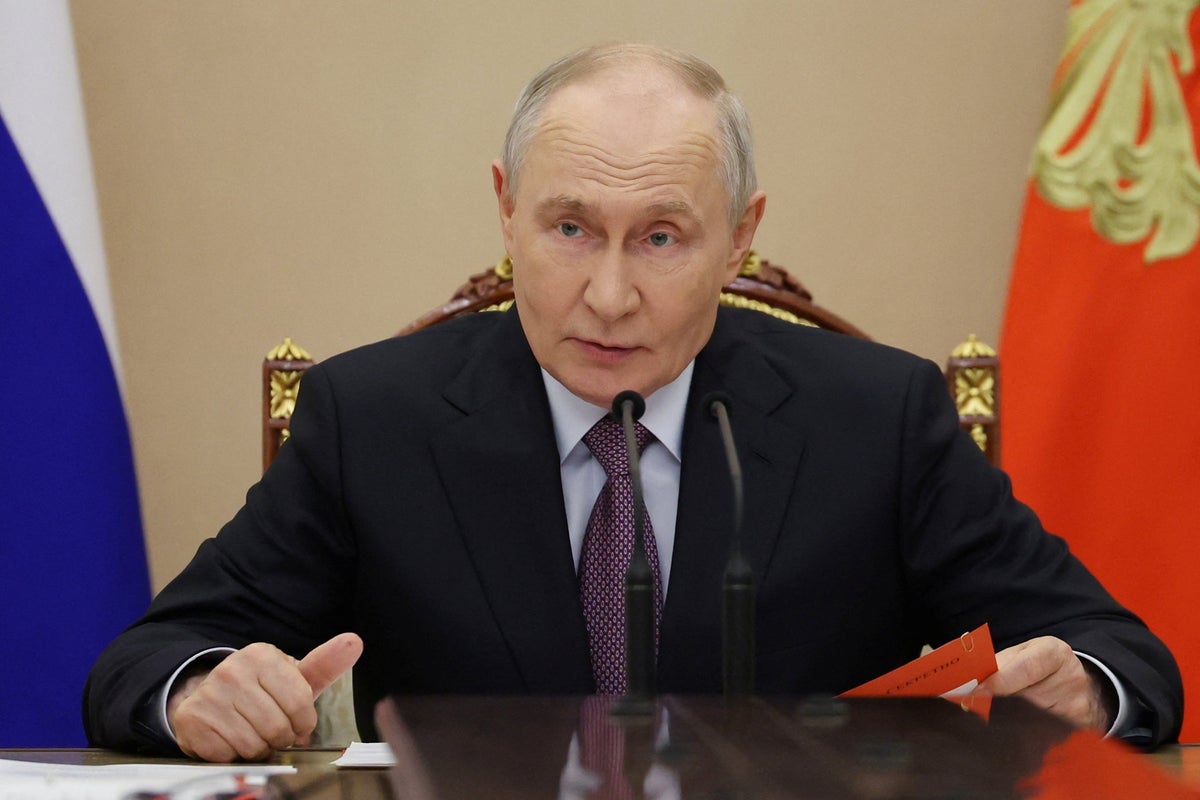
Western security architecture is cracking under the weight of new intelligence. American officials recently warned that Russian President Vladimir Putin could soon authorize targeted, deniable actions against NATO territory. Forget grand conventional invasions for a second. We are talking about cyber operations, sabotage, and localized hybrid warfare designed to test the alliance's breaking point.
If you think Moscow is too bogged down in Ukraine to look elsewhere, you are missing the entire point of how the Kremlin calculates risk. Putin wants to probe Western unity, test the resolve of the administration, and see if Article 5 is a genuine deterrent or just ink on paper. For an alternative perspective, read: this related article.
The Shifting Calculus in Moscow
Intelligence assessments show a sharp pivot in Russian risk tolerance. Battlefield losses in Ukraine are staggering, with estimates showing Russia shedding thousands of troops every week, heavily chewed up by AI-enabled drone warfare. Newly mobilized recruits often survive mere minutes on the front line.
Yet, these horrific attrition rates do not mean the Kremlin is backing down. Instead, military planners are looking for asymmetric ways to retaliate against Western backing of Kyiv. Further reporting on the subject has been published by NPR.
Consider recent red flags across Europe:
- Explosive-laden drones turning up at logistics hubs like Leipzig, Germany.
- Mysterious drone incursions violating airspace in Romania.
- Stray missiles crossing borders into Poland.
These aren't random navigational errors. They are calculated stress tests. Moscow wants to measure response times, political hesitation, and diplomatic fallout.
What a Limited Provocation Actually Looks Like
Nobody expects Russian tanks rolling through the Brandenburg Gate tomorrow. That is an outdated Cold War mental model. Modern hybrid warfare looks entirely different.
Intelligence briefs highlight several plausible vectors for near-term escalation. Sabotage of critical undersea communication cables could paralyze financial networks overnight. Massive cyberattacks targeting European energy grids can cause widespread chaos without a single shot fired. Small-scale armed provocations in the Baltic states are designed to create immediate diplomatic paralysis.
The primary objective is plausible deniability. If an explosion hits a rail depot or a communications node, and attribution takes weeks to verify, NATO's decision-making machinery stalls. That hesitation is precisely what Putin is betting on.
The Real Test for Alliance Unity
The underlying vulnerability for the West isn't military hardware; it's political cohesion. Leaders like NATO Secretary General Mark Rutte have repeatedly stressed that Europe is already in harm's way, warning that Moscow views the continent as its next long-term target.
At the same time, transatlantic friction over defense spending and waning enthusiasm for open-ended funding in Washington create a wide window of opportunity for the Kremlin. When alliance members disagree on threat levels, deterrence fails. Putin smells hesitation, and he acts accordingly.
Preparing for the Gray Zone
Dealing with hybrid warfare requires a complete mental shift. Traditional military defense doctrines are built for conventional invasions, not anonymous cyber sabotage or covert proxy attacks. European capitals are scrambling to harden critical infrastructure, upgrade counter-intelligence capabilities, and shorten response windows for attribution.
The next few months will determine whether Western deterrence holds or fractures under pressure. Ignoring these early warning signs is a luxury the alliance no longer has.
US intel warns Putin is planning a NATO attack: What we know
This video provides an in-depth breakdown of the latest U.S. intelligence reports regarding potential Russian hybrid operations against NATO allies.
http://googleusercontent.com/youtube_content/1