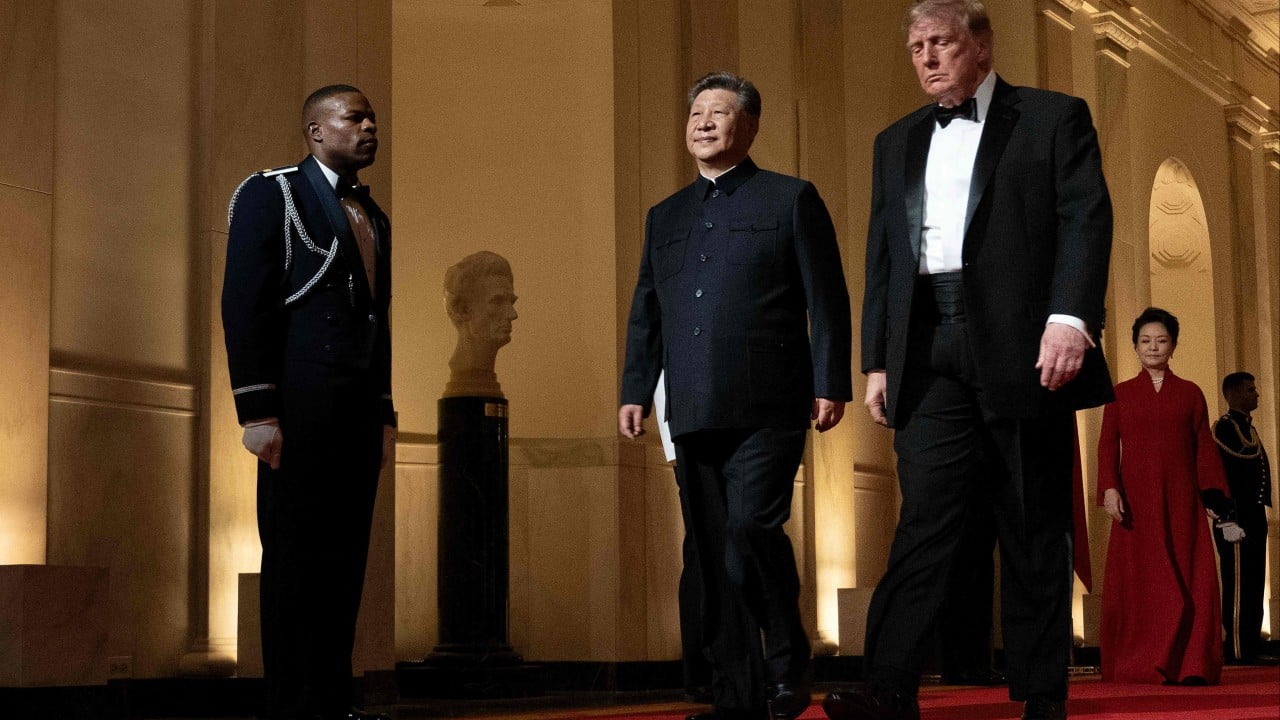
History is a blunt instrument in international relations. Washington and Beijing just picked it up, swung it hard, and left Tokyo scrambling to read the room. During recent high-profile summits, Donald Trump and Xi Jinping didn't just talk trade or tariffs. They reached back eight decades to invoke their joint struggle as World War II allies against Japanese aggression.
Xi reminded audiences of bonds forged in blood and fire. Trump nodded along, hailing China as a historic partner and even dropping historical references that left casual observers scratching their heads. Learn more on a connected issue: this related article.
For Tokyo, watching Washington cozy up to Beijing via anti-Japan historical rhetoric isn't just awkward diplomacy. It's a flashing red light.
The Shifting Diplomatic Ground Under Tokyo's Feet
Japanese defense planners have spent years operating under a simple assumption. America’s security umbrella in the Indo-Pacific relies on a rock-solid, unshakeable containment front against Beijing. Tokyo aligned its security policy, defense spending increases, and diplomatic messaging entirely around that premise. Additional reporting by The New York Times delves into comparable views on the subject.
Then comes a summit where the American president casually reminisces about fighting alongside China against Imperial Japan.
That narrative shift hits differently in Tokyo. Japan's current leadership finds itself in an uncomfortable diplomatic squeeze. On one side, Washington demands higher defense contributions and tighter alignment. On the other, Washington rolls out the red carpet for Xi Jinping, swapping wartime grievances about Japanese militarism back into contemporary geopolitical discourse.
You don't need a degree in foreign service to see what's happening here. Transactional diplomacy cares little for historical allies when a bigger deal is on the table.
Why Modern Japan Cannot Afford Blind Trust
Tokyo's foreign policy establishment is notoriously risk-averse. They hate surprises. The sudden revival of World War II victor narratives by Washington and Beijing exposes a glaring vulnerability in Japan's long-term strategy.
For decades, Japan buried its wartime past beneath a quiet economic consensus and reliance on the US-led security order. When Washington starts validating Beijing's historical framing of the 1940s, it undermines the very foundation of postwar Japanese diplomacy.
Let's look at the cold reality.
- The US-Japan security treaty remains active.
- Economic interdependence between Japan and China runs deep.
- Trust in American consistency is hitting historic lows in foreign capitals.
When superpowers start reminiscing about shared victories against your country's past regime, it is rarely just harmless nostalgia. It is a psychological wedge.
The Domestic Fallout in Japan
Back home, Japanese politicians are sweating. The optics of Xi's grand welcome in the US compared to how Japanese leadership gets treated in Washington have not gone unnoticed by local media or voters. Public opinion in Japan already tilts toward deep skepticism regarding China's maritime expansion. Now, people are starting to question whether Washington would truly have Tokyo's back in a regional crisis, or if America would cut a grand bargain with Beijing that leaves Japan out in the cold.
This dynamic forces a painful internal debate in Tokyo. Should Japan double down on its reliance on a fickle American partner? Or is it time to quietly hedge bets, open independent diplomatic channels with Beijing, and build a multi-polar defense strategy that doesn't depend on who occupies the White House?
What Happens Next in East Asia
Tokyo won't blow up its alliance with Washington overnight. Decades of institutional integration prevent any sudden moves. However, the psychological damage is real.
Expect Japanese diplomats to quietly push back against any historical revisionism that casts modern Japan as the regional pariah of the past. At the same time, watch for Tokyo to accelerate its independent defense capabilities. When your closest ally starts weaponizing history with your biggest rival, you stop relying on shared nostalgia. You start buying missiles.
.jpg?itok=hg_o2L0E)