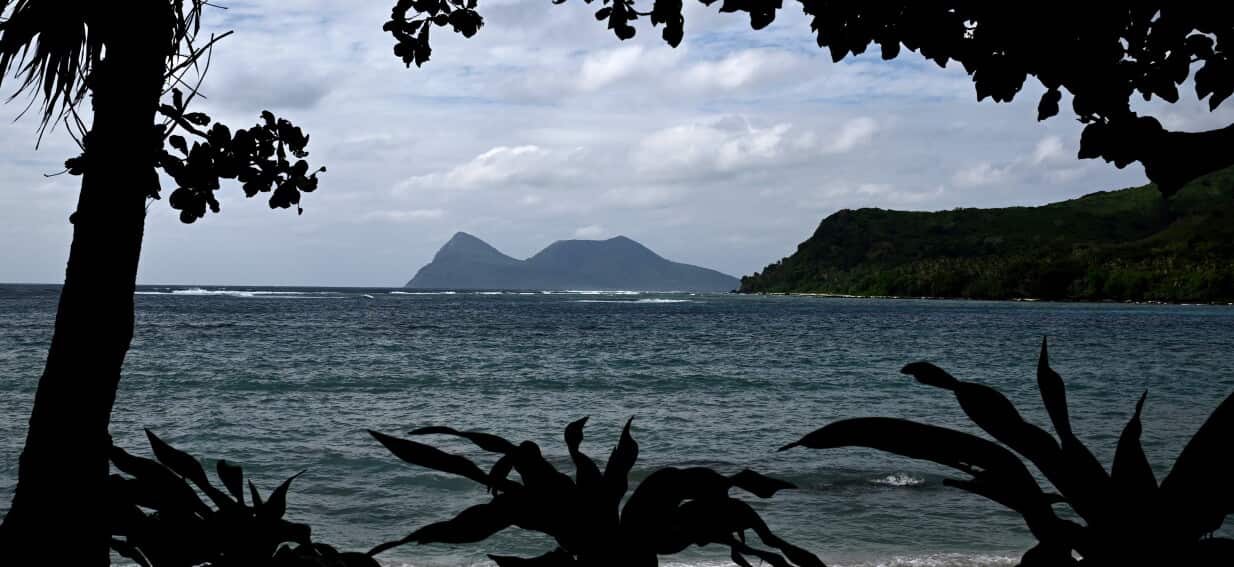
Washington wants to auction off millions of acres of the Pacific seabed for deep-sea mining. Local leaders found out after the fact. There were no sit-downs, no meaningful warnings, and zero local input before plans rolled out to lease deep-ocean blocks near American Samoa, Guam, and the Northern Mariana Islands.
That is not how you treat partners. That is how you treat a resource colony. If you enjoyed this piece, you might want to read: this related article.
When the U.S. Bureau of Ocean Energy Management started pushing to open vast expanses of maritime territory to mineral extraction, the reaction across the tropical island chains was immediate shock. An auction for an immense block near American Samoa could happen as early as November. Separate tracts near Guam and the Northern Mariana Islands are right behind it.
The Illusion of Consultation
Commonwealth of Northern Mariana Islands Governor David Apatang didn't mince words when talking to reporters. He made it clear that nobody bothered to ask the people whose survival depends on those waters. For another angle on this story, check out the latest coverage from Associated Press.
Washington initially floated a massive 140,000 square kilometre block east of Saipan. Then, without warning, officials added a second similarly sized block to the west.
"There have been no consultations," Apatang stated.
When distant capitals make sweeping choices about local survival, resentment follows. Over 70,000 public comments poured in opposing offshore mineral extraction during initial review phases. Bureaucrats looked at those numbers and kept moving forward anyway.
Why the Seafloor Is Suddenly a Battlefield
Mining corporations are drooling over what sits on the abyss. Polymetallic nodules scattered across the deep ocean floor contain massive concentrations of nickel, copper, cobalt, and rare earth metals.
Proponents argue these materials are mandatory for electric vehicles, renewable energy grids, and defense manufacturing. They point to global supply chain pressures and foreign dominance in mineral processing as justification for rapid extraction.
Executive orders from Washington have pushed agencies to "unleash" these domestic resources. Speed is the priority. Bureaucracy is being stripped away to get shovels in the dirt—or in this case, heavy machinery on the ocean floor.
The strategy ignores a fundamental reality. You cannot fast-track environmental destruction without breaking the ecosystems people rely on.
The Real Cost of Deep-Sea Mining
Marine scientists have warned for years that industrial seabed mining is a disaster waiting to happen. Heavy crawlers rolling across the abyssal plains kick up massive plumes of sediment. Those toxic plumes drift for miles, choking marine life and disrupting delicate mid-water food webs.
The noise alone is catastrophic. Heavy machinery operates at decibels that disorient whales, dolphins, and deep-diving marine mammals.
For the people of American Samoa and the Marianas, this isn't an abstract environmental debate. It is about food security and economic survival. Local fisheries drive export earnings and provide daily sustenance.
Dr. Sabrina Suluai-Mahuka, an advocate with the local group Finafinau, put it bluntly: "They can schedule a lease sale. They cannot lease our identity."
Territory Status Means No Real Say
This fight exposes a deeper structural flaw in how Washington manages its Pacific territories. Guam, American Samoa, and the Northern Mariana Islands lack voting representation in Congress. They have a voice, but no vote.
When federal agencies want to push an industrial agenda through, territories often find out when the press releases drop. María Hernandez of the Micronesia Climate Change Alliance pointed out how these unilateral actions expose an undemocratic system. Decisions about sacred waters are made thousands of miles away by people who never have to live with the consequences.
Contrast this with how independent Pacific neighbors handle the issue. Nations like Fiji, Samoa, and Palau have formally called for a precautionary pause or a total moratorium on deep-sea mining. They refuse to gamble their oceans for short-term corporate windfalls. Meanwhile, territories tethered to Washington are being dragged into an industry they reject.
What Happens Next
The timeline leaves very little room for pushback. Governors in the affected territories face tight windows to submit formal responses before final leasing notices lock in.
If Washington pushes the auction through on November 19, legal challenges and intense civil disobedience are guaranteed. Local communities are organizing across borders, realizing that ocean currents carry pollution far beyond individual maritime boundaries.
Watch the regional response closely over the coming weeks. Territorial leaders are demanding basic self-determination. They are making it clear that federal mandates will meet fierce, organized resistance on the water.