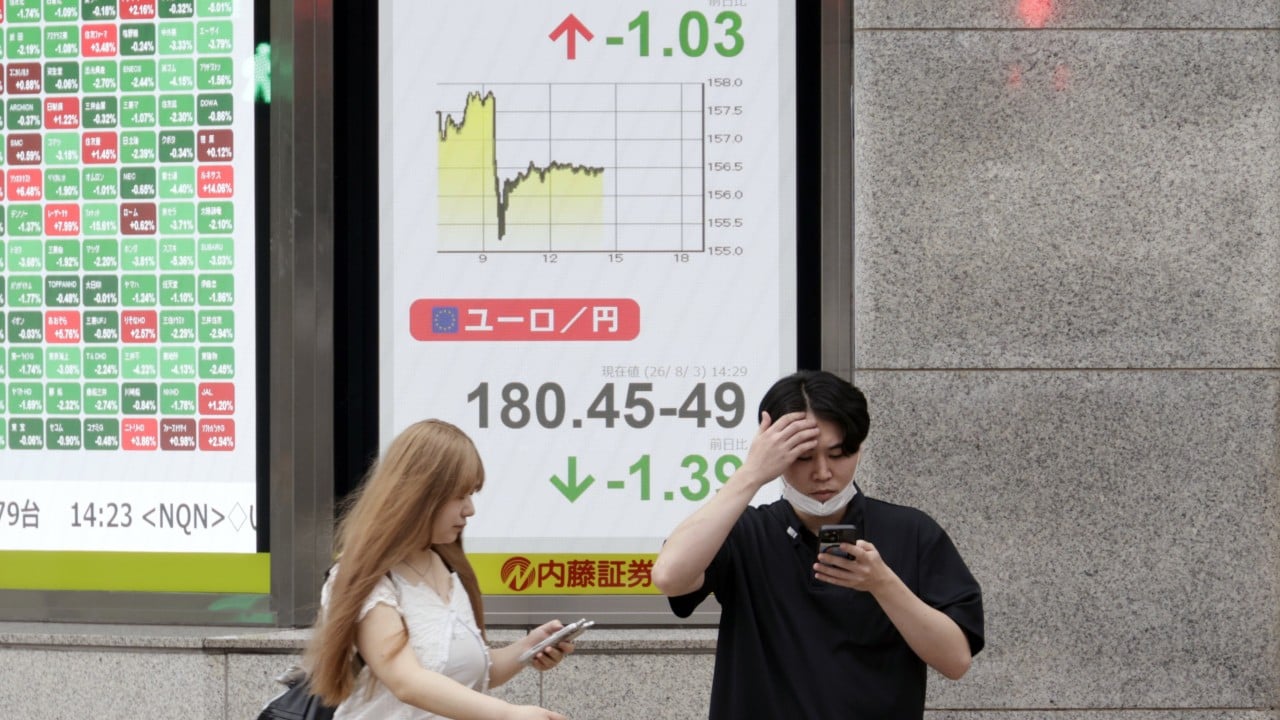
Everybody is staring at silicon chips and energy grids while trying to figure out if tech stocks are about to crash. They are missing the basement engine room. Down there, a severely battered currency has been quietly pumping cheap liquidity into the global financial system for years.
Behind the soaring valuations of tech giants and the breathless projections of artificial intelligence supremacy lies a much simpler, grittier monetary reality: a weak Japanese yen.
When you borrow money for next to nothing in Tokyo to buy high-yielding tech assets elsewhere, you are playing a massive arbitrage game. For years, the Bank of Japan kept interest rates pinned near zero while the US Federal Reserve hiked rates aggressively. Traders took massive loans in yen, converted them into dollars, and poured them straight into high-growth equities. This cheap money didn't just build server farms; it inflated an entire asset ecosystem.
The Mechanics Of Cheap Money
Let's look at how this actually works on a trading desk. Imagine you can borrow a currency at a fractional interest rate. You do not care about the fundamental health of that currency's domestic economy. You care about the spread.
You take that borrowed cash and chase the hottest trade on earth. Right now, that trade is artificial intelligence infrastructure. Data centers cost billions. Chip fabrication plants require staggering capital expenditure. Companies like Nvidia, Microsoft, and Alphabet look unstoppable because global liquidity has been sloshing around looking for a home that beats inflation.
When the yen stays weak, this loop keeps spinning. Investors feel invincible. Stock valuations stretch past historical norms, and traditional metrics of risk get thrown out the window. People assume exponential growth will bail out structural debt.
What Happens When The Engine Stutters
Currency markets do not stay asleep forever. Every time the Bank of Japan hints at policy normalization or intervention, the global market convulses. We saw sharp market corrections whenever Japanese officials showed signs of defending their currency.
Why? Because sudden yen strength forces a rapid unwinding of the carry trade.
Traders who borrowed cheap yen must suddenly buy back that currency to repay their loans as costs rise. To do that, they have to liquidate their high-flying assets. They sell their tech stocks. They trim their positions in high-beta growth sectors. Suddenly, the artificial intelligence bubble looks less like a technological revolution and more like a liquidity-driven house of cards.
Most retail investors ignore foreign exchange rates. They think currency policy only matters if you are booking a Tokyo vacation. That is a dangerous mistake. Global markets are deeply interconnected plumbing. When the Japanese currency loses value, it acts as a subtle subsidy for global risk-taking.
The Illusion Of Infinite Growth
Tech executives love to talk about paradigm shifts. They want you to believe that artificial intelligence earnings justify any price-to-earnings ratio. Sometimes, technological breakthroughs change the world. Think back to the late 1990s. The internet completely transformed society, but the dot-com stock market bubble still popped because prices detached completely from reality.
Today's market has a similar flavor, but with a distinct macroeconomic crutch. The expansion isn't just fueled by excitement over large language models. It is sustained by an ocean of cheap funding originating from an aging nation with a shrinking workforce and a persistently soft currency.
If you strip away the monetary policy distortion, the picture changes. Without the aggressive backing of cheap cross-border capital, the sheer capital expenditure required for artificial intelligence might look a lot less appetizing to Wall Street boardrooms. Companies are spending massive sums on GPU clusters and power purchase agreements, betting that future demand will offset the immense upfront cash burn.
How To Protect Your Portfolio Right Now
You cannot control central bank policy in Tokyo or Washington. You can, however, stop ignoring macroeconomic signals when managing your investments.
- Monitor currency pairs closely, especially USD/JPY, to gauge shifts in institutional risk appetite.
- Look past headline revenue numbers and check how heavily leveraged your favorite tech holdings are to external financing conditions.
- Diversify away from pure momentum plays that rely entirely on cheap liquidity remaining available forever.
Ignore the hype cycles and look at the balance sheets. The next major market shift won't necessarily start with a bad earnings report from a Silicon Valley darling. It might just start with a stronger currency halfway across the world.