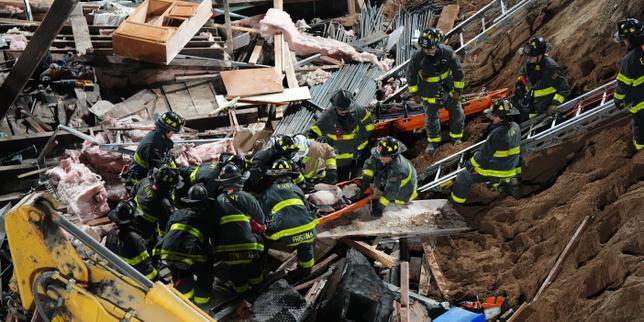
Tragedies in New York City rarely happen in a vacuum. When a residential building in Brooklyn's Flatbush neighborhood suddenly crumbled on Wednesday afternoon, it didn't just alter a street corner; it exposed the deadly friction between aggressive urban construction and the fragile stability of older housing stock.
Eight people lost their lives, including six adults and two children, after a three-story residential structure at 2625 Bedford Avenue crashed down into an adjacent excavation site. Mayor Zohran Mamdani confirmed the grim updated death toll during a Thursday press briefing, noting that emergency crews spent hours working through heavy rain and perilous wreckage. Nearly twenty others were injured, highlighting a catastrophe that has left a deep mark on the city.
Anatomy of a Disaster in Flatbush
The building gave way at around 4:00 p.m. on Wednesday, catching residents and pedestrians off guard. Witnesses described a sudden, terrifying roar as the 1930-era structure collapsed into the neighboring lot where heavy machinery had been active.
Two of the victims were construction workers laboring on the adjacent site. Among the dead were parents and children, families trying to build a life in a borough that often feels like a pressure cooker of development. Fire Commissioner Lillian Bonsignore led a massive response involving roughly 250 firefighters and medical personnel. They faced immense challenges, working overnight in torrential downpours to search through unstable rubble with dogs, saws, and excavators.
Unlike rapid-onset natural disasters, urban collapses of this nature trigger immediate, intense scrutiny of municipal oversight and neighborhood construction practices.
The Construction Connection and Questions of Safety
Investigators aren't just looking at the pile of bricks; they're looking backward at permits, stop-work orders, and foundation soil. Urban experts like former NYC Department of Buildings Commissioner Robert LiMandri point to preconstruction surveys and excavation work as critical focal points. When you dig deep into a lot immediately sharing a foundation line with an older, multi-story brick building, the margins for error shrink to zero.
Records show that demolition and construction work at the adjacent site had faced prior scrutiny. In April, inspectors found that work had resumed in violation of a stop-work order before being permitted to proceed in May once issues were supposedly corrected. Whether those past infractions played a direct role in the sudden structural failure remains the core question driving the ongoing investigation by city authorities.
Old New York infrastructure meets new New York capital every single day. Neighborhoods like Flatbush are transforming rapidly, and construction sites squeeze into tight urban footprints where multi-family homes have stood for nearly a century. When excavation compromises shared foundations or undermines soil integrity, the consequences can turn catastrophic in seconds.
The Human Toll and Next Steps
For the families affected, institutional accountability offers little immediate comfort. Mayor Mamdani emphasized the diversity of the victims, noting that they included immigrants from Mexico, Colombia, Ecuador, Trinidad, and local residents who called Brooklyn home.
First responders pulled multiple survivors from the debris in the immediate aftermath, including a pregnant woman and several children. Four firefighters were among the injured, demonstrating the extreme danger emergency personnel willingly walk into when urban structures fail.
As the heavy machinery finishes clearing the last blocks of concrete from Bedford Avenue, the city faces a reckoning. Oversight boards must evaluate whether current inspection protocols are tough enough to protect residents living in the shadow of relentless neighborhood development. Construction will continue across the five boroughs, but this disaster demands a hard look at how New York balances expansion with basic human safety.