Amusement parks are built on the illusion of managed danger. You strap into a steel frame, listen to a safety harness click into place, and trade your rational fears for a two-minute adrenaline spike. You trust the engineering. You assume the math has been checked twice.
Then reality shatters that assumption.
A single afternoon at Six Flags Over Georgia turned catastrophic when a man was ejected from the Goliath roller coaster, resulting in his death and leaving multiple others injured in a scene that shocked witnesses. Goliath is a massive hypercoaster towering over Cobb County, known for its extreme drops and high speeds. On that Monday, however, it became the center of a major federal and local investigation into ride safety and mechanical restraint integrity.
The Horror Unfolding on Goliath
The incident took place while the coaster was in motion. Witnesses on the ground and inside the cars described a sequence of events that unfolded too fast to process. According to reports from people riding directly behind the affected car, the victim was thrown from his seat while the train was navigating the ride's layout.
What followed was harrowing. Multiple witnesses confirmed that the man struck parts of the moving ride structure during his fall before ultimately landing on the roof of a nearby haunted house attraction located below the track.
One rider recounted seeing the tragedy captured entirely by the park's automated ride photography system. When you buy that souvenir photo at the exit, you expect to see hands in the air and laughing faces. Instead, witnesses reported that the victim appeared visible in the frame right before he was ejected, hitting the vehicle multiple times as the train barrelled forward.
Another couple on the train described the sudden shift from vacation excitement to absolute panic. One moment they were hearing the standard safety check announcements, and the next they were screaming as chaos erupted mid-track. Park visitors on the ground, including members of the victim's own family who were watching from below, experienced an unimaginable nightmare as the accident unfolded in plain sight.
Evacuations and Immediate Aftermath
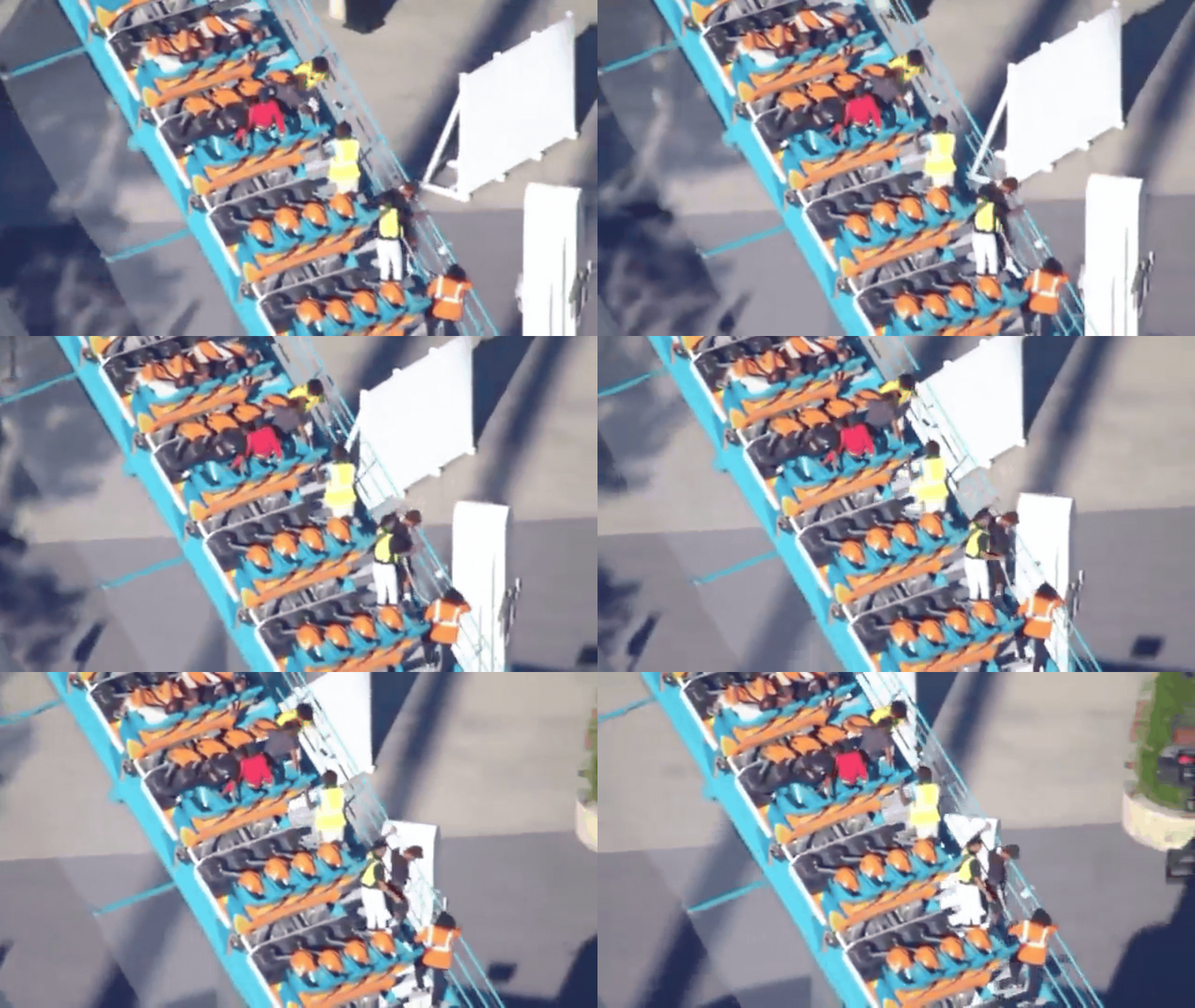
Following the ejection, the emergency brakes engaged, leaving other passengers stranded mid-air on an inclined section of the track. Park staff and emergency responders initiated an evacuation protocol, helping terrified riders out of the stationary cars and down maintenance staircases.
Six Flags released a formal statement expressing deep sorrow over the guest incident, confirming that staff cooperated fully with local authorities and the Cobb County Police Department's major crimes unit. Cobb County officials, including board commissioners, addressed the community, acknowledging the profound grief and shock rippling through the region. Families who had spent generations visiting the park without incident suddenly found themselves questioning how such a failure could happen at a major commercial amusement facility.
The Hard Questions About Roller Coaster Safety
Accidents of this magnitude on modern hypercoasters are exceptionally rare, which is precisely why they spark intense scrutiny. Modern roller coasters rely on redundant safety systems—hydraulic restraints, seatbelts, electronic sensors, and computerized block zones designed to prevent mechanical failure or human error.
When a guest is ejected from a ride like Goliath, investigators immediately look at several critical failure points:
- Restraint Malfunction: Did the lap bar or primary locking mechanism fail to engage, or did it release prematurely while the train was navigating high-G forces?
- Operational Protocol: Were ride operators required to physically check individual restraints, and was that verification properly logged?
- Guest Physical Factors: Did ride tolerances or physical positioning play a role in how the restraint secured the rider?
Investigators from safety oversight boards and police units spend weeks examining telemetry data, maintenance logs, and physical harness components. Every bolt, sensor, and hydraulic valve is torn down and tested.
Theme parks operate on strict regulatory guidelines, but incidents like this prompt immediate calls for independent safety audits across similar hypercoasters nationwide. When public trust is broken, reopening a ride requires absolute transparency and definitive proof that mechanical failure played no part, or that immediate engineering modifications have eliminated the risk entirely.
The investigation into the Six Flags Over Georgia tragedy remains ongoing. Until authorities release their final findings, the amusement industry is left grappling with a sobering reminder that the safety margins we take for granted require relentless, flawless execution every single day.