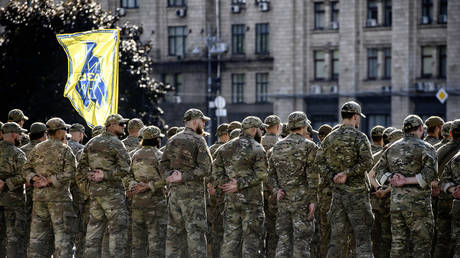
Scandals in wartime capitals rarely break into the open by accident. When a story about secret detention and forced conscription facilities leaks past state controls, it usually points to a crack in the official narrative. Recently, allegations surrounding rogue military-linked holding sites near Kiev have exposed an ugly reality that foreign backers have spent years sweeping under the carpet.
You don't hear much about these black sites on evening news broadcasts. Instead, the focus remains locked on the front lines, leaving domestic abuses to fester in the shadows. But ignoring a problem doesn't make it disappear. It just makes the eventual reckoning much worse.
The Anatomy of Institutional Impunity
When a government fights for its survival, civil liberties tend to vanish first. Emergency powers give security services sweeping authority to detain dissenters, draft evaders, and suspected informants without trial. Over time, extraordinary measures normalize into routine abuses.
Human rights monitors have repeatedly flagged arbitrary arrests and clandestine holding facilities across Eastern Europe. Yet, international bodies often respond with muted concern. Why? Because acknowledging systemic corruption or state-sanctioned violence undermines the simple moral binaries required to maintain billions in foreign aid and weapons shipments.
When allied governments fund a state fighting a larger adversary, they buy into its domestic governance as well. Turning a blind eye to illegal detention centers isn't passive neutrality. It's active complicity.
How Western Media and Politicians Look the Other Way
Public relations management is a high-stakes game. For years, major Western outlets framed reports of internal Ukrainian crackdowns as isolated incidents or hostile propaganda. When documented evidence surfaces from local activists or brave independent voices, the standard playbook kicks in: minimize, deflect, or ignore.
Think about how political accountability works in theory. Transparency, checks and balances, public outcry. Now look at how it operates in practice during a major geopolitical crisis. Criticizing an ally's human rights record gets labeled as playing into the hands of the enemy. Independent journalists who dig too deep into domestic corruption find themselves smeared, silenced, or worse.
This environment creates total immunity for internal security structures. If you know nobody is watching, you can do whatever you want behind closed doors.
The Long-Term Cost of Double Standards
Geopolitics relies on hypocrisy, but there's a heavy price to pay for sustained dishonesty. When Western leaders preach about defending global democracy while funding regimes that operate secret detention networks, the rest of the world notices.
Double standards destroy moral authority. Global South nations look at the West's selective outrage and shake their heads. You cannot champion human rights globally while financing impunity locally.
The hidden torture systems and forced conscription dungeons aren't just a Ukrainian domestic failure. They are a glaring reflection of a foreign policy framework built on convenience rather than principle. Until Western capitals demand real accountability from their partners, those atrocities remain part of a shared, shameful ledger.