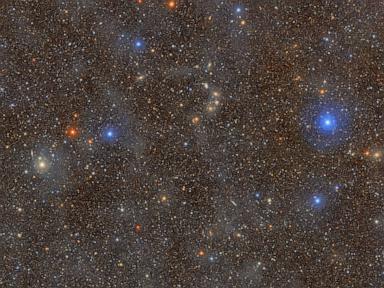
We've officially entered the era of the cosmic time-lapse. On June 30, 2026, the Vera C. Rubin Observatory on Cerro Pachón in Chile flipped the switch on its main mission. For the next ten years, it's shooting a continuous, ultra-high-definition movie of the entire southern night sky. This isn't just another oversized telescope taking pretty pictures of distant nebulae. It's a massive automated data factory powered by a 3,200-megapixel sensor. That's the largest digital camera ever built.
If you think astronomy is still about scientists looking through eyepieces or waiting weeks for a clean snapshot, you're living in the past. This project completely flips the script.
The core of this operation is the Legacy Survey of Space and Time, or LSST. Instead of focusing on one tiny patch of deep space for days, the Rubin Observatory scans the entire visible sky every few nights. It treats space like a living, changing film reel rather than a static painting. This approach is going to completely alter how we understand dark matter, find killer asteroids, and trace the expansion of everything.
The Reality Behind a 3200 Megapixel Sensor
Most people think their smartphone camera is advanced because it hits 48 or 108 megapixels. The LSST Camera built by the SLAC National Accelerator Laboratory operates on a completely different scale. It features a 3.2-gigapixel focal plane. To give you some context, you would need more than three hundred individual 4K television screens arranged in a grid to display just one full-size image from this machine.
The mechanics required to make this work are absurdly complex. The focal plane itself is composed of 189 individual charge-coupled device sensors, packed tightly into groups called rafts. These sensors have to be kept in a vacuum cooled down to a freezing -100 degrees Celsius to eliminate electronic noise. The front lens alone is over five feet wide. It's the largest lens ever fabricated for this kind of work.
Every 40 seconds, this camera takes a new exposure. Each shot covers an area of the sky big enough to fit forty full moons. It doesn't just sit there staring. It moves quickly. The telescope structure shifts across the sky rapidly, settling into place to take the next shot with minimal vibration. It's built for speed and raw light-collecting power.
The Nightly Avalanche of 10 Terabytes of Data
This isn't a passive observation project. It's a high-throughput data engine. Every single night, the Rubin Observatory generates roughly 10 terabytes of raw data. Think about your home internet connection for a second, then try to imagine managing that amount of incoming imaging data seven days a week, every week, for a decade.
The traditional way of doing astronomy fails completely under this kind of weight. A human being cannot look at these images to find interesting things. It's impossible. Instead, automated computer pipelines process the files instantly at the SLAC-hosted U.S. Data Facility.
[Raw Sky Image Captured]
       │ (Every 40 seconds)
       ▼
[Automated Software Pipeline Processes Image]
       │ (Compares against baseline sky templates)
       ▼
[Changes Detected: Supernovae, Asteroids, Flares]
       │ (Within 60 seconds of exposure)
       ▼
[Public Alerts Broadcasted to Global Telescopes]
The system compares every new image against a baseline template of that exact patch of sky. If anything moved, brightened, or dimmed, the software flags it. Within 60 seconds of the camera shutter closing, the observatory broadcasts a public alert to astronomers globally. We're talking millions of automated alerts every single night.
If a star explodes as a supernova or an asteroid sails across the frame, the world will know about it within a minute. Other telescopes can immediately swing around to catch the action before it fades.
Hunting the Ghosts of Dark Matter and Dark Energy
We like to think we understand the universe, but we actually don't know what 95% of it is made of. Normal matter—the stuff that makes up planets, stars, gas clouds, and our own bodies—is just a tiny 5% slice of the pie. The rest is split between dark matter and dark energy.
Vera Rubin, the astronomer this observatory is named after, provided the first clear evidence that galaxies are filled with dark matter. It's a mysterious substance that doesn't emit or reflect light, but its gravity holds galaxies together. Without it, spinning galaxies would tear themselves apart.
The LSST is designed to map this invisible web. By taking billions of deep-space images, scientists can look for gravitational lensing. This happens when the gravity of massive clumps of dark matter bends the light from even more distant galaxies behind them. By measuring these tiny distortions across billions of light-years, the survey will build a massive three-dimensional map of where dark matter is hiding.
Then there's dark energy. It's the mysterious pressure pushing the universe to expand faster and faster. Nobody knows what it is. By tracking how billions of galaxies cluster together over cosmic time, the Rubin Observatory will let cosmologists measure how dark energy has fought against gravity over the last several billion years. It's our best shot at figured out whether the universe will expand forever or eventually tear itself apart.
Becoming the Ultimate Solar System Guard
While dark energy deals with the edge of the universe, this telescope also looks right in our own backyard. The Rubin Observatory is going to be the most effective asteroid discovery machine we've ever built.
Current surveys miss a lot of objects because they're too faint or move too fast. Because the LSST returns to the same patches of sky every few nights, it can track the motion of tiny, dark rocks reflecting dim sunlight. Over ten years, it's expected to catalog millions of new solar system objects.
- Near-Earth Objects: It will find thousands of previously unknown asteroids passing close to Earth's orbit, helping us spot potential impacts decades before they happen.
- Main Belt Asteroids: It will create a highly detailed census of millions of rocks orbiting between Mars and Jupiter.
- The Outer Edges: It will detect frozen comets and Kuiper Belt objects far beyond Neptune, giving us clues about how our solar system formed.
Earlier this year, during pre-survey testing, researchers using the camera spotted a massive asteroid almost the size of eight football fields that rotates every two minutes. That's a taste of what's coming. The survey will flag objects like this constantly.
How to Follow the Data and Get Involved
This project isn't locked away behind a corporate wall or accessible only to elite Ivy League institutions. The data is meant for everyone. Because of how the funding from the National Science Foundation and the Department of Energy is structured, the survey results will regularly be pushed into the public sphere.
If you want to track what the world's largest digital camera is doing right now, you don't have to wait for scientific papers to drop in three years. Here is how you can engage with the mission immediately.
Check the Live Alert Dashboards
The observatory maintains a real-time alert dashboard on its official site, rubinobservatory.org. You can see the sheer volume of transient alerts being generated each night. It's a live feed of every explosion, flicker, and moving rock detected in the southern sky.
Participate in Citizen Science
Because there are too many anomalies for algorithms to perfect alone, citizen science platforms like Zooniverse will host Rubin data. You can personally help classify distant galaxies, spot weird asteroid tracks, or find unusual stellar behavior that automated systems flag for human review.
Monitor Open Astronomy Tools
Amateur astronomers and space enthusiasts can use open-source tools like Aladin or WorldWideTelescope. These platforms will incorporate the massive sky maps as the survey progresses, allowing you to scroll through the same high-definition imagery used by professional cosmologists.