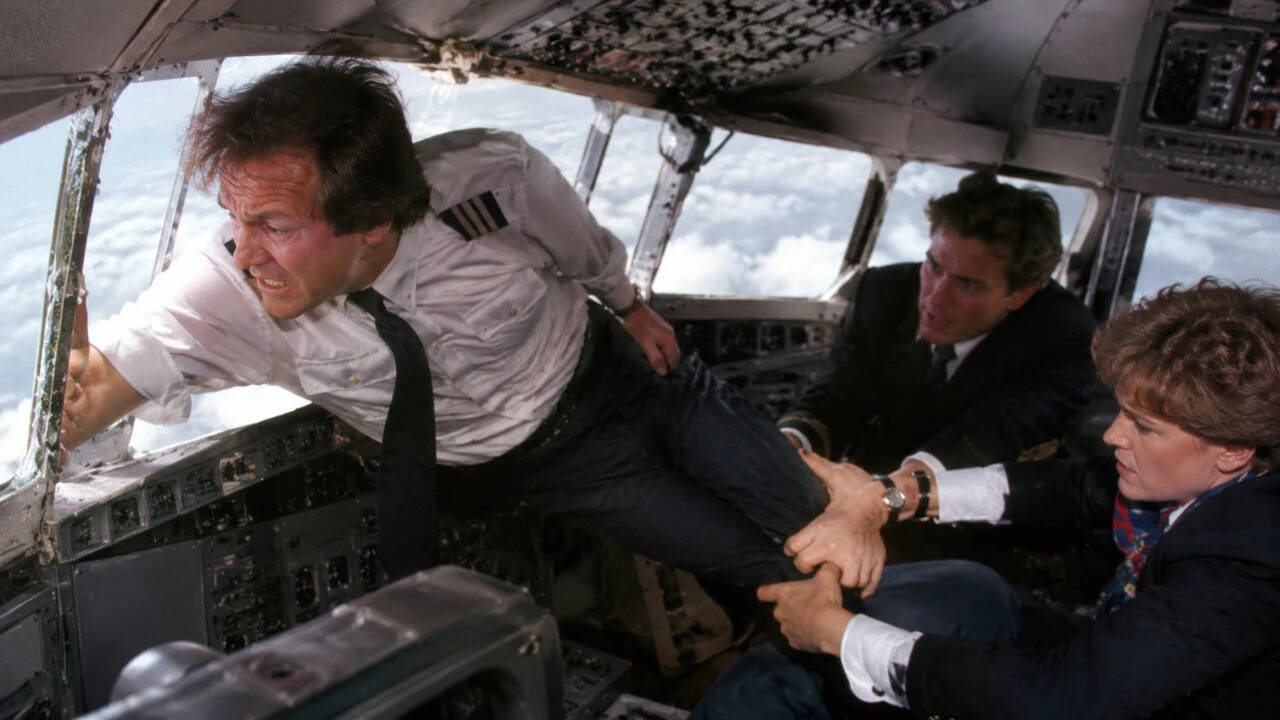
On June 10, 1990, British Airways Flight 5390 was climbing quietly over Oxfordshire when an ordinary flight turned into an absolute nightmare. At 17,300 feet, the left-hand windscreen of the BAC One-Eleven blew completely out. The sudden explosive decompression yanked Captain Tim Lancaster right out of his seat and forced him halfway through the window frame, leaving his upper body exposed to sub-zero temperatures and a roaring 300-mph slipstream.
What followed over the next twenty minutes reads like a Hollywood thriller written by someone with a dark sense of humor. Yet every single detail actually happened.
The Anatomy of a Blunder
You'd think a commercial airliner's windshield would be held in place by rugged, highly specialized aerospace engineering. Turns out, it basically came down to a maintenance worker eyeballing hardware in a poorly lit stockroom just 27 hours before takeoff.
Investigators from the Air Accidents Investigation Branch later uncovered a staggering sequence of human errors. The shift manager responsible for replacing the windscreen had run out of the correct manufacturer-approved bolts. Instead of checking inventory lists properly, he walked over to a self-service parts bin, grabbed a handful of fasteners that looked roughly similar, and installed them.
The fatal mistake? Eighty-four of the ninety bolts used were slightly too narrow—about 0.66 millimeters smaller in diameter than what was required. On top of that, a fraction of them were too short. When the aircraft reached a specific altitude and cabin pressure differential built up, those undersized threads simply stripped out and popped through the frame like corks from a shaken bottle.
Twenty Minutes of Pure Chaos
Inside the tiny cockpit, the noise was deafening. Decompression sucked loose charts, coffee cups, and flight manuals out into the freezing blue sky.
Captain Lancaster was wedged firmly in the window frame, his torso and head pinned against the outside fuselage while his knees caught squarely on the control yoke. That accidental jam on the controls pushed the aircraft into a steep, rapid dive toward the ground.
Flight attendant Nigel Ogden had just entered the flight deck with a cup of tea when the explosion hit. Without a second thought, Ogden lunged forward and grabbed Lancaster by the belt and legs.
Seconds later, cabin crew members John Heward and Simon Rogers rushed into the cockpit to help. They formed a human anchor, taking turns holding onto Lancaster's legs while the freezing wind whipped through the cabin at tornado speeds.
In the right-hand seat, First Officer Alastair Atchison faced an impossible task. He had to fly a damaged, screaming jet by himself while wrestling with emergency radio calls and managing a rapid descent to breathable air. Meanwhile, the crew holding Lancaster stared out the window in horror. Lancaster's eyes were wide open and unblinking, his skin turning a pale grey. Everyone in the cockpit genuinely believed he had died from asphyxiation or the brutal wind chill.
They kept holding on anyway. Not just out of loyalty, but because they feared letting go might suck his body into the port engine or smash it against the tail plane, which could trigger a catastrophic crash.
Miracle on the Flight Deck
Atchison managed to guide the aircraft down to Southampton Airport, touching down smoothly despite the chaos. Emergency responders swarmed the tarmac, fully expecting to pull a deceased pilot from the window frame.
Instead, the medical team realized Lancaster was still breathing.
He suffered from severe shock, frostbite, multiple fractures, and bruising, but he wasn't dead. Even crazier? Lancaster had zero memory of the event itself. His last conscious thought was running pre-flight checks on the ground; his next memory was waking up in a hospital bed weeks later.
All 81 passengers walked off the plane without a scratch. First Officer Atchison received honors for his heroic solo piloting under extreme stress, and the cabin crew members were rightly lauded for their sheer physical endurance.
Tim Lancaster recovered fully from his injuries and remarkably returned to flying commercial aircraft just months later. Maintenance protocols across global aviation changed overnight, proving that even the tiniest piece of hardware matters when you're cruising six miles above the earth.