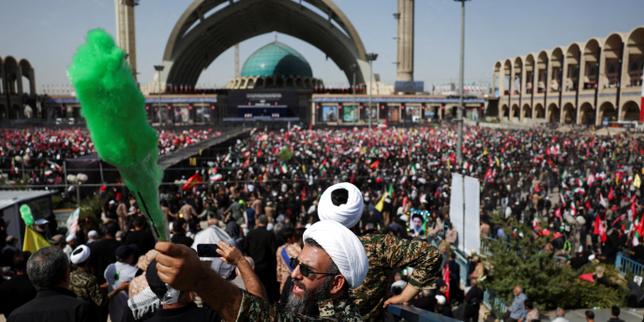
Thousands of people packed into the Imam Khomeini Mosalla in Tehran this morning, a sea of black clothes, red flags, and raw, state-sanctioned grief. They came to see a glass box holding a turbaned coffin. This is the start of a massive, six-day farewell ritual for Ayatollah Ali Khamenei, the man who ruled Iran for nearly four decades. But don't look at the crowd and assume everything is stable. This giant spectacle is a carefully managed distraction from a deeply fractured country trying to survive its own transition.
The official line from state media calls this the largest gathering of the century. They want you to believe the entire nation is united in mourning the Supreme Leader who died following an airstrike on February 28. But the truth on the ground is a complicated mess of forced corporate attendance, genuine religious devotion, and a desperate regime trying to prove it still exists.
The Spectacle of Grief in Tehran
Walk through the streets of Tehran today and the imagery hits you like a brick wall. Giant banners shout three words across every major highway: "We must rise." It is written in Persian, English, and Arabic. The message isn't subtle. It's a calculated roar aimed directly at the West.
The government didn't just ask people to show up; they engineered the turnout. Human resources departments at massive state-linked institutions like Mobile Communications of Iran canceled every single leave request. Remote work was banned for the week. In District 10, city municipality workers got explicit orders to line the streets. If you work for the state, your presence isn't optional. It's your job.
To keep this massive influx of human bodies moving, the government essentially turned Tehran into a giant, free camp. They laid down ten major fiber optic internet hotspots around the Mosalla so people could stream their grief. They ordered grocery stores to stay open 24 hours a day. They even stockpiled 50 million loaves of bread just to feed the pilgrims flooding in from rural areas and neighboring Iraq.
Yet, for every devout follower beating their chest in rhythm, there's a quiet citizen staying home. The sharp divide inside Iran hasn't vanished just because the streets are full of black shirts.
Four Months of Silence and Steel
The biggest question most outside observers are asking is simple. Why did it take four months to hold this funeral? Khamenei died in late February. It's now July. In Islamic tradition, burials usually happen within 24 hours. Holding a body for more than 120 days is almost unheard of.
The delay happened because Iran was fighting for its life. The same joint military strikes that killed Khamenei and members of his immediate family triggered a brutal, weeks-long war that brought the country to the brink of collapse. You can't host an international funeral with 20 million people when fighter jets are buzzing overhead and the country is under a strict naval blockade.
The regime had to freeze everything. They kept the bodies preserved under tight religious and legal protocols while the country steadied itself. Now that the U.S. naval blockade has been lifted and diplomatic talks are haltingly back on the table, the government finally has the breathing room to put on a show.
This funeral isn't just about saying goodbye. It's a declaration of victory. The rulers want the world to see that despite losing their top leader, dozens of senior officials, and historic buildings, the Islamic Republic didn't fall.
Mojtaba Khamenei and the New Guard
While the crowds scream for revenge, the real story is happening in the corridors of power. The succession crisis that analysts predicted for a decade has already played out behind closed doors. Mojtaba Khamenei, the late leader's son, has officially taken the top spot.
This move tells you everything you need to know about the current state of the regime. The transition wasn't a smooth, spiritual passing of the torch. It was a rapid, defensive huddle. For years, critics said a hereditary succession would destroy the republic's ideological legitimacy. But when survival is the only goal, ideological purity goes out the window.
Mojtaba has deep ties to the security apparatus and the Islamic Revolutionary Guard Corps. His rise means the military wing of the state is completely in charge now. The old clerical elite still speaks from the pulpits, but the guys with the weapons are making the calls.
This shift to a more militarized state is exactly why the funeral looks the way it does. It's organized like a massive military campaign, right down to the specific west-east transit corridor stretching across Damavand and Azadi avenues.
The Engineered Crowd and the Reality of Iran
Don't let the images of weeping crowds fool you into thinking the regime has a mandate. The context matters. Just one year ago, these same streets were filled with people protesting against the very government that now demands their tears.
The economic reality behind the scenes is grim. The war ruined an already broken economy. Inflation is wild. Basic goods are hard to find. The 50 million loaves of bread being handed out to mourners are a luxury that many ordinary families haven't seen in months.
There's also a stark generational divide. Young Iranians aren't in the streets chanting slogans. They're watching from their phones, wondering if this new era under Mojtaba will mean even tighter internet restrictions and more heavy-handed crackdowns. The celebratory scenes reported in parts of rural Syria and inside private homes in Iran tell a story that state television refuses to broadcast.
What Happens Next
The funeral procession will move from Tehran to Qom, then take a highly symbolic detour into Iraq's holy cities of Najaf and Karbala, before finally ending with a burial in Mashhad on July 9. If you want to understand where the region is heading, watch the next steps carefully.
First, pay attention to the foreign delegations. The presence of leaders from Iraq, Pakistan, and Tajikistan shows who Iran is relying on to break its diplomatic isolation. These regional ties are the regime's economic lifeline.
Second, watch the nuclear talks. The brief pause in negotiations for this funeral is temporary. When the diplomatic teams head back to the table next week, Iran will try to use the image of these 15 million mourners as a bargaining chip. They want to show the West that they're negotiating from a position of popular support, even if that support is heavily manufactured.
The show in Tehran will end in a few days. The black banners will come down. The free bread will run out. When the dust settles, the new leadership will have to face a deeply resentful population and a ruined economy. The real test for the post-Khamenei era doesn't happen during the six days of mourning. It begins the moment the coffin goes into the ground.