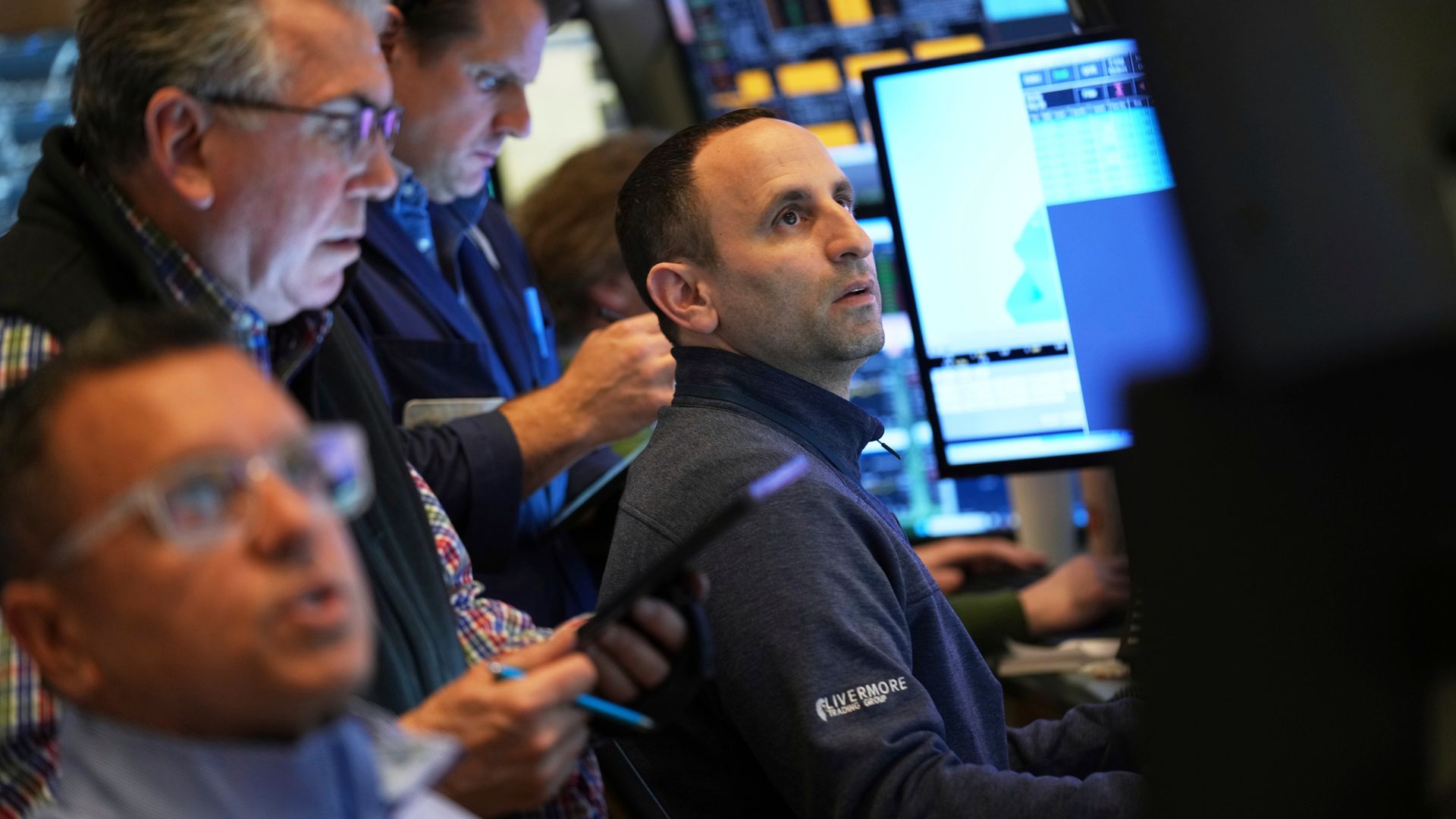
Anthropic stock slid into the red on Friday, November 20, 2026—its second day trading on the Nasdaq under the ticker ANT—after a bruising tech selloff wiped out the early euphoria of its record-setting public debut. Just 24 hours earlier, shares had opened at $111.50 against an $83.00 IPO price and briefly touched $114.99 before closing Thursday at $97.17. By Friday morning, ANT was dropping sharply—down as much as 11% to 12% in early action—as chipmakers sagged, global indices buckled, and Wall Street asked a blunt question: even when you raise $81.3 billion in the biggest IPO on record, how do you convince nervous buyers that AI spending isn't outrunning reality?
Honestly, the timing couldn't have been rougher. The S&P 500 was already sliding after five straight days of losses, Asian equities were staring down their worst week since 2020, and Bitcoin had fallen back below $60,000 for the first time since early July. When a flagship AI name steps onto the market during a broader tech wreck, it doesn't get graded on hype alone. It gets stress-tested in real time.
Why Anthropic stock stumbled on its second day of trading
You don't need a conspiracy theory to explain why Anthropic stock gave back ground on day two. It came down to gravity, macro nerves, and the hangover from Thursday's whippy session.
First, Thursday's opening surge was already cooling before the closing bell. A stock that prices at $83.00 and jumps to nearly $115 intraday attracts fast-money flippers who don't care about long-term model weights or enterprise contracts. Once those short-term traders locked in gains on Thursday afternoon—pulling ANT down to $97.17—the stock entered Friday without a cushion of fresh momentum.
Second, the broader AI and semiconductor trade was taking heavy fire. Chip and storage names like Nvidia, AMD, Micron, and SanDisk were under pressure amid renewed worries about AI infrastructure spending, rising borrowing costs, and whether near-term returns match massive capital outlays. When the exact hardware suppliers powering the AI boom are sliding, a newly public AI company sitting right in the crosshairs feels every tremor.
Third, there's a big difference between demand at the IPO roadshow and appetite on a red Friday. Anthropic's offering drew massive institutional interest—reportedly around six to seven times oversubscribed ahead of pricing—and lifted the offering to 980 million Class A shares at $83.00. That brought in roughly $81.3 billion from the share sale alone, eclipsing SpaceX's $75 billion raise in June. Yet once trading starts on the open market, buyers aren't competing for scarce IPO allocations anymore. They're weighing price risk against a shaky tape.
The $900 billion compute bill nobody can ignore
If you want to understand why seasoned investors are split on Anthropic right now, look past the ticker symbol and look at the commitments in its SEC filings.
Anthropic isn't just selling Claude and enterprise AI tools. It has locked in roughly $900.9 billion in aggregate committed spend—mostly tied to compute and infrastructure—stretching over time, with about $70.7 billion coming due within the twelve months following September 30, 2026. On the flip side, its revenue growth has been staggering: S-1 disclosures show quarterly revenue climbing from $380 million in Q1 2025 to $16.96 billion in Q3 2026, with nine-month 2026 revenue reaching $33.24 billion.
On paper, top-line momentum looks wild. In practice, committing to hundreds of billions in future compute means Anthropic has to keep scaling sales fast enough to feed a giant fixed-cost machine. After ringing the Nasdaq bell, CEO Dario Amodei argued to CNBC's Andrew Ross Sorkin that the company's cash buffer and revenue trajectory make those obligations more manageable than they look at first glance—noting the company holds roughly $132 billion in cash and short-term investments ahead of the deal. That cash cushion helps cover near-term obligations, which is why bulls see breathing room.
Still, skeptics aren't wrong to ask tough questions. In Q3 2026, Anthropic posted a GAAP operating loss of $567 million after a $974 million GAAP operating profit in Q2, while its nine-month GAAP net loss of $104.04 billion was heavily distorted by $94.3 billion in non-cash fair-value accounting charges tied to convertible instruments. You have to separate accounting noise from operating cash flow, sure. Even so, a company carrying that kind of capital intensity has zero margin for a prolonged AI demand slowdown.
Circular money and governance quirks Wall Street is watching
One of the most interesting—and debated—angles around this IPO isn't in a typical market recap. It's the web of strategic ties baked right into the deal.
Alongside the IPO, seven major tech and chip players—including Google, Nvidia, AMD, Broadcom, Micron, Microsoft, and TSMC—agreed to buy $26 billion in non-voting Class N shares at the IPO price. That pushes combined gross proceeds well past $100 billion before any underwriter over-allotment option.
Having deep-pocketed tech giants step up as major stakeholders signals strong strategic alignment. Yet some market watchers point out the circularity: several of the very companies buying into Anthropic are also cloud or chip partners receiving massive compute commitments and infrastructure spend. When suppliers and customers are tightly intertwined, investors naturally ask how independent—and how durable—the demand loop really is.
Governance is another detail plenty of retail buyers gloss over. Because Anthropic's co-founders hold 50.1% of the voting power through their founder structure, the company operates as a controlled company on the Nasdaq. That gives leadership room to execute a multi-year vision without getting whiplash from every quarterly complaint. It also means outside shareholders don't get traditional board leverage if they dislike how capital is allocated.
Then there's retail participation and supply. Up to 20% of the shares were earmarked for retail channels—higher than the 5% to 10% range common in many traditional IPOs—meaning everyday investors have real skin in the game early on. Plus, lock-up releases begin rolling out in stages after the IPO, starting with an initial tranche on day one and continuing across scheduled windows. Anyone buying on day two needs to keep future share supply in mind rather than assuming the float is frozen.
Bulls vs. bears: who has the better argument right now?
Watch financial TV or read trader notes this week and you'll see two camps talking past each other.
The bullish case is straightforward. Anthropic isn't a pre-revenue science project; it's generating tens of billions in revenue with explosive year-over-year growth and backing from major cloud and chip ecosystems. Some commentators even compare its long-term potential to a foundational compounder like Google, arguing that volatility during a macro tech washout creates opportunity rather than breaking the business.
The cautious case is equally clear. Even strong businesses can be bad entries if you buy during a broad tech drawdown or pay up before earnings visibility settles. As market commentators like Steve Grasso have suggested on CNBC, waiting for the dust to settle—and letting the stock find real support rather than catching a falling knife—often beats rushing in on day two.
My take? Both sides have a point, and I wouldn't romanticize either. The underlying AI shift isn't going away, and Anthropic is clearly a centerpiece player. At the same time, a $1 trillion-plus valuation story paired with a $900 billion-plus compute commitment sheet doesn't trade like a sleepy utility. Expect sharp swings while the market figures out fair value.
Practical next steps if you're watching ANT
If you're tracking Anthropic's stock after its bumpy start, keep your moves disciplined instead of reacting to every red headline.
- Separate macro panic from company fundamentals. Check whether ANT is dropping because of company-specific news or because the Nasdaq and semiconductor stocks are getting hit across the board.
- Read the S-1 risk and commitment tables yourself. Don't rely on headlines alone—look closely at near-term compute obligations due over the next 12 months versus cash on hand and GAAP operating margins.
- Avoid chasing wide spreads or emotional spikes. If you're trading around the debut, use limit orders, size positions conservatively for high volatility, and watch lock-up dates and upcoming options liquidity before making big bets.
- Give the tape time to build real support. Wait for the initial post-IPO air to come out of the balloon before deciding whether to build a longer-term position.