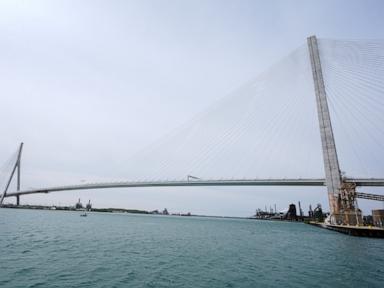
A $6.4 billion engineering marvel now stretches across the Detroit River, but nobody on the American side is raising a champagne glass with Ottawa.
The Gordie Howe International Bridge was supposed to debut with a grand, two-nation ribbon cutting. Canadian and American leaders were slated to stand shoulder-to-shoulder on the bridge deck, celebrating a brand-new arterial line for North American commerce.
That joint party was abruptly killed.
Canada canceled the unified ceremony and decided to hold its own solo event on July 24, leaving American officials on the sidelines ahead of the bridge’s official public traffic opening on July 27. The reason isn't complex. A fresh, high-stakes trade fight erupted after President Donald Trump announced plans for 50% tariffs on Canadian goods.
This awkward standoff is not just a minor diplomatic snub. It exposes deep economic anxiety between two trading partners that depend heavily on each other.
A Six-Lane Lifeline Standing in the Middle of a Trade War
For nearly a century, commercial truck traffic between Detroit and Windsor relied almost entirely on the privately owned Ambassador Bridge. That single bottleneck carried billions in trade every year, creating massive vulnerability for auto manufacturers, agricultural suppliers, and regional shippers.
The Gordie Howe Bridge fixes that structural fragility.
Spanning 1.5 miles and standing 151 feet above the river, the six-lane bridge gives freight carriers a modern route equipped with state-of-the-art border inspection plazas. Named after the legendary Detroit Red Wings hockey icon, the span represents years of intense planning, massive spending, and heavy political wrestling.
Canada shouldered the vast financial burden. Ottawa paid roughly $6.4 billion to build the structure under an arrangement to recover costs through toll revenue. Yet right when truck drivers prepare to roll across the river, the economic foundation under the bridge is shaking.
More than 70% of Canadian exports head straight into the United States. Detroit stands as the busiest land port for commercial truck traffic along the entire Northern border. When tariffs flare up, this exact crossing feels the pain first.
How 50 Percent Tariffs Blew Up the Ribbon Cutting
The immediate spark for the canceled joint event was the White House's move to invoke Section 338 of the 1930 Tariff Act. That rarely used legal authority allows sweeping duties on foreign goods. The administration aimed a massive 50% tariff penalty at Canadian imports, accusing Ottawa of discriminatory trade practices targeting American automobiles, dairy, and alcohol.
Canadian officials made their frustration clear. Infrastructure Minister Gregor Robertson’s office stated bluntly that celebrating together while under threat of punitive trade measures would be completely inappropriate.
"It's regretful that we're at this point in time with our trade relationship. We're hopeful for better days ahead," acknowledged Windsor Mayor Drew Dilkens.
This is hardly the first political obstacle the bridge faced. Earlier in the year, political disputes flared over construction materials, US content quotas, and the distribution of toll revenue. Washington pushed for early revenue sharing, resulting in a recent deal where the US gets 50% of net toll revenues through 2041.
Despite those political compromises, the tariff threat proved to be a bridge too far for Canadian leadership.
Why the Detroit Windsor Corridor Matters to Everyone
It is easy to dismiss this spat as political theater, but the financial reality on the ground is dead serious. Supply chains across North America operate on tight schedules.
Think about how an automobile gets built in North America:
- Auto parts frequently cross the Detroit River multiple times before final assembly.
- Engine components built in Ontario travel to Michigan plants within hours.
- Staging yards in Detroit depend on reliable, predictable border processing.
- Agricultural exports rely on fast passage to prevent spoilage.
If new tariffs force manufacturers to scramble or adjust supply chains, the presence of a shiny new bridge won't shield businesses from rising costs. High tariffs hit consumer prices, squeeze profit margins for middle-market logistics firms, and slow down factory lines on both sides of the border.
Navigating the Border Ahead
Trucking fleets, logistics providers, and supply chain managers cannot afford to wait around for political tempers to cool. The bridge opens to traffic on July 27, and companies need clear operational plans.
Here is what cross-border logistics operators should execute immediately:
- Verify tariff classification codes: Audit your harmonized system (HS) codes now to determine exact exposure to upcoming trade penalties before goods reach the customs plaza.
- Test route options early: Map out transit times across the new Gordie Howe span versus the Ambassador Bridge to determine customs processing speeds during initial opening week.
- Review USMCA documentation: Ensure origin certificates are airtight so qualifying goods aren't inadvertently hit with unexpected duties at entry points.
- Build tariff contingency surcharges: Adjust contract terms with freight clients to address sudden, policy-driven duty increases without eating the financial loss yourself.
Political spats will come and go across the Detroit River, but physical trade routes last for generations. Canada will cut its ribbon alone, the trucks will start rolling on Monday, and businesses on both sides must adapt quickly to the new economic reality.