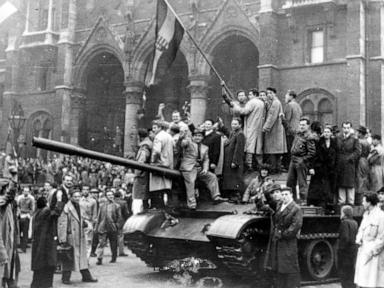
Seventy years after Soviet tanks rolled down the avenues of Budapest to crush a desperate nation's plea for freedom, the Hungarian capital stands at the center of a very different kind of European reckoning. Prime Minister Péter Magyar didn't just host a solemn historical commemoration this week. He used the 70th anniversary of the 1956 Hungarian Revolution to signal a dramatic, hard-fought realignment of Budapest’s relationship with Brussels.
For years, the country's posture toward the European Union was defined by stubborn isolation, perpetual gridlock, and constant institutional warfare. That era is over. With more than forty foreign delegations descending on Kossuth Square—including European Commission President Ursula von der Leyen and European Council President António Costa—Hungary is signaling a return to the Western fold.
Turning the Page on a Decade of Isolation
If you watched European summits over the past decade, you saw a familiar script. Hungary stood apart, blocking aid packages, clashing over rule-of-law standards, and treating Brussels like an occupying adversary rather than a union of shared values.
Péter Magyar's rise to power changed the diplomatic math entirely. Instead of using history as a weapon to fan anti-Western grievances, Magyar anchored his speech on the 1956 uprising to a clear, unambiguous proposition: Hungary belongs in a democratic, sovereign Europe as a reliable ally.
"We want to be reliable allies who sit at the shared table with our heads held high," Magyar declared in front of Parliament, drawing a sharp contrast with the fortune-seeking isolationism of previous years.
That shift didn't happen in a vacuum. Brussels noticed. Ursula von der Leyen’s high-profile presence alongside Magyar on October 23 wasn't merely ceremonial; it was a pragmatic endorsement of a fresh start. The EU executive is ready to mend fences, provided Budapest proves its commitment to democratic norms and cooperative governance.
The Ghost of 1956 Still Hangs Over the Danube
History matters deeply in Central Europe, and the ghost of 1956 remains a living memory. On October 23, 1956, ordinary students, workers, and citizens rose up against Stalinist oppression and Soviet military dominance. For two brief, euphoric weeks, freedom seemed within reach.
Then came the Red Army. The brutal Soviet intervention killed roughly 3,000 civilians, battered the city into ruins, and forced nearly 200,000 Hungarians to flee across borders. For decades under communist rule, mentioning the revolution was a prison offense. Even after the fall of the Iron Curtain, political factions often squabbled over who truly owned the legacy of 1956.
By welcoming top EU officials to Kossuth Square, Magyar tied the historic struggle against Soviet tanks directly to the modern struggle for European integration and democratic sovereignty. It's a powerful narrative shift. Instead of framing European integration as a threat to national identity—a favorite tactic of nationalist politicians—Magyar framed the EU as the natural home for a free and independent Hungary.
What This Reset Means for the European Union
Of course, a single anniversary speech doesn't solve every underlying policy dispute overnight. Deep-seated tensions don't vanish just because world leaders gather for a gala performance at the National Opera and listen to flag-raising ceremonies.
Significant friction points remain. Budapest has recently raised eyebrows by throwing roadblocks into the membership processes for neighboring nations like Ukraine and Moldova. Diplomatic hurdles won't magically disappear simply because a new administration occupies the prime minister's office.
Yet the diplomatic atmosphere has transformed overnight. António Costa’s presence underscores that Brussels is eager to keep open channels of communication rather than default to punitive freezes. When European leaders arrive in Budapest in droves, it sends a clear signal that the EU prefers engagement and reform over permanent estrangement.
The real test begins tomorrow. Magyar has promised a reliable partnership, but maintaining that course while managing domestic political pressures will require immense political capital.
Hungary has chosen its table. Now comes the hard work of breaking bread.
Ursula von der Leyen, Costa and Péter Magyar Unite in Budapest
This video captures the historic gathering in Budapest where European leaders and Prime Minister Péter Magyar commemorated the 1956 revolution.
http://googleusercontent.com/youtube_content/1



