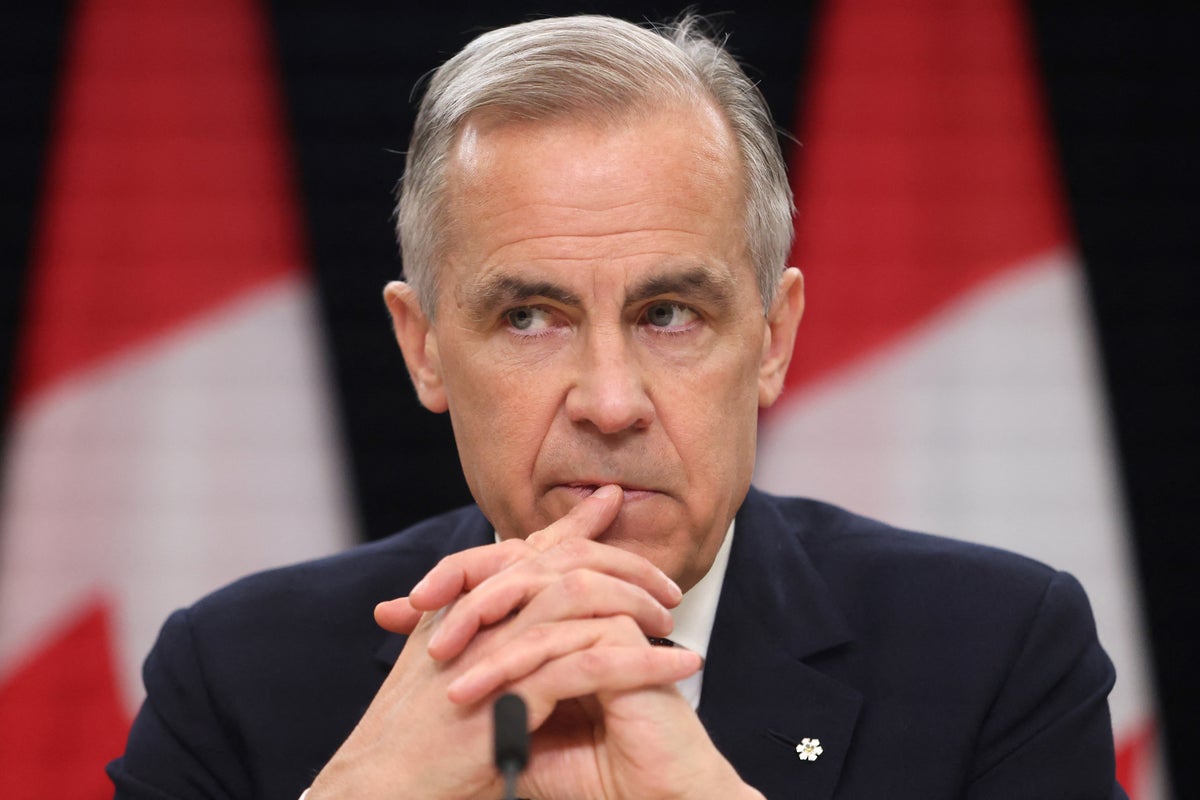
Canada just made a massive statement about its geopolitical independence, and Washington isn't going to love it.
Prime Minister Mark Carney's government officially finalized a $1.75 billion agreement ($2.5 billion in Australian dollars) to buy a highly advanced long-range radar system from Australia. This isn't just another routine procurement order. It's the first time Australia has ever exported its prized over-the-horizon radar technology, and Canada intentionally chose it over comparable options from the United States. For a closer look into this area, we suggest: this related article.
The contract was signed in Canberra by Australian Defense Minister Richard Marles and Canadian Secretary of State for Defense Procurement Stephen Fuhr. It cements a partnership born out of a stark new reality. Ottawa realizes it can no longer rely solely on its southern neighbor for national security.
The Search for Arctic Sovereignty
For decades, the standard playbook for Canadian defense was simple. You look to the United States, coordinate through NORAD, and buy American hardware. Mark Carney threw that playbook out the window shortly after taking office. For further information on the matter, comprehensive reporting can also be found at Al Jazeera.
The Arctic is melting. Shipping lanes are opening up. Russian and Chinese presence in the Far North is growing every month. Yet, Canada's ability to actually see what is happening in its own northern backyard has been embarrassingly outdated. Traditional radars operate on a line-of-sight basis. They can't see past the horizon because the Earth curves. If a low-flying missile or a stealth aircraft creeps over the Arctic cap, Canada's legacy systems wouldn't spot it until it was practically overhead.
That is where Australia comes in. The Australians have spent more than 40 years developing and refining the Jindalee Operational Radar Network, or JORN. Because Australia has a massive, isolated coastline to protect, they built a system that doesn't care about the Earth's curvature.
Instead of shooting signals straight ahead, this system fires high-frequency electromagnetic waves directly up into the sky. Those waves bounce off the ionosphere—an electrically charged layer of the atmosphere miles above the dirt—and reflect back down to Earth thousands of kilometers away. When those signals hit a target, they bounce back up to the ionosphere and return to the receiver.
It lets you see things up to 3,000 kilometers away. For Canada, that means a clear view from the southern border right up into the deep Arctic.
Why Washington Got Left Behind
You have to look at the political climate to understand why Carney bypassed the US defense sector. Ever since Donald Trump floated erratic ideas about trade walls and even bizarrely hinted at annexing parts of Canada, Ottawa has been on edge. Carney has been vocal about the fact that Canada needs to protect its own sovereignty without constantly begging for American approval or relying on an ally whose domestic politics change wildly every four years.
By choosing BAE Systems Australia and the Australian government as partners, Canada gets world-class technology without the political strings that often come with American foreign military sales. Washington likes to control how its tech is used, where it's deployed, and who gets to look under the hood. Australia, on the other hand, is treating Canada as a true equal in the future development of this technology.
Stephen Fuhr put it plainly during the press conference in Canberra. He pointed out that as the world adjusts to intense economic and strategic pressures, Australia is the strongest partner Canada could ask for. They share a Commonwealth history, they are both part of the Five Eyes intelligence alliance, and they don't have the baggage of a superpower neighbor trying to dominate the relationship.
Building the System in Two Hard Phases
This isn't just a conceptual agreement. The money is allocated, the contracts are signed, and the engineering timeline is already set.
The first part of the plan is called the Arctic Over-the-Horizon Radar, or A-OTHR. The transmitting and receiving stations for this phase won't actually sit in the freezing cold of the deep north. Instead, they will be built in southern Ontario, specifically around the Kawartha Lakes region.
Building it in southern Ontario makes a ton of sense logistically. The infrastructure is already there, construction is cheaper, and the radar's massive 3,000-kilometer reach means it can peer right over the entire country into the Arctic airspace anyway. The government expects this Ontario-based setup to be fully operational by 2029.
The second phase is where things get complicated. Canada plans to build a second system called the Polar Over-the-Horizon Radar, or P-OTHR. This one will be placed deep inside the Canadian Arctic Archipelago, a sprawling network of more than 36,000 islands north of the mainland.
The exact coordinates for the polar system are highly classified. Building giant radar arrays—which consist of massive fields of antennas stretching nearly 1.6 kilometers in length—in sub-zero environments is an engineering nightmare. The ground is permafrost, weather conditions are brutal for most of the year, and supply lines are nonexistent. But if Canada wants to secure its northern border against modern cruise missiles and hypersonic threats, it has to happen.
Boosting the Canadian Defense Industry
One of the biggest flaws in previous Canadian defense deals was that money flowed out of the country and stayed out. This deal avoids that trap. BAE Systems Australia is locked into an agreement to work directly with Canadian domestic aerospace and defense firms.
Instead of just buying a finished box of electronics from Australia, Canadian engineers will help build, maintain, and upgrade the system. This transfers critical technical knowledge directly into the Canadian economy. If something breaks in 2032, Canadian technicians won't have to wait for an American or Australian contractor to fly in with spare parts. They'll have the capability to fix it themselves.
This fits perfectly with Canada's updated Defense Industrial Strategy, which focuses heavily on self-reliance. The total cost for the entire modernization program, including future phases and expanded Arctic bases, is projected to reach around $6 billion. That is serious money, and keeping a chunk of it within Canadian borders is a smart play by Carney's administration.
Australia Bags a Historic Export Win
Over in Canberra, the mood is celebratory. This deal represents the single largest defense export agreement in Australian history.
Before this, Australia's biggest defense export was a 2024 deal worth roughly $700 million to supply Germany with 100 Boxer heavy weapon carrier vehicles. The Canadian radar deal blows that out of the water. It proves that Australia can develop high-tech, sovereign defense capabilities that other advanced nations desperately want to buy.
Prime Minister Anthony Albanese wasted no time praising his country's defense tech sector, labeling JORN an incredible domestic success story. For Australia, this brings in massive revenue and helps share the ongoing research and development costs of keeping the radar network updated against modern stealth threats.
What Happens Next
If you're watching how global power shifts, this deal is a clear indicator that middle powers are banding together to form their own security webs. You don't always have to run to Washington or Beijing to get things done.
For Canada, the immediate next steps involve breaking ground on the southern Ontario sites. Environmental assessments, land prep, and initial component manufacturing will dominate the next 12 to 18 months.
Keep an eye on the classified site selections for the second polar phase in the Arctic Archipelago. That is where the real geopolitical friction will show up, especially as Russia continues to militarize its own side of the Arctic Circle. Canada just took a major step toward defending its own turf, and they did it on their own terms.