The numbers coming out of the Democratic Republic of the Congo right now are grim. Official data from the Congolese Ministry of Health shows 999 recorded deaths and 2,473 confirmed cases. That milestone took just over two months.
To put that into context, the catastrophic 2013-2016 West Africa outbreak took nearly eight months to reach 1,000 deaths. The 2018 outbreak in North Kivu took about 235 days to cross the 1,000-case mark. This current crisis hit that same threshold in roughly 40 days.
It's officially the fastest-spreading Ebola outbreak on record.
Why is it moving so fast? The answer comes down to a lethal combination of biology, violent conflict, and systemic breakdown.
The Threat of the Bundibugyo Strain
Most people hear "Ebola" and think of the Zaire strain, which was behind the major outbreaks in West Africa and North Kivu. For Zaire, public health agencies eventually developed usable vaccines, like Ervebo.
This outbreak is different.
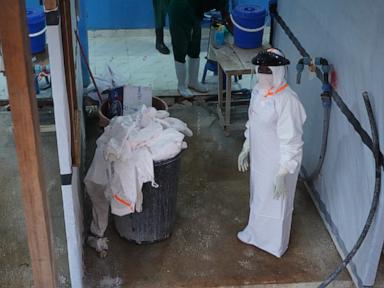
It's driven by the Bundibugyo virus, one of the rarer species of the Orthoebolavirus genus. There are no approved vaccines for Bundibugyo. There are no targeted monoclonal antibody treatments. Doctors on the ground in Ituri province can only provide supportive care — fluids, electrolytes, and symptom management — while watching the body fight off a hemorragic fever.
When you don't have a vaccine to ring-fence contacts, containing the spread relies entirely on traditional public health steps: trace every contact, isolate every suspect case, and bury the deceased safely.
And that's where the strategy falls apart in eastern Congo.
A Crisis Fueled by Conflict and Distrust
You can't separate disease response from geography. Eastern Congo has been gripped by armed conflict for decades, with dozens of rebel groups, including the ADF, operating across Ituri and North Kivu.
Healthcare workers can't simply drive out to rural villages to trace contacts. In many health zones, aid workers face immediate physical danger. Medical vehicles have been pelted with stones, and field facilities have faced direct threats.
Community resistance is another massive hurdle. Years of instability have bred intense distrust toward outside interventions, government agencies, and foreign aid groups.
When family members fall ill, many households choose to care for them at home rather than send them to an isolation unit. When patients die, traditional burial customs involving physical contact with the body continue in secret. Because Ebola load peaks right at the time of death, unmonitored burials act as super-spreader events.
The result? The Africa CDC reports that over 60% of deaths in this outbreak are happening in the community before patients ever reach a healthcare center. Worse, less than 9% of potential contacts are currently being tracked.
When 80% of new cases stem from unknown chains of transmission, health teams aren't managing an outbreak — they're chasing a ghost.
The Internal Strike and Missing Resources
Add labor issues to the security nightmare. Frontline Congolese health workers have gone on strike during this response, pointing out that many haven't been paid since the outbreak was declared back in May.
When responders aren't compensated, supplies run out, and basic burial kits are unavailable, the system collapses from within. In several affected health zones, there aren't even operational burial teams to deploy when a death is reported.
Dr. Jean Kaseya, Director-General of the Africa CDC, put it bluntly at a recent health summit in Ghana: if international and local efforts aren't scaled up immediately, this could turn into one of the worst viral catastrophes ever documented.
What Needs to Happen Now
Containing a fast-moving, untreatable strain in a conflict zone requires a pivot in how the response is handled.
- Prioritize Community-Led Response: Forcing top-down protocols through security escorts often deepens local hostility. Local leaders, religious figures, and trusted community members must lead the educational outreach around safe burials and symptom reporting.
- Pay the Frontline Workers: International funding must directly guarantee salaries and protective equipment for local doctors, nurses, and burial crews on the ground.
- Accelerate Clinical Trials: While no Bundibugyo vaccine is market-ready, candidate therapeutics and emergency trial protocols need rapid-track approval to evaluate experimental treatments safely in field settings.
- Scale Regional Surveillance: Cross-border trade between eastern DRC, Uganda, and neighboring regions means case detection systems must remain active far beyond the immediate epicenter in Ituri.
Monitoring the situation through official updates from the World Health Organization and the Africa CDC provides verified reporting as field teams work to regain control of transmission chains.