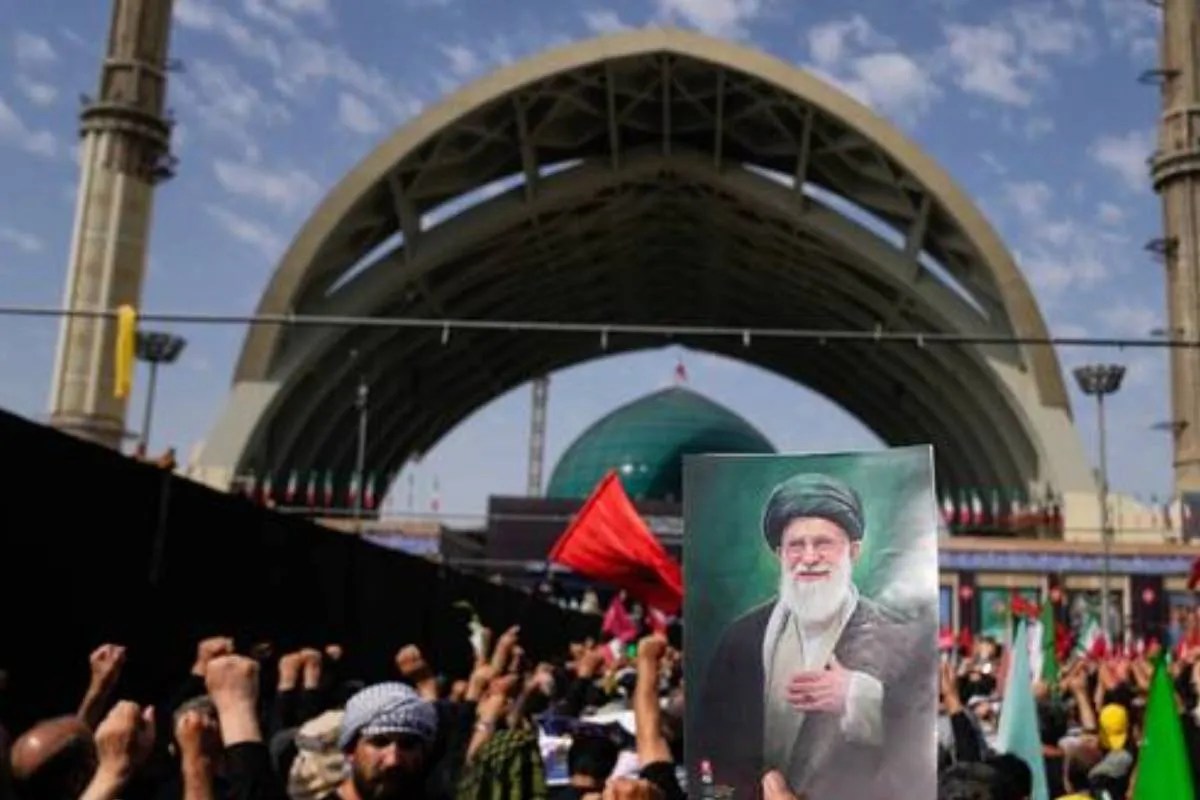
Hundreds of thousands of mourners packed Tehran’s Grand Mosalla complex on Sunday. They chanted, wept, and strained their eyes toward the front lines of the massive religious gathering. The occasion was the second day of a week-long state funeral for Iran’s long-serving Supreme Leader, Ayatollah Ali Khamenei, who was killed back in late February during an intense wave of US and Israeli airstrikes.
But the massive crowd wasn't just looking at the coffin topped with the late leader's signature black turban. They were looking for his successor. If you liked this post, you should check out: this related article.
When the prayers started, three of Khamenei’s sons stood prominently near the casket, visibly devastated. But the one man the entire country expected to see—his second son and newly appointed Supreme Leader, Mojtaba Khamenei—was nowhere to be found.
His absence sent shockwaves through the crowd and sparked instant rumors across the region. If you want to understand the fragile state of Iran’s leadership right now, you have to look closely at this missing figure. For another perspective on this event, see the latest coverage from Al Jazeera.
Why Mojtaba Khamenei Was Missing from the Grand Mosalla
The official explanation from inside the regime circles points toward security concerns and injuries. Reports surfaced right after the February 28 airstrikes that Mojtaba was wounded in the exact same attack that claimed his father’s life. Since being named the new Supreme Leader shortly after the assassination, Mojtaba hasn't made a single public or televised appearance. He’s only issued written statements.
Some regime insiders claim he’s physically recovered, and that keeping him hidden is pure operational security. With the Middle East currently holding its breath during a tense, fragile ceasefire, the regime can't risk its new head of state sitting out in the open.
Yet, for ordinary Iranians and regional analysts, the absence signals something deeper. It highlights a massive vulnerability at the very top of the theocracy. The regime desperately needs to project stability and strength after five weeks of devastating conflict. Instead, they presented a leaderless stage.
The Three Sons Who Did Show Up
While Mojtaba stayed in the shadows, his three brothers stepped into the intense media spotlight. It’s a rare sight. Khamenei’s other sons usually keep a very low profile, avoiding the political theater of Tehran.
Here is who actually stood by the casket on Sunday:
- Mostafa Khamenei: The eldest son. He’s a senior Shiite cleric who wields quiet, substantial influence within the religious establishment in Qom. He has always steered clear of official government roles.
- Masoud Khamenei: The third son. He runs the massive bureaucratic machine known as the Office for Preserving and Publishing Khamenei’s Works. This gives him control over the late leader’s vast media and communication networks.
- Meysam Khamenei: The youngest brother. He also works within the family’s media preservation office and has historically avoided any public political posturing.
Seeing them weep openly alongside high-ranking military commanders like Quds Force chief Esmail Qaani and Revolutionary Guards commander Ahmad Vahidi was a calculated move. The regime wanted to show family unity. They wanted to show that the Khamenei lineage remains unbroken and committed to the state. But it didn't completely work. Without Mojtaba, the display felt incomplete.
A Nation Tearing Between Revenge and Diplomacy
The atmosphere on the streets of Tehran isn't just one of grief. It's filled with boiling anger. People don't just want to mourn; they want payback.
During the ceremonies, the crowds aggressively chanted for vengeance against the US and Israel. This puts President Masoud Pezeshkian and Parliament Speaker Mohammad Bagher Ghalibaf in a brutal political bind. Ghalibaf is currently acting as the chief negotiator in back-channel talks with Washington to prevent the current ceasefire from collapsing into total ruin.
Many hardline mourners at the funeral openly expressed disgust at the idea of talking to the West. The consensus among the regime's core loyalists is clear: any diplomatic compromise is a betrayal of the martyred leader. If Mojtaba remains hidden, it makes it much harder for the government to sell a peaceful de-escalation to its own radical base.
What to Watch Next as the Procession Continues
This state funeral is a logistical marathon designed to rally the public. The casket moves through a highly symbolic route over the coming days, and each stop will be a test of the regime's control.
Monday brings a massive procession through the main avenues of Tehran. By Tuesday, the body moves to the clerical hub of Qom to solidify backing from senior theologians. On Wednesday, the cortege takes an international detour into Iraq, stopping at the holy Shia cities of Najaf and Karbala, before finally returning to Iran for burial in Mashhad on Thursday.
Keep your eyes on the Thursday burial. If Mojtaba Khamenei doesn't show his face by the time his father is lowered into the ground in Mashhad, the questions about his health, his safety, and his actual grip on power will become impossible for Tehran to ignore. Watch the shifting rhetoric of the military commanders during these stops. That's where the real clues about Iran's next move are hiding.