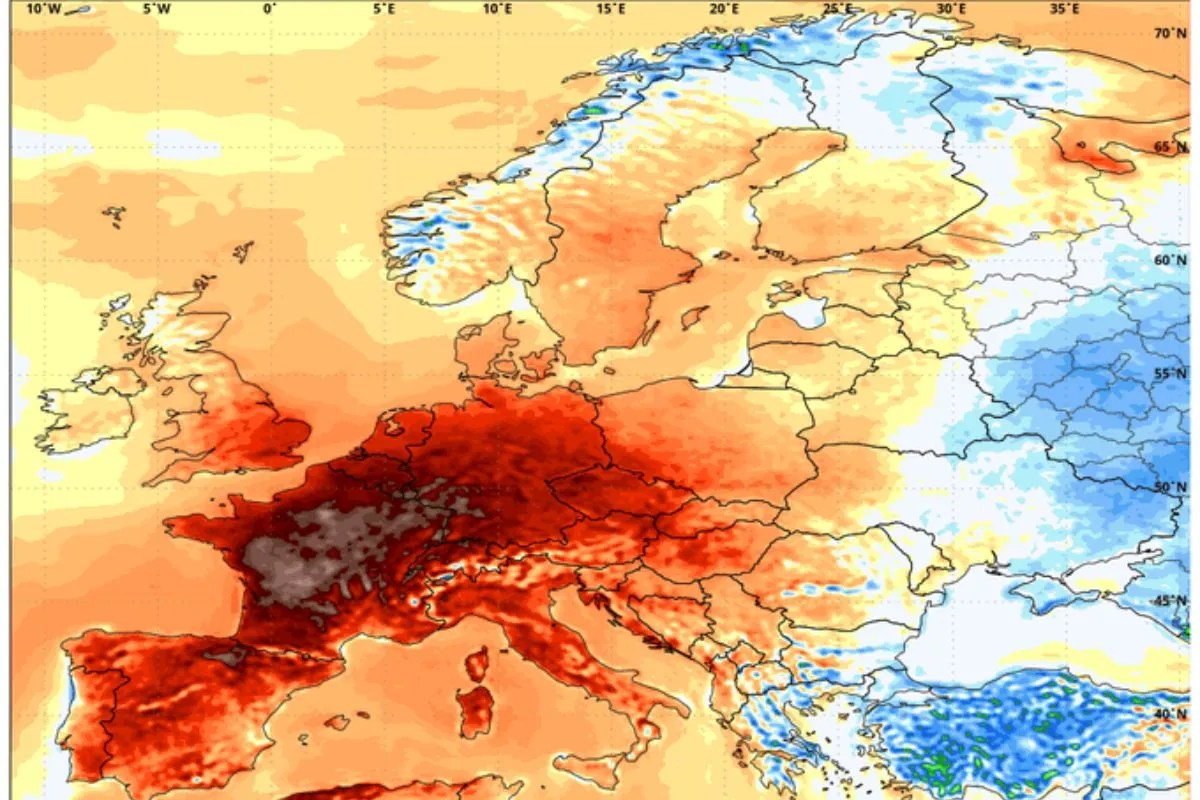
Summer in Europe is changing. The days of effortlessly sipping wine at an outdoor Parisian cafe during a July afternoon are colliding with a brutal, dangerous reality. Right now, a massive heatwave is scorching the continent, forcing governments to take unprecedented, aggressive steps that look more like lockdown protocols than summer management.
If you think this is just another warm week in June, you're missing the bigger picture. This isn't just about high numbers on a thermometer. It's about a fundamental shift in how cities have to function to prevent widespread medical emergencies and infrastructure collapse. France just put 35 of its 96 mainland departments under a strict red heatwave alert, with expectations that the extreme danger zone could expand to nearly 50 regions within 24 hours. Temperatures are soaring past 40°C (104°F) from the southwest straight through Paris and into Burgundy, forcing officials to completely alter public life. Discover more on a connected subject: this related article.
The Public Drinking Ban Everyone Is Talking About
The headline making everyone double-take is France's preemptive strike against public alcohol consumption. Prime Minister Sebastien Lecornu announced a strict ban on public drinking inside the red alert zones. This wasn't a puritanical decision. It came right out of a crisis meeting aimed at keeping people out of the hospital.
The timing couldn't be worse for locals. The heat wave peaked exactly during France's annual Fete de la Musique—a massive nationwide summer solstice celebration where millions of people crowd village squares, alleyways, and Paris parks for free outdoor concerts. Further journalism by NBC News explores similar views on this issue.
Why target alcohol during a heatwave? The logic is purely medical, and it highlights a common mistake people make when trying to cool down:
- Vasodilation and Blood Pressure: Alcohol dilates your blood vessels. Extreme heat does the exact same thing. When combined, your blood pressure can drop dramatically, leading to dizziness, fainting, or sudden heat stroke.
- The Dehydration Illusion: A cold beer feels hydrating, but alcohol inhibits vasopressin, the hormone that tells your kidneys to hold onto water. You end up losing far more fluid than you put in.
- Medical Resource Allocation: Emergency services are already stretched thin dealing with heat stroke among elderly citizens and the vulnerable. Banning public drinking reduces alcohol-fueled injuries and heat complications, allowing medics to focus strictly on saving the lives of those who can't protect themselves.
Organizers of the music festival were ordered to limit alcohol sales aggressively. Even high-profile indoor cultural events aren't safe. The Louvre Museum scrapped a massive free concert scheduled under its iconic glass pyramid because the structure essentially becomes a greenhouse in 40-degree weather.
Infrastructure Is Melting From the Inside Out
We tend to look at heat waves as a human health issue, but Europe's core infrastructure simply wasn't built for a world that regularly stays above 38°C (100.4°F).
Take the rail network, for example. France's national rail authority had to cancel scores of trains and deploy thousands of extra staff to monitor tracks. When steel rails get baked by a relentless sun, they absorb heat far beyond the air temperature. They expand, warp, and buckle—a phenomenon known as "sun kinks." If a train hits a warped rail at high speed, it derails. The overhead electrical cables also sag in intense heat, threatening to snag on moving trains and take down the entire power line.
Extreme Heat -> Steel Rails Expand -> Buckling/Warping -> Train Derailments
Extreme Heat -> Power Cables Sag   -> Line Snags       -> Total Grid Failure
Then there is the energy sector. The French government has quietly ordered tightened surveillance on water supplies flowing to its vast network of nuclear reactors. Nuclear power plants rely heavily on nearby river water to cool their systems. When river temperatures get too high, pumping that water back out into the ecosystem kills local fish populations. If the rivers get too warm or run too low, these massive power stations have to throttle their electricity output—precisely when everyone is turning on whatever cooling systems they have.
This Is Not Just a French Problem
While France is taking the most rigid policy measures, the rest of Western Europe is dealing with the exact same oven.
In Germany, the DWD weather service issued sweeping alerts as temperatures hovered near 38°C. The real danger in Germany isn't just dry heat; it's the suffocating humidity. This combination creates a high humidex, which triggers severe, erratic thunderstorms. Over the weekend, organizers of the Berlin Open tennis tournament had to completely halt the final and evacuate the entire stadium due to sudden, dangerous weather shifts.
Across the English Channel, Britain's Met Office issued amber extreme heat warnings for major chunks of England and Wales. What worries UK health experts the most aren't the daytime peaks, but what they call "Tropical Nights." These occur when overnight temperatures refuse to drop below 20°C (68°F). When a house doesn't cool down at night, the human body never gets a chance to recover from the daytime heat stress, causing a dangerous cumulative toll on cardiovascular systems over three or four days.
In Rome and Madrid, tourism has turned into a high-stakes endurance challenge. Tourists are queuing outside the Colosseum under a blistering sun, using public fountains just to wet their faces and limbs. In Spain, football fan zones have been shut down completely to prevent mass heat exhaustion.
How to Navigate a European Heatwave Safely
If you are currently traveling through Europe or living in a region impacted by these red alerts, standard vacation advice won't cut it. You need to adapt to how locals are surviving.
First, rewrite your daily schedule. Do not change your habits; change your hours. The mid-day sun between 12:00 PM and 4:00 PM is a dead zone. Major cities like Paris have ordered public parks to stay open 24 hours a day. Utilize these green spaces during the late-night hours when the concrete buildings start radiating their trapped heat.
Second, respect the water restrictions and warnings. With natural bodies of water seeing record crowds, multiple drownings have already been reported across France and Germany as people desperately dive into unmonitored rivers and lakes to cool off. If you are going to swim, use designated zones like the Canal Saint-Martin in Paris, where authorities have officially set up supervised cooling areas.
Finally, keep a close eye on transport apps. Do not rely on tight train connections or expect schedules to run flawlessly. Expect delays, look for misting stations at major hubs, and always carry double the amount of water you think you will need before stepping onto a platform.
The heat isn't going away anytime soon, and the old European summer is officially a thing of the past. Stay informed, stay sober in public zones, and give the emergency services the space they need to do their jobs.