Stop waiting for a miracle in Pyongyang. It isn't happening.
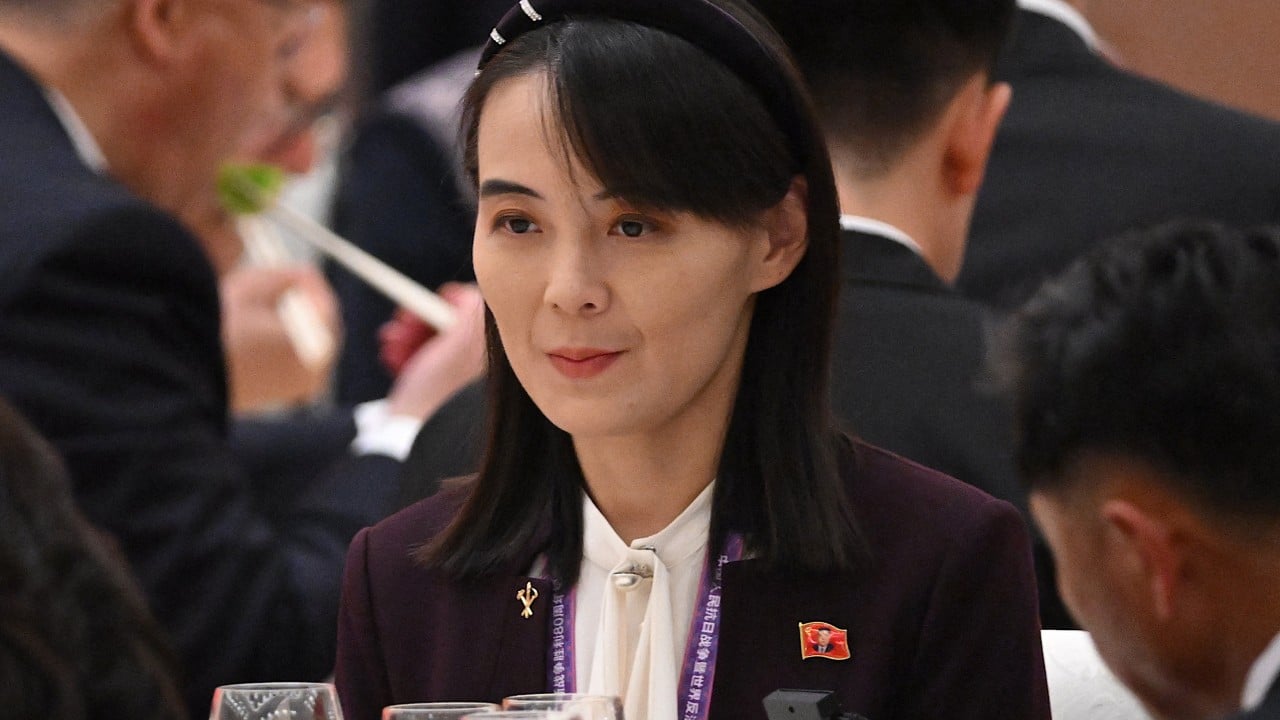
Kim Yo Jong just called out the international community. The powerful sister of North Korean leader Kim Jong Un dropped a reality bomb during the International Atomic Energy Agency's recent conference in Vienna. Her message was simple. Anyone holding out hope for North Korea nuclear weapons to magically disappear is, in her exact words, an idiot.
Honestly, she isn't entirely wrong about the delusion part.
We keep treating North Korea's atomic arsenal like a temporary problem we can negotiate away with enough sanctions or summit photo ops. That era is over. Pyongyang has legally enshrined its status as a nuclear-armed state. They declared their atomic arsenal permanent and irreversible.
You need to accept the new reality. North Korea is a nuclear power. It is going to stay a nuclear power. Hoping they just change their minds is a massive diplomatic failure.
The Reality of North Korea Nuclear Weapons
If you think diplomacy alone will disarm Kim Jong Un, you're kidding yourself. Look at the data. US President Donald Trump recently claimed in August 2026 that Pyongyang sits on 57 "very powerful" nuclear weapons. Seoul's intelligence estimates put that figure much higher. They believe the stockpile ranges between 80 and 120 warheads.
That isn't a bargaining chip. That is an existential insurance policy.
When Kim Yo Jong says their nuclear status is "absolute" and "cannot change even a bit," she means it. The regime watched what happened to Muammar Gaddafi in Libya after he surrendered his nuclear program. They saw the collapse of Saddam Hussein. They took notes. Basically, they decided that holding onto their warheads is the only way to guarantee regime survival.
I have tracked geopolitical security trends for years. The pattern is painfully obvious. Every time Western powers demand denuclearization, Pyongyang accelerates its missile testing. They use our demands as justification to build more.
Why the World Stays Stuck in Denial
The diplomatic world suffers from a severe case of cognitive dissonance. The IAEA holds conferences in Vienna. Diplomats give stern speeches. They issue the same tired resolutions demanding complete, verifiable, and irreversible denuclearization.
Kim Yo Jong called this "familiar silly talk." She has a point.
It takes zero geopolitical expertise to see that the 2019 Hanoi summit was the final nail in the coffin for disarmament. When those talks between Trump and Kim collapsed over sanctions relief, Pyongyang shifted gears. They stopped pretending they might give up the bomb. Instead, they doubled down. They upgraded their delivery systems, tested solid-fuel ICBMs, and locked their nuclear status into their constitution.
How This Arsenal Directly Impacts You
You might think a nuclear North Korea only matters to South Korea or Japan. You would be wrong.
The existence of 100-plus North Korean nuclear weapons creates a massive ripple effect. It forces South Korea to debate building its own nuclear deterrent. It pushes Japan to rethink its pacifist constitution and double its defense spending. This sparks a regional arms race that drags in China, Russia, and the United States.
When regional tensions spike, global markets react. Supply chains running through the South China Sea and the Sea of Japan face heightened risks. If you run a business heavily dependent on East Asian manufacturing, North Korean missile tests aren't just news. They are direct threats to your bottom line.
The Real Issue With Counting Warheads
Let's talk about the gap between Washington's numbers and Seoul's numbers. Trump says 57. South Korea says up to 120.
This discrepancy matters.
If North Korea has 50 weapons, they have a basic deterrent. If they have 120, they have second-strike capability and enough surplus to potentially sell technology to other rogue actors. The intelligence community struggles to get an exact count because Pyongyang hides its facilities deep inside mountains. We rely on satellite imagery of uranium enrichment plants and plutonium reactors. It is educated guesswork.
But the exact number kinda misses the point. Ten warheads or a hundred. The threat is identical. They have enough firepower to obliterate major cities across Asia and reach the US mainland.
Hanoi Haunts Current Diplomacy
Let's rewind to February 2019 in Hanoi.
Trump and Kim Jong Un met with massive expectations. The world watched, genuinely believing a breakthrough was possible. It wasn't. The summit collapsed spectacularly because Washington wanted total denuclearization before lifting sanctions, and Pyongyang wanted sanctions lifted for partial disarmament.
That failure changed everything.
Since Hanoi, North Korea completely abandoned the charade. They went home, purged the diplomats responsible for the failure, and put their weapons program into overdrive. Kim Yo Jong's recent statement is just the culmination of that post-Hanoi shift. She is telling the world, very clearly, that the window for negotiation slammed shut years ago.
Learning the Wrong Lesson from Libya
If you want to know why Kim Jong Un will never give up his weapons, look at Libya. Look at Ukraine.
Muammar Gaddafi agreed to abandon his nuclear weapons program in 2003 in exchange for economic integration and security guarantees. A few years later, he was dead in a ditch, overthrown with the help of NATO airstrikes.
Ukraine gave up its Soviet-era nuclear arsenal in 1994 under the Budapest Memorandum. Russia promised to respect their borders. We all know how that turned out.
Pyongyang watched these events unfold. Their conclusion was simple and ruthless. Security guarantees written on paper are worthless. Nuclear weapons are the only currency that matters. When Kim Yo Jong calls advocates for denuclearization "idiots," she is essentially saying that anyone who thinks North Korea will volunteer for the Gaddafi treatment is completely detached from reality.
Legal Locks on the Arsenal
This isn't just tough talk. North Korea actually changed its laws.
In September 2022, they passed a law declaring their nuclear status "irreversible." Then they went a step further. They enshrined their nuclear-armed status into their constitution. This is a massive legal barrier. In the North Korean system, the constitution is supreme. Reversing it would require Kim Jong Un to admit a strategic error, which is impossible in a regime built on his absolute infallibility.
They codified the right to use preemptive nuclear strikes if they perceive an imminent threat to their leadership.
Let that sink in. They don't just have the weapons. They have a legal framework to use them first. The international community keeps sending diplomats to argue against a brick wall.
Seoul Faces a Terrible Choice
Seoul is watching all of this with intense anxiety.
The South Korean Unification Ministry correctly noted that Kim Yo Jong's timing isn't accidental. With Trump recently expressing a willingness to pursue dialogue again and boasting about Pyongyang's 57 weapons, North Korea is setting the baseline for any future interactions. They are drawing a line in the sand.
South Korea sits in the crosshairs. That terrifying reality is pushing South Korean public opinion toward a drastic solution. Recent polls consistently show a majority of South Koreans want their own nuclear weapons. They are losing faith in the American nuclear umbrella. Can you blame them? If North Korea can threaten Los Angeles or New York with an ICBM, will a US president risk American cities to save Seoul?
That is the exact doubt Pyongyang wants to plant.
An Unacknowledged Arms Race
We are already in the middle of a massive East Asian arms race.
Japan is doubling its defense budget. They are buying Tomahawk missiles. South Korea is developing submarine-launched ballistic missiles and hypersonic glide vehicles. China is rapidly expanding its own nuclear silo fields.
Every time the IAEA meets in Vienna and issues a toothless demand for North Korean disarmament, the actual players in Asia are busy buying more guns. The diplomatic statements are just background noise to the actual military buildup happening right now.
Why the IAEA is Wasting Its Breath
The International Atomic Energy Agency does incredible work around the world. But when it comes to North Korea, they are completely paralyzed.
Kim Yo Jong issued her statement specifically because the IAEA was holding its General Conference. The agency routinely passes resolutions calling on North Korea to comply with the Non-Proliferation Treaty. They demand inspectors be allowed back into the Yongbyon nuclear complex.
Pyongyang kicked the inspectors out in 2009. They haven't been back since.
Listening to these IAEA demands is like watching a referee blow a whistle at a player who left the stadium fifteen years ago. North Korea withdrew from the NPT in 2003. They simply do not care about Vienna's rules. Kim Yo Jong dismissing their demands as "familiar silly talk" is an accurate assessment of how little leverage the IAEA actually holds. The agency relies on satellite imagery and open-source intelligence to guess what is happening inside North Korean facilities. They are spectators, not regulators.
Understanding the Arsenal Numbers
Let's look closer at the warhead counts.
When Trump stated that North Korea holds 57 nuclear weapons, he was likely referencing a specific set of US intelligence briefings. But South Korean intelligence operates on a different threat matrix. They look at the sheer volume of highly enriched uranium and weapons-grade plutonium Pyongyang has produced over the decades.
Seoul's estimate of 80 to 120 warheads isn't just alarmism. It reflects maximum capacity.
If you produce enough fissile material for 120 bombs, you have to assume they built 120 bombs. In the intelligence community, underestimating a hostile power's nuclear capacity gets people killed. This numbers game dictates military strategy. A stockpile of 57 weapons means Kim Jong Un has to carefully allocate his targets. But a stockpile of 120 weapons? That changes the math entirely.
The Terrifying Shift to Tactical Nukes
This is the most terrifying development nobody wants to talk about.
North Korea isn't just building massive city-busting ICBMs anymore. They are developing smaller, tactical nuclear weapons designed for use on the battlefield. They want weapons they can strap to short-range ballistic missiles or even fire out of heavy artillery.
Why? Because tactical nukes lower the threshold for nuclear war.
If Kim Jong Un faces a conventional military defeat, he might authorize a low-yield nuclear strike on a South Korean tank formation. He would gamble that the US wouldn't retaliate with a massive strategic strike, fearing escalation. This strategy is directly copied from Russia's doctrine. It makes the Korean peninsula the most dangerous flashpoint on earth.
Moscow Changes the Math
You cannot understand North Korea's nuclear confidence today without looking at Moscow.
A few years ago, Pyongyang was isolated. China was their only reluctant benefactor. Not anymore. The geopolitical ground shifted completely. When Russia invaded Ukraine and found itself alienated from the West, Vladimir Putin turned to Kim Jong Un.
Russia needed artillery shells. North Korea had millions of them.
This transaction gave North Korea a massive economic lifeline. But more importantly, it provided diplomatic cover. Russia holds a veto on the UN Security Council. They are now actively blocking new sanctions against North Korea. They even disbanded the UN panel of experts tasked with monitoring North Korean sanctions evasion.
Pyongyang knows they have a permanent protector on the Security Council. Why would they ever give up their nuclear weapons when they are being rewarded for their defiance?
Erasing the Magical Thinking
The biggest mistake analysts make is assuming North Korea is crazy. They aren't. They are brutally rational.
Every missile test, every constitutional amendment, and every fiery statement from Kim Yo Jong serves a calculated purpose. They are normalizing their nuclear status. They want the world to get so tired of the crisis that we eventually just shrug and accept them as a nuclear state, the same way we accepted India and Pakistan.
And honestly? That strategy is working.
Sanctions have failed to stop them. Cyber heists and cryptocurrency theft fund their weapons programs despite the heaviest financial embargoes in human history. The isolation strategy is dead. North Korea found a backdoor.
A New Playbook for Reality
You have to deal with the world as it is, not as you want it to be.
First, stop demanding denuclearization as step one. It is a fairy tale. The US and South Korea need to pivot to a risk-reduction framework. This means opening military-to-military hotlines to prevent a border skirmish from escalating into a nuclear exchange.
Second, target the crypto. If you want to squeeze Pyongyang, forget about stopping coal shipments. You have to go after their elite hacker groups like Lazarus. That is where the real money for their nuclear program comes from today.
So what do you do with this information?
You stop pretending the situation will magically resolve itself. If you manage a global supply chain, you must price in the risk of sudden military escalation in East Asia. If you invest heavily in South Korean tech giants or Japanese manufacturing, understand that their operations exist under the constant shadow of a nuclear-armed neighbor whose arsenal is growing daily.
You need to diversify your regional exposure. Build redundancies into your logistics routes that bypass the immediate conflict zone.
The politicians will keep holding summits. Diplomats will keep drafting strongly worded statements. Let them. Your job is to deal with reality. North Korea's nuclear weapons are a permanent fixture of the global security architecture. Plan for it right now.