For decades, America lived with a massive, undeniable paradox. The very building that symbolizes global democracy and freedom was built, in large part, by enslaved labor. It's a factual reality that former First Lady Michelle Obama brought to the mainstream back in 2016, but for generations, that reality lacked names. We knew the system did it, but we didn't know the people.
That changed with a massive genealogical breakthrough. Through the work of the 10 Million Names Project, researchers successfully identified the first confirmed living descendants of an enslaved person who helped build the White House.
Jackie Smith Sullivan of Philadelphia and her daughter, Dr. Jasmine Swain, an Atlanta-based neuroscientist, are the direct descendants of a laborer whose hands literally shaped 1600 Pennsylvania Avenue. Sullivan discovered the laborer was her third great-grandfather; for Swain, he was her fourth.
This isn't just a feel-good piece of family trivia. It's a massive shift in how we document American history. It proves that the paper trail of erasure isn't totally permanent.
The Brutal Bureaucracy Behind the White House Construction
When the federal city was being carved out of the Maryland and Virginia swamps in the 1790s, the commissioners running the project faced a massive labor shortage. White laborers and European immigrants weren't showing up in the numbers needed to build a president's palace.
So, the government turned to slavery.
The commissioners didn't necessarily buy human beings directly for the build. Instead, they hired them. They cut deals with local slaveholders in Maryland and Virginia, paying those enslavers a monthly fee for the labor of their enslaved workers. The enslaved men did the heaviest, most hazardous work. They cleared dense forests, dug the foundations, and quarried the massive sandstone blocks from Aquia Creek in Virginia. They operated the kilns that baked the bricks.
The government kept meticulous financial ledgers. We have pay records showing the names of enslavers receiving money for "Negro hire." But the names of the actual human beings doing the work? Those were rarely written down. If they were, they were just first names on a scrap of paper or a line item next to a dollar amount.
Why Tracing African American Genealogy Is a Historical Wall
If you've ever tried to trace your family tree, you know it's a game of census records and certificates. But for Black Americans looking backward past 1870, that tree hits a brick wall.
Before the 1870 U.S. Federal Census, enslaved people weren't listed by name. They were recorded on separate documents called "slave schedules." On these sheets, human beings were reduced to ticks on a page—classified merely by age, gender, and skin color under the name of their enslaver.
To find a direct line from a living person in 2026 back to an enslaved laborer in 1792, you can't just look up your last name. You have to use advanced genealogical tactics:
- The FAN Principle: Researchers must investigate the Family, Associates, and Neighbors of the suspected enslaver. Often, the clue to an enslaved person's identity is hidden in a neighbor's property dispute or a cousin's witness statement.
- Estate Wills and Inventories: Because enslaved people were legally classified as property, they were passed down in wills alongside farm equipment, livestock, and furniture. Finding a first name listed in a 1795 probate record is sometimes the only proof a person existed.
- Freedom Records and Pension Files: Sifting through post-Civil War Freedman's Bureau records or Union military pension files often yields testimonies where formerly enslaved people explicitly named their previous owners and origins.
The 10 Million Names Project—spearheaded by American Ancestors—is trying to centralize this work. Their goal is to recover the names of the estimated 10 million people enslaved in America before emancipation. Connecting Sullivan and Swain to the executive mansion is their most high-profile proof of concept yet.
What This Discovery Changes For The Rest Of Us
It's easy to look at a historic house and think of it as a museum frozen in time. But history is alive, and it lives in our biology. For Dr. Jasmine Swain, knowing that her fourth great-grandfather built the roof that sheltered early American presidents—men who held the power to free him but chose not to—brings a strange mix of grief and intense pride.
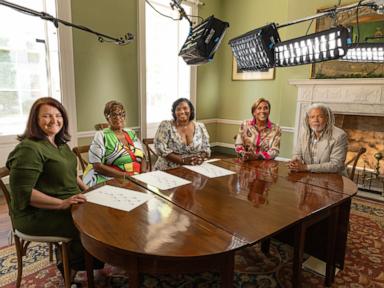
"To know that I'm a descendant of someone who helped build the White House... gives me goosebumps," Swain shared during an ABC News special with Robin Roberts detailing the find.
The discovery matters because it disrupts the traditional narrative of who built America. For centuries, our textbooks focused on the architects, the politicians, and the founding fathers. The labor was anonymous. By putting faces, names, and living descendants to that labor, the history becomes collaborative. It forces the nation to reckon with the fact that its greatest symbols of liberty were physically assembled by people denied basic human rights.
How to Start Tracing Your Own Roots Past the 1870 Wall
If this discovery proves anything, it's that the records exist—they're just scattered, buried, and incredibly tedious to parse. If you're looking to break through your own genealogical brick walls, you don't need a national news crew, but you do need strategy.
First, lock down the 1950 to 1880 census records. Work backward methodically. Don't skip generations, or you'll end up chasing the wrong family line.
Second, identify the locations where your ancestors lived immediately after emancipation. Find out who the major landholders and enslavers were in those specific counties.
Third, dive into local county court records. Digital databases like Ancestry or FamilySearch are great, but many property deeds, tax lists, and slave bills of sale are still sitting in physical courthouse basements.
It's tedious, heavy work. But as we've just seen, it can rewrite what we think we know about our families—and our country.