Decades of conflict leave scars that don't fade easily. Right now, the southern Philippines is trying to rewrite its own story.
Voters in the Bangsamoro Autonomous Region in Muslim Mindanao are heading to the polls for their very first parliamentary elections. This isn't just a standard bureaucratic update. It marks a monumental shift away from decades of bloody insurgency toward a fragile, self-determined peace. If you want to understand modern Southeast Asian politics, you have to look at what's happening right now in Mindanao.
For generations, the Bangsamoro region suffered under cyclical violence. Rebellions sparked by grievances over land, governance, and religious identity tore families apart. The signing of the historic peace accord between the Philippine government and the Moro Islamic Liberation Front (MILF) changed the math. It paved the way for autonomy. But autonomy on paper means very little without working democratic machinery.
That machinery is being tested today.
The Long Road to the Bangsamoro Autonomous Region
Let's get one thing straight. Peace deals don't magically fix institutional corruption or local clan rivalries overnight.
The creation of the Bangsamoro Autonomous Region in Muslim Mindanao, often called BARMM, was supposed to be the ultimate fix. It replaced an older, weaker autonomous arrangement that critics called a failure. The new parliament gives local leaders actual authority over their budget, health services, education, and cultural affairs.
Yet, translating a peace pact into real governance is messy. Former combatants are trading assault rifles for legislative podiums. That transition is terrifying for some and exhilarating for others. You have veterans of a guerrilla war trying to figure out parliamentary procedure, coalition-building, and public finance.
Observers often overlook the sheer scale of the administrative challenge. Building a functioning government from scratch in a war-torn area requires more than good intentions. It demands technical competence, billions of pesos, and massive amounts of patience from a population that has been let down repeatedly by Manila.
What Makes These Elections Different
Why should anyone outside the southern Philippines care about these parliamentary elections? Because Mindanao is a testing ground for how the state integrates marginalized minority populations without resorting to military rule.
Previous elections in the region were notoriously messy. Clan warfare, known locally as rido, and private armies often dictated who won local seats. Vote-buying was standard operating procedure.
This time, the rules are stricter. The introduction of a parliamentary system means voters are choosing political parties rather than just competing warlords. Parties must present platforms, even if traditional family loyalties still hold massive sway.
The MILF's political wing, the United Bangsamoro Justice Party, is fielding candidates. But they aren't running uncontested. Other regional factions, civil society groups, and independent coalitions want a piece of the pie. That competition is healthy. It proves that democracy in the region is breathing, even if it's wheezing a bit.
The Realities on the Ground
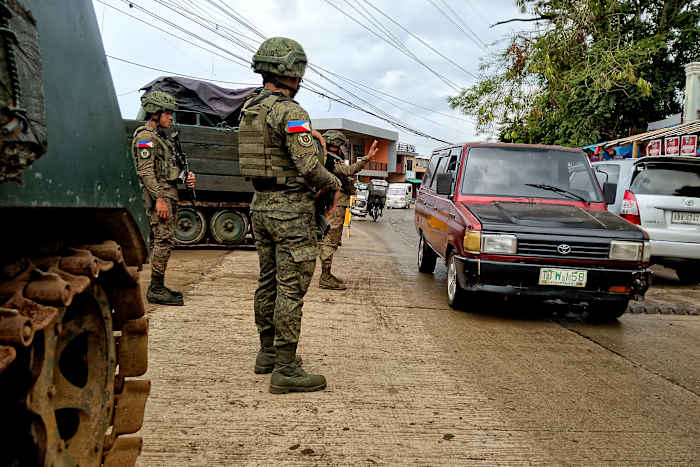
If you walk through towns in Cotabato City or the island provinces of Sulu and Tawi-Tawi, the atmosphere is electric. Security is tight. Soldiers and police officers are stationed at nearly every major intersection. People are lining up early, clutching their voter IDs with expressions of cautious hope.
They know what is at stake.
If these elections go smoothly, it validates the entire peace process. It shows the world that former separatist movements can successfully govern through democratic means. If it collapses into widespread violence or fraud, critics in the national capital will use it as an excuse to claw back regional powers.
That pressure makes every single vote count.
The Obstacles Ahead
Don't mistake this vote for a fairy-tale ending. The challenges facing the new parliament are staggering.
- Economic recovery: Decades of fighting gutted local infrastructure. Jobs are scarce, and poverty rates remain painfully high compared to the rest of the country.
- Disarmament: Thousands of former rebels still need to decommission their weapons and reintegrate into civilian life. Progress on this front has been frustratingly slow.
- Political fragmentation: The region is culturally diverse. Balancing the interests of different ethnic groups and clans under one legislative roof is a nightmare for any strategist.
Transparency International and local watchdog groups are watching the polling stations like hawks. They know that traditional political dynasties are looking for loopholes to maintain their grip on local patronage networks.
Moving Forward From Here
The votes are being cast, but the real work starts the moment the winners are announced.
If you are following this transition, keep your eyes on how the new parliament handles its budget allocations. Watch whether they prioritize basic services like clean water and electricity over political patronage. The success of the Bangsamoro experiment depends entirely on whether ordinary citizens feel tangible improvements in their daily lives.
The southern Philippines is showing the world how a region steps back from the brink of perpetual war. It is messy, imperfect, and entirely necessary.
Support local independent journalism covering Southeast Asian politics. Demand accountability from political leaders who claim to represent marginalized communities. Pay attention to Mindanao, because its fragile experiment in peace will shape the geopolitical reality of the entire region for decades to come.