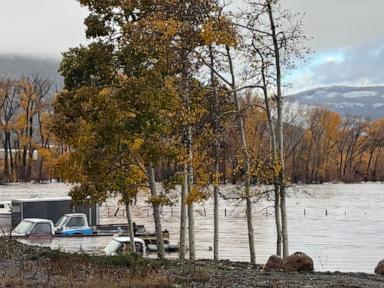
You don't expect a desert to drown. Yet water is currently winning across the American Southwest.
Severe flooding in the U.S. Four Corners region has forced emergency crews to pull stranded residents from rooftops. Rivers are surging past historic marks. Entire communities in Colorado, New Mexico, Utah, and Arizona are scrambling to deal with a disaster that meteorologists describe as a once-in-a-generation event. In other updates, take a look at: Why The Recent Vanuatu Earthquake Scare Is A Wake Up Call For Coastal Safety.
If you live in a dry climate, you assume flash floods are short-lived inconveniences. You wait an hour, the wash drains, and you go back to your day. This week broke that rule completely. Weeks of relentless moisture from Pacific tropical systems soaked ground that was already exhausted from drought. When the latest storm hit, the earth couldn't absorb another drop. Runoff turned quiet creeks into raging torrents, trapping people in vehicles, surrounding RV parks, and cutting off mountain highways.
The Scale of the Crisis
Look at Farmington, New Mexico, right along the San Juan River. Officials ordered roughly 600 households to evacuate immediately as water levels began to climb toward dangerous crests. Downstream, communities across the vast Navajo Nation braced for impact, with leaders urging families to secure their properties and livestock before roads became impassable. The Washington Post has also covered this important subject in great detail.
Emergency responders haven't had a moment to breathe. In San Juan County, New Mexico National Guard boats, helicopters, and heavy amphibious vehicles deployed overnight to pluck residents out of houses submerged under three to four feet of water.
Meanwhile, just north in Colorado, the flooding has surpassed last year's historic high-water marks by a full three feet. Archuleta County Sheriff Mike Le Roux deployed a state helicopter to reach two adults and three dogs stranded inside a motor home parked dangerously close to a rapidly rising river. In South Fork, Colorado, popular campgrounds and trailer parks turned into islands, while pickup trucks sat half-submerged along Highway 160. Colorado Governor Jared Polis declared a disaster emergency across 11 counties to free up immediate state resources.
Why Desert Floods Hit Harder Than Coastal Ones
Most people misunderstand how flash floods work in arid regions. They think concrete and pavement are the main culprits. But nature itself set a trap here.
- Zero Vegetation: Rocky soil with sparse plant life offers no resistance to heavy downpours.
- Hydrophobic Earth: After months of intense dry heat, topsoil bakes into a crust that acts like solid rock. Rain bounces right off instead of soaking in.
- Funneling Terrain: Narrow canyons and steep mountain passes act like natural firehoses, channeling millions of gallons straight into low-lying valley towns.
When you combine these geographic factors with consecutive rounds of tropical moisture—four separate soaking events in just as many weeks—you get catastrophic failure in local drainage systems.
The Ripple Effect Across the Southwest
The damage isn't confined to a single river basin. Arizona spent the early part of the week dodging severe thunderstorms that spawned destructive tornadoes, tearing roofs off buildings and knocking down power lines near Heber-Overgaard and Mesa.
Over in southwestern Utah, the city of Hurricane dealt with severe urban washouts. Rushing water packed with mud and heavy debris knocked around shipping containers and damaged roughly 80 homes alongside dozens of recreational vehicles. Major travel routes like Utah 24 through Capitol Reef National Park and Colorado's scenic "Million Dollar Highway" between Silverton and Ouray faced extensive closures due to structural washouts and mudslides.
What You Should Do If You Live in Flood-Prone Arid Zones
Disaster preparedness looks different when you live in the desert. You aren't just packing for a hurricane; you're planning for sudden wall-of-water events that give you minutes to react rather than days.
- Ignore the Clear Skies Test: If rain stopped upstream hours ago, don't assume you're safe. Water travels immense distances down mountain tributaries like the Animas and San Juan rivers before hitting populated valleys.
- Move Livestock and Vehicles Early: Never try to drive through a flooded wash. It takes less than two feet of moving water to sweep away a full-sized pickup truck.
- Map Your High Ground: Know the exact route to elevated ground within walking distance. Once water rises inside a home, standard exit routes vanish instantly.
Stay alert to local emergency alerts, keep emergency fuel tanks full, and treat flood warnings in dry regions with absolute urgency.



