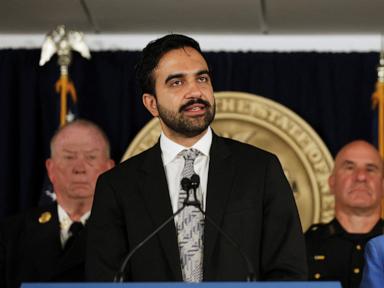
The firewall has cracked. For the first time since the darkest era of twentieth-century history, a far-right extremist party has smashed through regional barriers in Germany, taking 44% of the vote in Saxony-Anhalt and pushing the political establishment into a state of panic.
If you thought European politics was immune to populist surges, think again. The Alternative for Germany, better known as the AfD, didn't just win an election. They shattered a taboo that held for over seven decades.
Mainstream politicians are scrambling for explanations. Chancellor Friedrich Merz came to power promising to cut the AfD’s support in half. Instead, the exact opposite happened. Support doubled. Centrist coalitions are bleeding credibility, and voters are walking away from conventional politics in droves.
What went wrong? And more importantly, what happens next?
The Anatomy of a Political Earthquake
Voter turnout told the real story. In Saxony-Anhalt, turnout jumped to 77.8% compared to just 60.3% five years prior. That surge didn't come from happy centrists. It came from people who had given up on the system entirely, until an extremist party energized them.
Let's be clear about who is voting for them. While polling suggests roughly one in three voters actively align with the party's hardline ideology, the rest are driven by something else: pure alienation. Years of stagnant economic mobility in the former communist east, paired with deep-seated resentment of western German political dominance, created a pressure cooker. Nostalgia for the old days—known locally as ostalgie—plays a role, but the primary driver is plain anger at a status quo that feels completely indifferent to working-class struggles.
For thirteen years, mainstream parties relied on the Brandmauer, a rigid firewall of total non-cooperation designed to starve the AfD of any political legitimacy. Refusing to talk to them, debate them, or let them govern was supposed to make them wither away.
It did the exact opposite.
Why the Firewall Backfired
Isolation turned out to be a fantastic marketing strategy. By shutting the AfD out of every level of governance, traditional parties forced themselves into messy, unnatural coalitions just to keep power. Those coalition governments spent more time arguing internally than fixing real problems.
Ineffective government feeds extremes. When voters see a political class incapable of fixing infrastructure, managing immigration, or lowering living costs because they are too busy keeping out a common enemy, they stop believing the system works.
Worse still, the political center stopped setting the terms of the debate. The AfD successfully framed the immigration narrative, forcing every other party to react on populist terms. Once the mainstream starts adopting your framing, you've already won half the ideological battle.
Now, the consequences of this breakthrough are hitting home.
The Scramble for Coalition Power
Saxony-Anhalt faces brutal political math. Ulrich Siegmund, the local AfD leader, stands on the precipice of regional power. While he has dismissed leading a minority government, whispers of an alliance with the hard-left, pro-Russian Bündnis Sahra Wagenknecht are floating around.
If the AfD secures control of the state government, the changes will be swift. Education, policing, and public broadcasting fall under regional authority. Party members have already floated rewriting school curriculums, cutting funding for anti-racism programs, and stripping pride flags from public buildings. Civil service recruitment could see a massive ideological shakeup.
And then there's the federal impact. Securing a state government gives the AfD seats in the Bundesrat, the upper house of parliament. While they lack the numbers to unilaterally block federal legislation, they now possess a massive megaphone and a direct line to disrupt national policy from within.
National polls show the AfD leading nationwide, and upcoming state elections—including in traditionally liberal Berlin—threaten to pull more dominoes down.
What This Means for Europe
A weakened, fractured Germany spells trouble for the entire European Union. Berlin acts as the political and economic anchor of the bloc. With a domestic government in total upheaval, key European policies face immediate peril.
Climate policies will likely stall, given the AfD's fierce climate-sceptic stance. Migration policy will face continuous internal sabotage. And Moscow is watching closely. With pro-Kremlin sentiments running strong within the party ranks, eastern European neighbors are deeply unsettled by what an empowered German far right means for regional security.
Mainstream parties across Europe are watching this collapse with genuine dread. The old playbook of moral condemnation and total quarantine is dead. If centrist leaders don't pivot toward delivering tangible economic improvements and addressing real public anxieties, the rest of the continent will follow the exact same path.
Stop pretending this is a temporary protest vote. It's a fundamental restructuring of political reality.
Look closely at the mistakes made in Berlin and Saxony-Anhalt. Build better policies, fix broken public services, and stop ignoring the voters who feel left behind before the next wall falls completely.