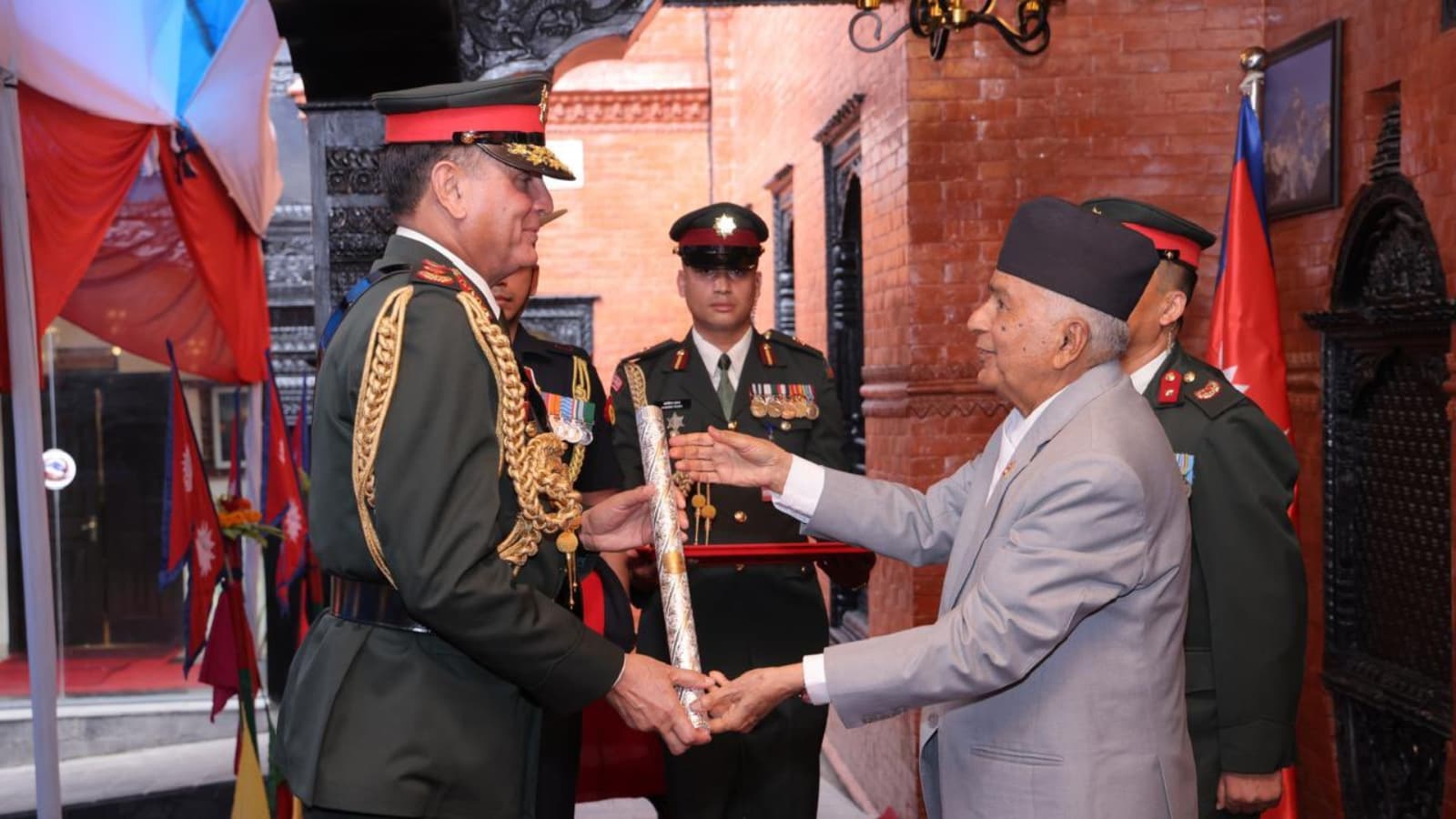
You’ve probably seen the headlines about Indian Army Chief General Dhiraj Seth being awarded the rank of honorary General of the Nepal Army. It looks like a standard diplomatic handshake. It’s easy to dismiss it as just another photo op in Kathmandu.
But if you think that’s all there is to it, you’re missing the point.
This isn’t just a medal exchange. It’s a mechanism that has survived shifting governments, regional tensions, and the passage of seventy-six years. This tradition, dating back to 1950, acts as a heat shield for one of the most critical military-to-military relationships in South Asia.
The Reality Behind The Rank
When Nepal President Ramchandra Paudel conferred the rank on General Seth at the Sheetal Niwas earlier this week, he wasn’t just following a script. This ceremony is an institutional anchor.
Think about how messy international relations can get. Politicians come and go. Policies change. Diplomatic friction happens. Yet, the armies of India and Nepal have kept this thread of mutual respect alive regardless of who sits in the prime minister’s office in either country.
Why does this matter to you? Because stability in this region relies on these two armies staying in lockstep.
Beyond The Ceremony
If you dig into what actually happens during these three-day visits, you’ll see the substance. General Seth didn’t just show up for a title. He held substantive talks with his counterpart, General Ashok Raj Sigdel.
These aren't just polite tea meetings. They are operational check-ins. They discuss border security, training exchanges, and, increasingly, how both nations navigate the global peacekeeping environment.
Here are the facts that move the needle:
- Equipment Cooperation: During this visit, General Seth handed over medical and military equipment to the Nepal Army. This isn't just charity; it’s about interoperability and ensuring that when their soldiers work together—or work in tandem during international peacekeeping missions—they share the same baseline of readiness.
- Peacekeeping Expertise: As of mid-2026, Nepal ranks as the top troop-contributing country for United Nations peacekeeping missions. India remains a massive player there as well. When these two army chiefs meet, they are talking about real-world scenarios in some of the most dangerous conflict zones on the planet.
- Institutional Memory: This tradition prevents the relationship from becoming transactional. When you rely on a partner for decades, you develop a form of "institutional muscle memory." You don't start from scratch when a new chief takes office. You start from a position of established trust.
Why The Critics Get It Wrong
People love to focus on the "ceremonial" nature of these events. They see the guard of honour, the wreath-laying at the Martyrs’ Memorial, and the sapling planting at Army Headquarters and call it fluff.
They’re wrong.
In diplomacy, symbolism is a form of currency. When an Indian Army Chief wears the honorary rank of a Nepali General, it’s a public signal to the rest of the world that these two forces are fundamentally aligned. It’s a quiet deterrent against regional actors who might try to drive a wedge between New Delhi and Kathmandu.
If you want to understand the actual state of India-Nepal relations, stop watching the daily political bickering in the press. Watch the military-to-military engagement instead. It’s the constant, steady baseline that keeps the relationship from tipping over when things get heated elsewhere.
What This Means For The Future
You’re going to see more of this. Expect to see these high-level visits serve as a forum for even more substantive strategic dialogue. As transnational security threats evolve—whether they relate to cyber security, disaster management, or border stability—the direct communication channel between the two army chiefs is arguably more valuable than any piece of hardware they exchange.
The next time you see a report about "honorary ranks," don't scroll past it. Recognize it for what it is: a tactical choice to maintain a vital strategic partnership in an unpredictable world.
If you want to track where this goes next, keep an eye on:
- Joint Military Exercises: Look for shifts in the complexity of the training drills these two armies conduct annually.
- Peacekeeping Deployments: Watch how they coordinate their logistics and medical support in UN zones.
- Personnel Exchanges: Notice any increase in the number of mid-level officers swapping between military academies.
The surface-level optics are just the beginning. The real story is the silent, sustained professional trust that keeps the border quiet and the backchannels open. Stay focused on that.