Geopolitics usually loves a good crisis. Pundits obsess over every border map dispute, every diplomatic snub, and every fiery political speech coming out of South Asia. But away from the nightly news shouting matches, the reality on the ground looks very different.
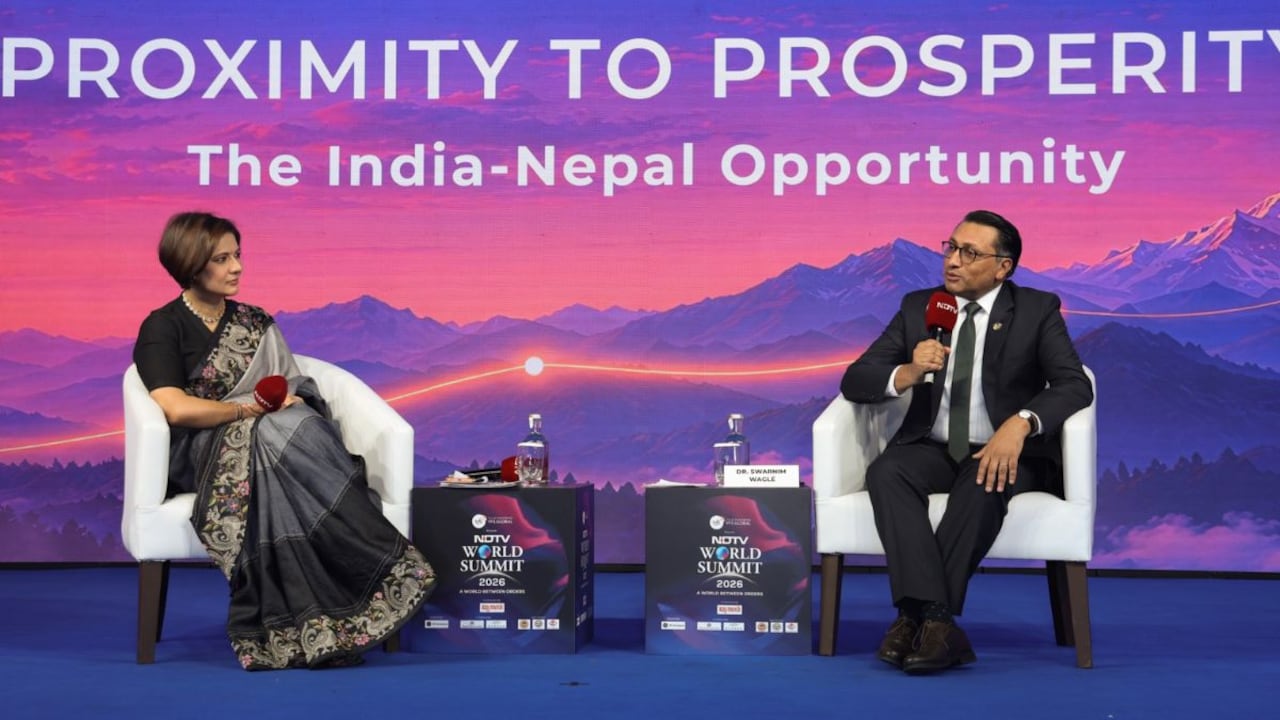
Nepal Finance Minister Swarnim Wagle recently laid it out straight at the NDTV World Summit. He admitted there are occasional hiccups in the diplomatic machinery, but he used a much more visceral phrase to describe the bond between New Delhi and Kathmandu: joined at the hip.
That single phrase cuts through years of stale diplomatic theater. It forces us to look past temporary political posturing and examine the permanent architecture holding India and Nepal together.
Beyond the Anti-India Nationalism Trap
For decades, domestic politics in Nepal operated under a predictable script. Politicians frequently whipped up anti-India sentiment to score quick points and signal their own brand of patriotism. It was easy, loud, and effective for ballot boxes.
That playbook is officially broken.
Wagle made a striking confession during the summit. He noted that the era of equating Nepali nationalism with anti-India sentiment is dead. When a senior cabinet minister publicly states that the old political crutch no longer works, it signals a massive psychological shift in Kathmandu.
Leadership change plays a massive part here. Under Prime Minister Balen Shah's administration, the tone has shifted from defensive posturing to pragmatic economic integration. The focus has moved away from manufacturing imaginary threats and toward figuring out how Nepal can benefit from a booming neighbor.
The Reality of Emergency Diplomacy
Diplomacy gets tested when things go sideways. Theories and treaties matter very little when disaster strikes. Here is where the India-Nepal relationship proves its worth over and over again.
Consider the response times during national crises. When a massive earthquake flattened parts of Nepal in 2015, Indian cargo planes landed in Kathmandu within hours, setting the benchmark as the absolute first responder. Fast forward to the devastating flash floods of August 2026, and the playbook repeated itself instantly.
Prime Minister Narendra Modi picked up the phone immediately to pledge total support to Nepal's leadership. There was no bureaucratic lag or hand-wringing. This kind of rapid-fire emergency response reveals a muscle memory between the two security and civil defense apparatuses that no political disagreement can easily break.
The Economic Reality of Viksit Bharat 2047
You cannot separate geography from economics. Nepal sits landlocked, sharing an open border with an economic juggernaut targeted toward the Viksit Bharat 2047 vision. Wagle understands a fundamental truth that isolationists ignore: a growing India creates massive gravity that pulls its neighbors up, provided they are smart enough to plug into it.
Think about the Indian middle class. Millions of citizens are seeing rising disposable incomes, and they are traveling the globe in record numbers. Nepal is sitting right next door with some of the most breathtaking mountain ranges and cultural sites on the planet. Capturing even a fraction of that outbound tourism wave changes local economies overnight.
Integration is not about losing sovereignty. It is about building something functional. Wagle pointed to the European Union model as an inspiration. Imagine open borders for commerce, fluid movement of capital, and shared market advantages while domestic institutions remain completely independent. That is the pragmatic vision modern leaders in Kathmandu are starting to entertain.
What Comes Next for the Himalayan Partnership
Tensions will flare up again. Border posts will haggle over trade regulations, and cable news networks in both countries will inevitably find some minor diplomatic misstep to hyperventilate over for forty-eight hours.
Ignore the noise.
The structural realities of open borders, shared rivers, interconnected power grids, and deep cultural threads outweigh any temporary political theater. When your economies are intertwined and your people cross borders daily for work, family, and faith, you don't have the luxury of staying estranged for long.
The relationship has matured past the fragile post-colonial sensitivities of the past century. If current economic trends hold, the upcoming state visits between New Delhi and Kathmandu won't just be about handshakes and photo ops—they will be about syncing supply chains and energy grids for the next fifty years.