You can drop bombs, lock down a critical maritime chokepoint, and trade heavy airstrikes for half a year, yet somehow still avoid the w-word. That is the rhetorical tightrope JD Vance is walking right now.
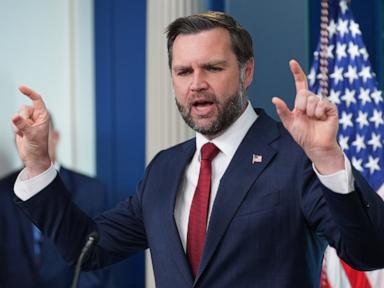
Standing at the White House podium in early September, the vice president offered a semantic pivot that left political analysts and gas-weary voters blinking [cite: 1.2.3]. He claimed the grinding, six-month-old US-Iran conflict is no longer a war. Major combat operations wrapped up weeks ago, according to his timeline, leaving behind a weirdly suspended state of maritime skirmishes, targeted strikes, and stalled diplomacy [cite: 1.2.3].
Call it what you want. The reality on the water tells a much sharper story.
Why Washington Is Sweating Over Semantics
Language is never accidental in West Wing politics, especially when November midterms are staring down an administration [cite: 1.2.1].
When Vance asserts that he wouldn't label the current standoff with Tehran a war [cite: 1.2.3], he's doing heavy lifting for a few distinct audiences:
- The Electoral Clock: Asked point-blank if the campaign will wrap up before voters hit the polls in November [cite: 1.2.1], Vance refused to offer a deadline [cite: 1.2.1]. Redefining the operation as a contained, post-combat posture lets the White House sidestep the toxic label of an "endless foreign entanglement."
- The Energy Anxiety: Gas prices haven't behaved [cite: 1.2.3]. While Vance insists the administration staved off a total global economic catastrophe in the Strait of Hormuz [cite: 1.2.3], everyday drivers aren't seeing three-dollar fuel anytime soon [cite: 1.2.3]. Admitting you're in an actual, full-blown war makes economic pain harder to spin.
- The Doctrine of Restraint: Vance has long branded himself as a skeptic of traditional neo-conservative regime change [cite: 1.1.2]. Framing this as an ongoing enforcement action rather than an open-ended war preserves his ideological brand of America First pragmatism.
The Ground Truth In The Strait Of Hormuz
You don't need a formal congressional declaration to feel the friction in global shipping lanes.
Traffic through the Strait of Hormuz remains dragged down way below pre-war baselines [cite: 1.2.3]. Iranian forces keep applying pressure to commercial vessels, and Washington keeps responding with fresh air raids [cite: 1.2.3]. White House officials insist they won't even entertain a conversation with Tehran until the shipping harassment stops cold [cite: 1.2.3].
Yet look at the friction bubbling inside the administration itself. Reports dropped showing Vance quietly hitting up CIA desk analysts and naval intelligence officers directly [cite: 1.2.4], fishing for raw, unfiltered assessments of the Strait rather than relying purely on polished joint-chiefs summaries [cite: 1.2.4]. That isn't the behavior of a guy who thinks things are wrapped up in a neat little bow. That is the behavior of a leader trying to figure out how to get off a tiger's back without getting mauled.
The Political Backlash And Tucker Factor
The rhetoric isn't just annoying Democrats. It is fracturing the conservative coalition.
Conservative firebrand Tucker Carlson has openly blasted the entire enterprise in Iran [cite: 1.1.1], putting him in a bizarre public slugfest with Donald Trump [cite: 1.1.1]. Vance found himself defending his personal friendship with Carlson right around the same time he was redefining the war out of existence [cite: 1.1.1]. He brushed it off, noting he won't toss friends under a bus over policy splits [cite: 1.1.1].
Meanwhile, intelligence disputes are turning messy. When Tehran claimed a US strike clipped a wedding party and killed civilians [cite: 1.2.3], Vance declared himself "extremely skeptical" [cite: 1.2.3]. Skepticism is cheap when you're thousands of miles away from the smoke, and trust in official battle damage assessments is sitting at historic lows.
What This Means For You
If you're trying to figure out how this affects your portfolio, your commute, or your ballot next-door to November, strip away the podium spin.
The administration wants a frozen conflict. They want just enough kinetic deterrence to keep Iran from sprinting toward a nuclear weapon [cite: 1.2.3], combined with enough naval muscle to keep oil from spiking to catastrophic heights [cite: 1.2.3]. What they don't have is an off-ramp.
Stop waiting for a formal peace treaty or a neat V-J Day style announcement. In modern American foreign policy, wars don't end with a signed document on a battleship. They just quietly change their name until everyone gets tired of asking when they started.
Watch the shipping insurance rates in the Persian Gulf. Watch the weekly spot price of Brent crude. Pay zero attention to what the podium calls the calendar, and keep your eyes on the tankers that refuse to move.