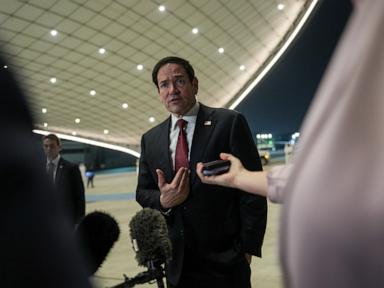
The diplomatic circuit rarely looks this frantic. US Secretary of State Marco Rubio just touched down at Al Bateen Executive Airport in Abu Dhabi, kicks off a grueling three-nation tour of the Persian Gulf, and faces an audience that is downright furious. He is there to salvage alliance trust after Washington signed a tentative memorandum of understanding with Iran to halt a brutal four-month war that began back on February 28.
The White House is selling this as a historic peace deal. To America's closest Gulf allies, it feels like a sudden betrayal.
If you are wondering why nations like the United Arab Emirates, Kuwait, and Bahrain are panicking, you have to look at what this temporary ceasefire actually gives away. The text, hammered out in Switzerland by Vice President JD Vance alongside Qatari and Pakistani mediators, leaves glaring security gaps that directly threaten the region. Rubio is trying to convince these countries that a deal with their primary adversary is good for them. It is a massive uphill battle.
The multi-billion dollar problem Washington ignored
The biggest point of friction centers on money. The preliminary accord outlines a path toward a $300 billion reconstruction fund intended for Tehran. The Trump administration argues this financial injection is necessary to stabilize the Iranian economy and secure long-term cooperation.
Gulf leaders look at that number and see a disaster. They know exactly how the regional dynamic works. When the Iranian government gets cash, that money does not go to domestic infrastructure or social programs. It flows directly into military hardware and regional influence.
Sunni monarchies are asking a simple question. Why should they support an agreement that hands billions to a state that has spent years trying to destabilize their governments? Bahrain, with its complex domestic demographics, is especially terrified that a flush-with-cash Tehran will restart efforts to foment domestic unrest. The text of the accord does not contain any concrete guarantees to prevent this funding diversion.
Weapons left off the table
The financial aspect is bad enough, but the military omissions are even worse. The tentative agreement completely ignores Iran’s ballistic missile program.
This is not a theoretical problem for the Gulf states. Over the last four months of active conflict, the UAE, Saudi Arabia, Kuwait, and Bahrain were repeatedly targeted by Iranian drones and missiles. They absorbed these attacks because they were hosting the US military infrastructure that formed the backbone of the war effort.
To have a peace agreement drafted that ignores the very weapons that just rained down on your cities is a massive insult. The Trump administration points to a clause in the memorandum that calls for a complete end to hostilities and conflicts in the region. Rubio insists this phrase legally binds Iran to stop arming groups like Hamas in Gaza, Hezbollah in Lebanon, and the Houthis in Yemen.
That explanation is not flying in Abu Dhabi. Relying on vague phrasing when dealing with a regime that has spent decades mastering proxy warfare looks incredibly naive to regional security officials. They want hard limits, not optimistic legal interpretations.
The fight over the Strait of Hormuz
Then there is the issue of global shipping. The memorandum establishes a 60-day window of toll-free transit through the Strait of Hormuz. After those two months lapse, the text leaves the future administration and maritime services of the strait open to negotiations between Iran, Oman, and other regional states.
Iranian Parliament Speaker Mohammad Bagher Ghalibaf immediately seized on this ambiguity. He proudly announced to state media that the administration of the waterway will never return to the pre-war status quo and that Iran intends to manage it under its own arrangements. This implies Tehran plans to levy heavy transit fees or tolls on global shipping.
Rubio attempted to shut this down the moment he stepped off his plane in the UAE. He told reporters that no country is allowed to charge tolls on an international waterway under existing international law. He claimed that the US would never accept such an arrangement and that every country in the region agrees with Washington.
Saying the US will not accept it is one thing. Preventing it without restarting a war is another matter entirely. Kuwait and Saudi Arabia rely completely on that narrow strip of water to export their oil and gas. If Iran controls the flow and sets the price of transit, it holds a knife to the throat of the Gulf economies.
Trump defends the terms against friendly fire
Back in Washington, the political backlash is heating up. The criticism is not just coming from Democrats. Hardline Republicans and traditional foreign policy hawks are slamming the administration for giving up too much leverage.
President Donald Trump dismissed these critics, stating that anyone who dislikes the deal simply needs to be educated. Trump claims that the military strikes over the past few months completely devastated Iran's radar systems, leadership structure, and conventional military capacity. In his view, Tehran is negotiating from a position of absolute weakness because its economy is ruined by inflation and shortages of basic goods like medicine.
The administration’s logic is clear. They believe economic desperation will force Iran to accept strict terms during the final 60-day negotiation push. Trump even explicitly left an escape hatch open, reminding everyone that this is just a memorandum of understanding. If he does not like the final results, he claims the US will simply go back to dropping bombs.
This casual attitude toward regional stability is exactly what makes the Gulf allies so nervous. They do not have the luxury of walking away or switching strategies on a whim. They live next door to the threat.
The actual cost of American concessions
While Washington talks about holding all the cards, the immediate concessions granted to Tehran are remarkably generous. The US Treasury has already issued a sanctions waiver allowing Iran to freely sell its oil and receive payments in US dollars.
This move alone drops a massive financial windfall into Tehran's lap. Iran expects to immediately regain access to $6 billion in frozen assets currently held in Qatar, plus another $6 billion loan from Doha. On top of that, the oil waiver is projected to bring in at least $8 billion in revenue over the next two months alone.
Iran's central bank governor, Abdolnaser Hemmati, wasted no time making it clear that Iran has zero intention of using this money to buy American goods or follow Washington's economic script. They will spend it wherever they want.
What happens next in the region
Rubio's trip to the UAE, Kuwait, and Bahrain is a desperate damage control operation. He needs to convince these allies to stay aligned with the US diplomatic track while their trust in American security guarantees is rapidly eroding.
If Rubio fails to assuage their fears, the regional fallout will be severe. The UAE has already shown signs that it might bypass Washington entirely to negotiate its own security understandings directly with Tehran. If Gulf allies begin to rethink their relationships with the US or place restrictions on the American military bases operating within their borders, the entire global defense architecture in the Middle East will crack.
The 60-day clock is ticking. For Rubio, the next forty-eight hours of closed-door meetings with the Gulf Cooperation Council will determine whether the US maintains its leadership in the region or if it just handed the keys to Iran.
To track how this geopolitical shift impacts global markets and defense policy, follow these immediate steps. Watch the daily Brent crude pricing fluctuations as the 60-day toll-free window in the Strait of Hormuz winds down. Monitor official state statements from the upcoming Gulf Cooperation Council summit in Bahrain for any shifts in language regarding US base access permissions. Track whether the International Atomic Energy Agency secures the specific downblending verification protocols mentioned by Trump but contested by Iranian negotiators.

:max_bytes(150000):strip_icc():focal(742x300:744x302)/elon-musk-justine-wilson-062424-d55056f5cbd1428fa3b76079db3cd865.jpg)
