Marine Le Pen just made her move.
The National Rally leader stepped onto the stage in Orléans to kick off her presidential campaign, drawing roughly ten thousand party militants to a packed congress. Six months out from the election, she’s leading early polls with up to thirty-eight percent support. That number should terrify her political opponents. Orléans isn't just a random pin on a map; it's a calculated statement of intent right in the heart of France.
If you want to understand where French politics is heading, you have to look past the campaign slogans. You have to look at the street outside.
The Atmosphere in Orléans
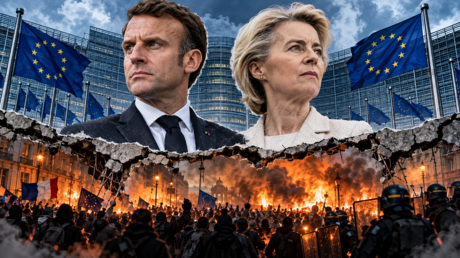
Heavy security defined the weekend. Thousands of police and gendarmes locked down traffic checkpoints leading into the city. Just twenty-four hours before Le Pen’s keynote speech, massive crowds of anti-fascist demonstrators marched through the historic streets, chanting slogans and pushing back against the far-right surge.
This friction isn't accidental. It's the exact dynamic the National Rally wants.
Political scientists like Gilles Ivaldi from the French National Centre for Scientific Research point out a blunt reality. Public unrest and street protests often backfire on the left in France. When cities see violent clashes or disruptive demonstrations, voters frequently run toward whoever promises law and order. Le Pen’s team knows this. They are leaning into the tension, positioning themselves as the sole political force capable of restoring public safety.
Jordan Bardella Takes the Helm and the Strategy Shifts
Behind the scenes, the party machine is running smoother than ever. Jordan Bardella secured the party presidency with an overwhelming ninety-eight point ninety-eight percent of the vote at the congress. Passing the operational torch to Bardella while Le Pen focuses entirely on the Élysée presidential bid creates a dual-engine strategy.
Bardella handles the youth vote and digital mobilization with ruthless efficiency. Le Pen plays the stateswoman, softening her edges and projecting institutional stability.
Look at what she focused on in Orléans. Renewal. Optimism. Words you usually don't associate with a nationalist party built on anti-establishment grievance. She wants to look like a president-in-waiting rather than an eternal protest candidate.
What the Polls Actually Tell Us
Polling numbers this far out can trick you. A thirty-eight percent lead sounds bulletproof, but French elections have two rounds for a reason.
In the final runoff, mainstream voters historically coalesce against the far right. The republican front always activates. But the terrain feels different this time. Years of persistent inflation, public service strain, and immigration fatigue have normalized the National Rally's platform. Policies that used to be considered radical a decade ago are now dinner table conversations in provincial towns across France.
Le Pen isn't fighting to convince people she's mainstream anymore. She's fighting to convince them she's inevitable.
The Road Ahead to the Élysée
The campaign is officially live, but the real test starts now. Can the National Rally maintain this disciplined narrative for half a year without a major scandal derailing the momentum? History suggests they will trip over themselves eventually. Yet, as thousands chanted outside the Orléans convention center, you realize the old playbook against the far right isn't working.
Ignore the noise. Watch the polls shift as the campaign machinery moves out of the convention hall and into every village square in the country.