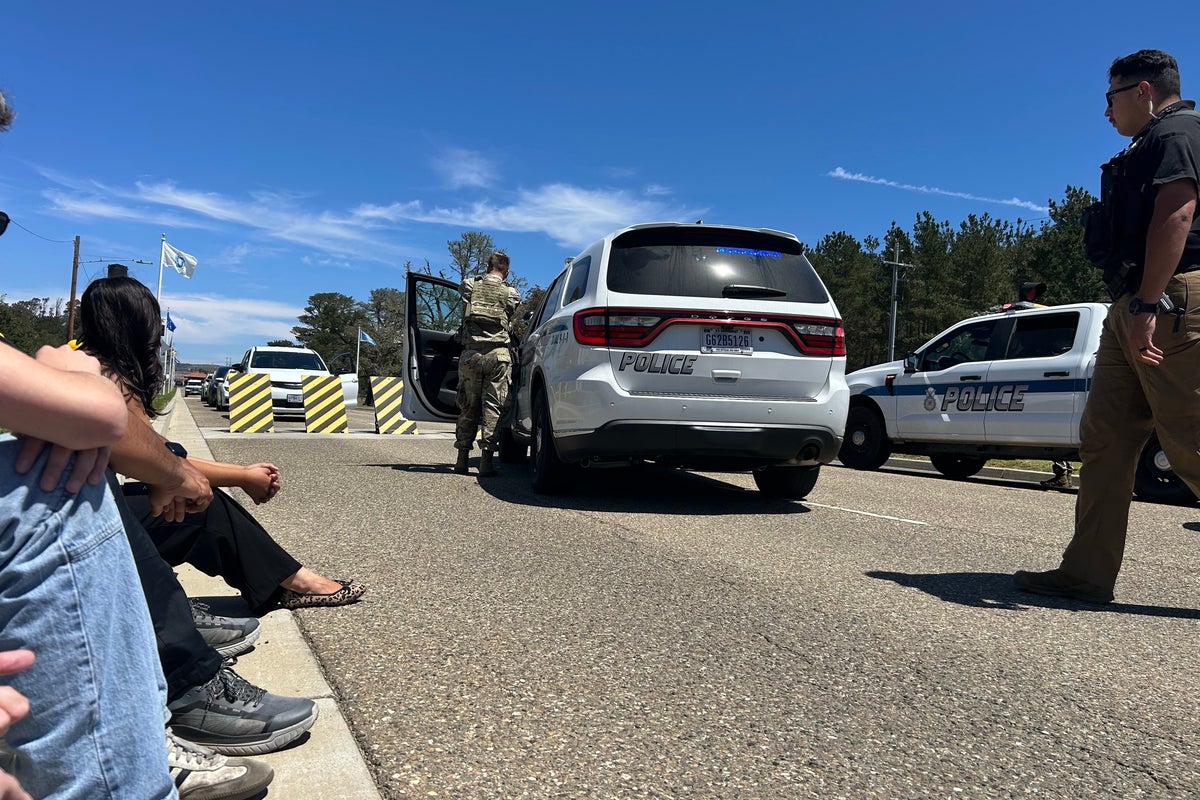
Getting held at gunpoint while on an official, pre-authorized media escort is a nightmare scenario for any journalist. Yet, that is exactly what happened this week at Vandenberg Space Force Base in California. When five reporters and two military members found themselves staring down the barrels of security weapons, the reality of high-stakes base security hit a breaking point.
The incident occurred during a scheduled groundbreaking ceremony for a new missile operator training facility. These aren't random gatecrashers. These were invited members of the press, escorted by uniformed military public affairs staff in a government vehicle. Despite this official stamp of approval, the situation devolved into a chaotic scene of sirens, drawn weapons, and handcuffs.
It is easy to blame "bad communication" from a distance. However, having covered various military installations, I know that internal base procedures often operate in silos. What happened at Vandenberg highlights the disconnect between high-level clearance and ground-level enforcement.
The breakdown of standard security checks
Basically, the base leadership claimed that Vandenberg is currently battling a rise in unauthorized entry attempts. They treat every vehicle not perfectly verified as a legitimate threat. That sounds correct in a briefing room. On the ground, it turns into a dangerous standoff.
The military police were not just doing their jobs; they were operating under an aggressive posture that leaves no room for human error. When your security forces are told to assume the worst, they stop looking for context. A government van with invited guests should be the easiest thing to clear. Instead, the lack of coordination meant the security gate had zero warning about the arrival of the press convoy.
Why this matters for press access
The reporters involved, representing local outlets like Noozhawk and KEYT, were held for over 30 minutes. This wasn't just an inconvenience. It meant they missed the event they were invited to cover.
Security forces have a job to do. I’m the first to defend the need for absolute vigilance at a facility housing sensitive missile technology. But when the very people charged with facilitating media access are the ones caught in the crosshairs, the system is clearly broken.
When you strip away the official statements about "protecting personnel," you are left with a simple truth. The military’s internal verification processes failed. They didn't just fail to communicate; they failed to protect the very individuals they authorized to enter their property.
Lessons in military-media coordination
If you are a public affairs officer or a journalist dealing with base access, look at this mess as a warning. Relying on an "escort" is not enough if the gate security isn't looped into the plan.
- Confirm, then confirm again. Even if you have an official invitation, ensure the security details for the specific gate you are using have your name, your vehicle info, and the precise arrival time at least 24 hours in advance.
- Understand the escalation ladder. Know that security forces at bases like Vandenberg are currently on high alert. If you are stopped, don't argue, don't move quickly, and follow instructions to the letter, even if they seem absurd.
- Centralize command. The issue here was that the security gate didn't know what the public affairs office knew. If you are organizing a media event, demand a clear communication trail that links the gate staff directly to the event organizers.
The editor-in-chief of Noozhawk, Tom Bolton, was right to call the situation dangerous. Having firearms drawn on unarmed civilians is never a "standard procedure" you want to see. Vandenberg leadership is reportedly planning a review of the event to prevent a repeat performance. They better hope they get it right.
This type of error erodes the trust between the public and the military. Next time, it could end much worse than a few missing photos. Real security requires competence, not just guns. It is time for the military to synchronize their left hand with their right. Anything less is just an accident waiting to happen again.
If you are planning media access for sensitive sites, review your protocols immediately. Don't assume the gates know who you are. Verify the verification. Trust me, you don't want to be the one sitting on the curb because a van’s entry wasn't logged.