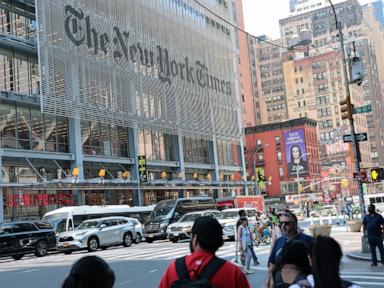
When FBI agents showed up at the front doors of New York Times reporters on a Friday night, they didn't just bring grand jury subpoenas. They brought a message.
The Justice Department wanted names. It wanted confidential sources. And when the reporters refused to break their professional promises, federal prosecutors went a step further. They quietly subpoenaed phone records. Not just for the journalists, but for their spouses and an aging mother who works as a mental health counselor.
If you think this is standard Washington political noise, you aren't paying attention.
The battle currently unfolding before U.S. District Judge Arun Subramanian in Manhattan isn't just another legal squabble between a newsroom and a hostile White House. It's an unprecedented test of whether journalists can protect their sources when federal law enforcement decides to bypass decades of legal precedent.
I've watched press freedom battles play out for years, but this one feels fundamentally different. The speed, the aggression, and the sheer scope of the government's demands show a pattern that should worry anyone who cares about accountability.
The Story That Triggered a White House War Room
To understand why the DOJ is moving so aggressively, you have to look at what started the fire.
In early July, New York Times reporters Julian E. Barnes, Eric Lipton, and Eric Schmitt published a series of stories exposing security flaws in the administration's new flagship aircraft. The plane—a luxury jet donated by the Qatari government and retrofitted at a cost of $400 million—had just completed its maiden voyage to a NATO summit in Turkey.
According to sources cited by the Times, the Secret Service stepped in right after that flight. Security officials raised serious concerns about the aircraft's lack of advanced defensive countermeasures, including missile defense systems found on the older Air Force One. The Secret Service urged a quick switch back to the legacy plane.
The reporting embarrassed the administration. It directly contradicted official claims that the Qatari jet was combat-ready and fully secured.
Within forty-eight hours of publication, the response was swift and heavy-handed. FBI Director Kash Patel took personal charge of a leak investigation. Instead of working out of FBI headquarters in Hoover Building, Patel operated from a White House "war room" alongside Chief of Staff Susie Wiles.
By Friday evening, July 10, agents were dispatched straight to the private homes of Times reporters. Subpoenas demanding grand jury testimony were handed over in person. Similar attempts were made against reporters Adam Goldman and Tyler Pager.
Serving grand jury subpoenas to reporters at their homes, without prior notice or negotiation with newsroom lawyers, breaks almost every established DOJ protocol on press inquiries.
Phone Records, Family Members, and a Surprising Dragnet
If home-served subpoenas weren't enough, what came next made the situation far worse.
A few days after serving the initial notices, prosecutors went after phone records through third-party carriers like Google and telecom providers. They didn't just ask for records tied to the specific dates surrounding the Air Force One articles.
They demanded records starting all the way back on January 1.
Think about that timeline for a second. Why would a leak investigation into articles written in July require detailed phone logs from six months earlier?
The Times legal team, led by David A. O'Neil of Debevoise & Plimpton, called it out in a letter-motion filed in federal court. They argued the six-month window shows prosecutors aren't just investigating a single story. They're fishing for the newspaper's broader network of government sources.
Here's the part that really crosses the line. The DOJ didn't limit its records request to the journalists themselves. They targeted phone lines belonging to family members who have zero connection to national security reporting.
- A reporter's mother, who works as a licensed mental health professional with strict client confidentiality duties.
- A reporter's spouse, who serves as general counsel for a major law firm.
- Another reporter's spouse, whose daily calls have nothing to do with government leaks.
When a government agency starts vacuuming up the phone logs of a therapist and a corporate lawyer just because they're married to or related to a journalist, the goal isn't just gathering evidence. It's intimidation. It creates a chilling effect designed to make reporters' families feel unsafe and exposed.
Katherine Marsh, wife of Times reporter Julian Barnes, captured the emotional weight of that reality: "When something like this happens, it's very frightening. You almost feel like you're being treated as an enemy of the state, and we're just reporters and reporters' families."
How the DOJ Defends Its Dragnet
The Justice Department isn't backing down. Their official public line has been consistent: "Reporters are not the targets; those leaking classified information are."
During recent testimony before Congress, Attorney General Todd Blanche defended the aggressive tactics. He argued that when classified information appears in news reports, the journalists who published it are essential witnesses to a potential federal crime.
Blanche offered a simple analogy. He likened reporters to material witnesses to a car crash. If you witness a crime, he argued, the government has every right to ask you what you saw and who was involved.
On the surface, that sounds like a reasonable legal position. But it ignores fifty years of legal doctrine surrounding the First Amendment and newsgathering.
Reporters aren't bystanders who happened to stumble upon a hit-and-run. They are active gatherers of public-interest information whose work relies entirely on confidentiality. If sources know their identity will be handed to a grand jury the moment a story makes an official look bad, whistleblowing stops overnight. Waste, fraud, and security lapses stay hidden behind closed doors.
Former Department of Justice guidelines strictly limited when prosecutors could seek information from news media. Historical policy required prosecutors to prove that:
- The information sought was vital to a significant federal investigation.
- Every alternative non-media source had been exhausted.
- Timely negotiations had been conducted with the news organization before issuing subpoenas.
In this case, the government skipped the negotiations, skipped the exhaustion of other leads, and went straight to subpoenaing family members' cell phones within days of the reporting.
Why This Case Is Different From Past Legal Battles
We've seen tensions between the press and federal prosecutors before. The Obama administration set record numbers for Espionage Act prosecutions against leakers. The first Trump administration regularly criticized investigative reporters.
So why is this specific fight causing so much alarm among press freedom groups?
First, look at the speed. Most leak investigations drag on for months or years while investigators interview government employees, audit classified access logs, and review internal emails. Here, the DOJ targeted reporters' homes within 48 hours. That points to a political hurry rather than a systematic law enforcement process.
Second, look at the location of the operation. Running a leak inquiry directly out of a White House war room, rather than through career prosecutors at Main Justice, breaks the traditionally required distance between presidential politics and criminal prosecutions.
Third, this isn't happening in isolation. Earlier this year, FBI agents raided the home of a Washington Post reporter and seized electronic devices. The White House also stripped Associated Press journalists of press pool credentials after the agency refused to adopt government-mandated geographical name changes in its reporting.
When you put these events together, a clear strategy emerges. The goal isn't just stopping one leak about an airplane. The goal is making the price of confidential whistleblowing so high that nobody dares to talk.
What Happens Next in Court
The legal fight is now resting in the hands of U.S. District Judge Arun Subramanian.
The Times has asked the court to quash both the grand jury subpoenas compelling reporter testimony and the third-party subpoenas targeting phone records. Their legal motion argues three main points:
- First Amendment Infringement: Compelling journalists to reveal sources undermines the constitutional privilege essential for effective newsgathering.
- Bad Faith and Regulatory Abuse: The DOJ ignored its own binding internal rules governing media subpoenas and failed to conduct a genuine preliminary investigation.
- Overbreadth: Demanding six months of records and targeting non-journalist family members constitutes an improper abuse of the grand jury's power.
The Justice Department responded by asking Judge Subramanian for a temporary hold on enforcement so it could carry out additional investigative steps. Meanwhile, phone carriers have been asked to hold off on transferring data until the judge rules.
A ruling against the New York Times could set a dangerous precedent for every news organization in the country. If prosecutors can bypass internal guardrails, skip preliminary steps, and obtain reporter phone logs within days of an unwanted story, the legal protections that have safeguarded investigative journalism for decades will be severely weakened.
If you care about independent reporting, don't look away from this court battle. Follow the docket in the Southern District of New York. Read the unsealed motions yourself. Understand that when the government goes after a reporter's family phone logs, the real target is your access to the truth.