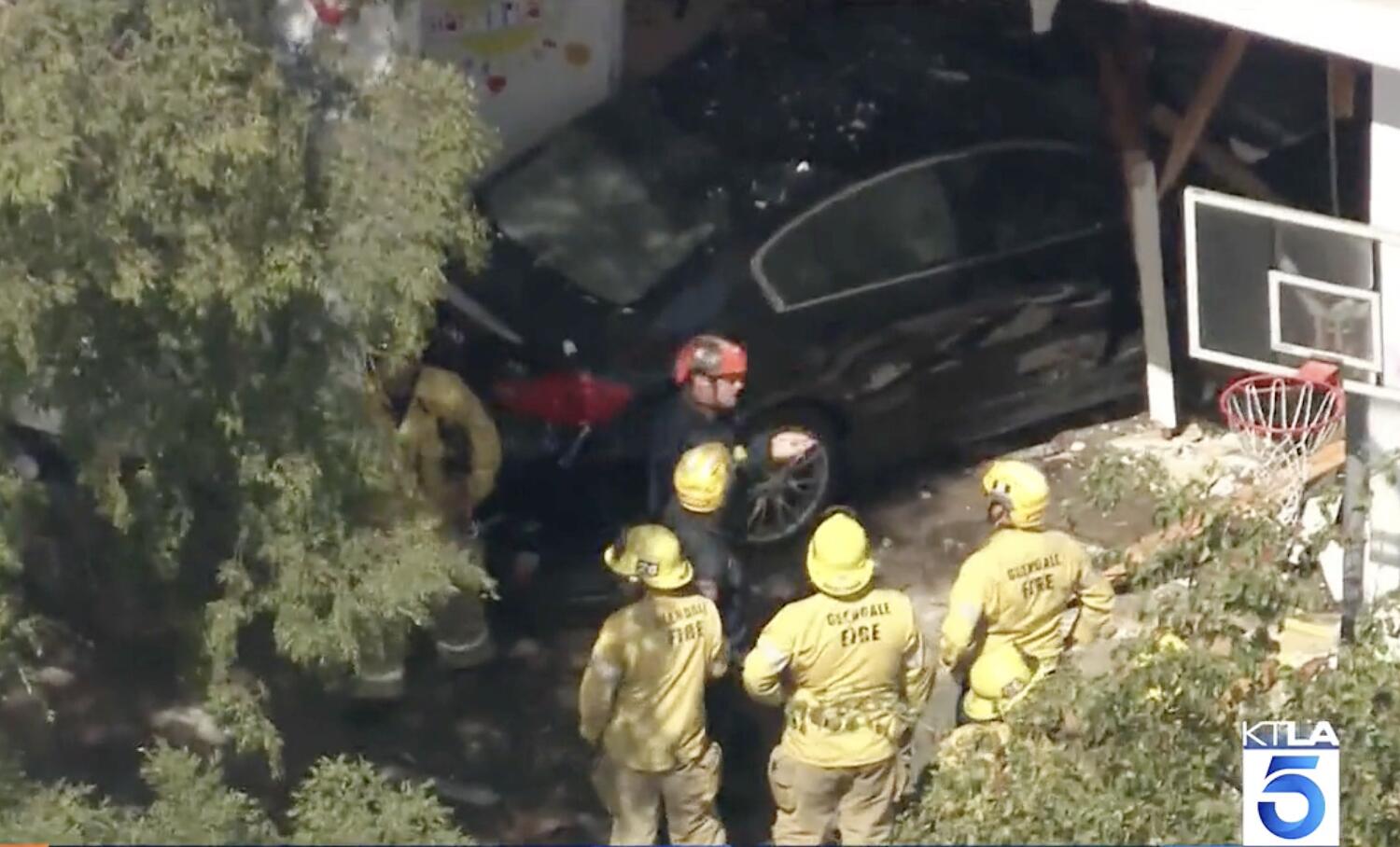
A routine summer camp afternoon turned chaotic when a car smashed straight into a Glendale preschool classroom, sending eight children to local hospitals.
The incident unfolded shortly before 2 p.m. at Grandview House Preschool on North Pacific Avenue. According to the Glendale Police Department, a 79-year-old driver unaffiliated with the school attempted a tight U-turn in the facility's parking lot. Instead of clearing the area safely, the driver accelerated, hit a parked vehicle, smashed through a security gate, and collided directly with an occupied classroom.
Miraculously, all eight injured children sustained only minor injuries and were quickly transported for medical evaluation before being released back to their families. No adults were hurt, and investigators confirmed that driving under the influence was not a factor. Police officials stated the crash was entirely accidental, pointing to a classic, dangerous mix-up between the gas and brake pedals.
Yet, this frightening close call exposes a glaring vulnerability in how early education facilities handle vehicular safety right at their doorsteps.
The Hidden Vulnerabilities of Shared Parking Lots
Most parents never think twice about the parking lot layout when dropping off their toddlers. You look for clean play areas, certified teachers, and secure entry gates. You rarely look at the proximity of moving vehicles to active classrooms.
At facilities like Grandview House Preschool, buildings often sit uncomfortably close to asphalt driveways and turnaround spaces. When an elderly driver or anyone else panics behind the wheel, standard perimeter fencing offers virtually zero protection against a multi-thousand-pound vehicle.
Law enforcement and traffic safety experts repeatedly see the same pattern. Pedal confusion happens across all age groups, but older drivers face disproportionate scrutiny when incidents like this occur. Cognitive processing speed and spatial judgment in tight spaces can drop rapidly in high-stress driving scenarios. When a driver realizes they are stuck or facing the wrong way in a confined lot, a sudden panic response often triggers full acceleration instead of braking.
Why Standard Fences Fail Child Safety Standards
If you walk the perimeter of most commercial strip-mall daycares or converted residential preschools, you will notice standard chain-link or wrought-iron fencing. These barriers are designed to keep wandering children inside and unauthorized strangers outside.
They are not rated to stop a vehicle.
To genuinely protect children inside classrooms adjacent to parking spaces, facilities need heavy-duty structural safeguards.
- Bollards: Steel-reinforced concrete posts sunk deep into the ground can absorb the kinetic energy of a moving vehicle before it ever reaches a wall.
- Setbacks: Enforcing strict zoning rules that mandate a physical distance barrier or elevated curbs between parking stalls and building walls.
- Traffic Flow Redesign: Eliminating turnaround dead-ends in tight lots so drivers never have to execute multi-point maneuvers near vulnerable pedestrian zones.
What Parents and Facility Directors Should Do Next
Accidents happen, but infrastructure can be engineered to mitigate human error. If you have children enrolled in a daycare or preschool, take a hard look at the layout during your next drop-off.
Ask the director tough questions about traffic management. Find out if vehicles park directly facing room windows or thin exterior walls. Advocate for physical vehicle barriers if the parking layout looks hazardous.
We dodged a major tragedy in Glendale because the structural impact wasn't severe enough to cause catastrophic harm. Next time, the margins might not be so forgiving. Fix the physical layout before the next mistake happens.