The border between Pakistan and Afghanistan is officially on fire again. After a brief, fragile month of relative calm, the regional proxy conflict blew wide open following heavy cross-border operations. If you're reading mainstream headlines, you're probably seeing a sterilized version of events: clean surgical strikes hitting "militant camps."
The reality on the ground is messier, bloodier, and far more dangerous for regional stability.
Overnight military actions along the mountainous Durand Line have shattered any hope of a lasting truce. Pakistan insists it executed highly calibrated, intelligence-based operations to neutralize active security threats. Kabul sings a completely different tune, pointing to flattened family homes and a surging civilian body count.
To understand what's actually happening, you have to look past the sanitized press releases from Islamabad and the furious rhetoric from the Taliban government. This isn't just a sudden border flare-up. It's an open, undeclared war between two heavily armed neighbors who used to be close allies.
The Overnight Carnage in Paktia and Paktika
The latest escalation kicked off when Pakistani security forces launched a coordinated ground operation along the border, quickly followed by heavy airstrikes targeting suspected insurgent safe havens. According to Pakistani Information Minister Attaullah Tarar, the strikes successfully dismantled key operational bases belonging to Jamaat-ul-Ahrar and Fitna al-Khawarij—the official term Islamabad uses for factions of the Pakistani Taliban (Tehrik-e-Taliban Pakistan, or TTP).
Pakistan claims 29 fighters were wiped out in the blitz. They even shared video footage of projectiles obliterating sprawling encampments, claiming major caches of weapons and ammunition went up in smoke.
But the view from the Afghan side looks devastatingly different.
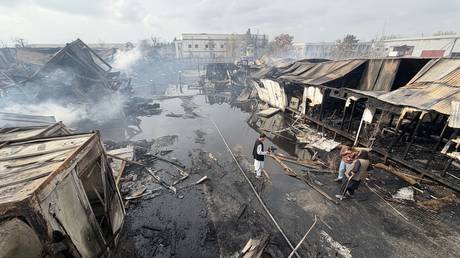
According to Hamdullah Fitrat, the deputy spokesperson for the Afghan Taliban government, a Pakistani projectile first struck a residential home in the Chamkani district of Paktia province, killing an elderly man and a child. When local villagers rushed to the scene to dig through the rubble for survivors, the area was struck a second time. That secondary strike turned a rescue effort into a massacre, killing 28 villagers and wounding 158 others.
Simultaneously, another strike hit a home in the Giyan district of Paktika province, killing six people, mostly women and children. By the time the sun came up, Afghan officials reported at least 36 civilians dead and more than 160 wounded.
The Spark that Lit the Fuse
Why did Pakistan pull the trigger now? Look at what happened over the weekend in the southern port city of Karachi.
Militants armed with automatic weapons and explosives launched a brazen assault on the regional headquarters of the paramilitary Rangers. Three Pakistani soldiers were killed before security forces neutralized three attackers. Crucially, Pakistani forces captured a fourth assailant alive—a wounded fighter whom the military explicitly identified as an Afghan national.
When Jamaat-ul-Ahrar claimed credit for the Karachi ambush, it gave Islamabad all the justification it needed. For months, Pakistan's military leadership has warned that Afghan soil is being used as a launching pad for cross-border terrorism. Capturing an Afghan citizen mid-attack in Karachi was the breaking point.
The TTP Problem and the Blame Game
The root of this entire conflict lies in a frustratingly complex relationship between two distinct Taliban groups.
The Afghan Taliban are the ones currently running the government in Kabul after the chaotic U.S. withdrawal. The Tehrik-e-Taliban Pakistan (TTP), or Pakistani Taliban, are a separate entity, but they share deep ideological, historical, and tribal bonds with their Afghan counterparts.
| Group | Primary Objective | Current Status |
|---|---|---|
| Afghan Taliban | Govern Afghanistan under strict Islamic law | De facto rulers of Kabul |
| TTP (Pakistani Taliban) | Overthrow the Pakistani government | Insurgent network operating from border regions |
When the Afghan Taliban took over Kabul, Pakistan expected them to rein in the TTP and secure the border. Instead, TTP attacks inside Pakistan skyrocketed. Islamabad feels deeply betrayed. They argue that Kabul provides a safe haven for these fighters, allowing them to plan operations, cross the porous border, kill Pakistani troops, and slip back into Afghanistan completely untouched.
Kabul completely denies harboring terrorists, routinely demanding that Pakistan handle its own internal security problems instead of pointing fingers. The diplomatic fallout from the latest strikes was instant: both nations hauled in each other's top diplomats to lodge furious formal protests.
Why This War Isn't Ending Anytime Soon
International mediators, primarily Qatar and Turkey, have repeatedly tried to broker a peace deal between the neighbors. They even managed to secure brief ceasefires, but those agreements keep falling apart within weeks.
The fundamental issue is that neither side can afford to back down. Pakistan is dealing with an intolerable surge in domestic terrorism that threatens its internal stability and foreign investments. They feel completely justified using cross-border force to protect their citizens.
Meanwhile, the Afghan Taliban cannot openly turn on the TTP without risking a massive internal revolt from their own hardline commanders, many of whom fought side-by-side with the TTP for two decades.
With both nations locked into their respective positions, these tit-for-tat military strikes have become the new normal. Pakistan will keep launching airstrikes whenever a major attack hits its cities. The Taliban will keep retaliating across the border, and the people trapped in the middle will continue to pay the price.
If you are tracking security risks, travel advisories, or geopolitical developments in South Asia, look closely at the border dynamics between Peshawar and Jalalabad. Watch for indicators of major troop movements along the Durand Line, or signs that the Afghan Taliban are deploying heavy anti-aircraft weaponry to the border provinces. Those movements will tell you exactly how close this conflict is to spilling over into an all-out, conventional regional war.