We live in a world where sending missile systems across borders takes days, but sending a bag of grain to a starving child takes months. It is an open secret. Everyone knows it, yet nobody wants to say it out loud.
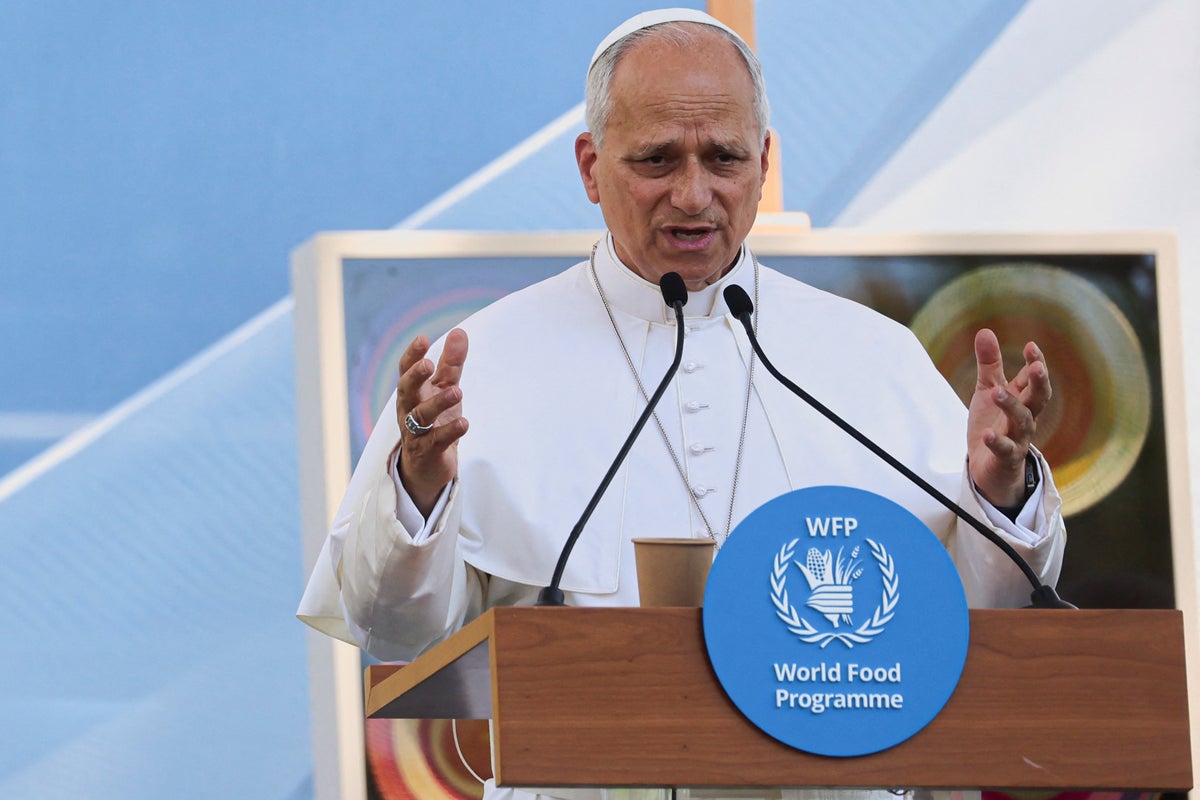
Pope Leo XIV just blew the doors off this global hypocrisy.
During his visit to the United Nations World Food Programme headquarters in Rome, the pontiff didn't mince words. He openly accused global powers of having completely warped priorities. He pointed out that conflicts get funded with terrifying efficiency while human beings starve under bureaucratic red tape.
It is a massive moral failure.
When you look at the raw numbers, the situation is even worse than it looks on the news. Global food aid is cratering. Wars are multiplying. The international systems built to keep the peace are breaking under the weight of pure cynicism.
The Core of the Pope Leo Warning to World Leaders
The first American pope is turning out to be far more politically direct than many expected. He took the stage at the WFP and delivered a line that should make every major president and prime minister flinch. He said conflicts are fed much more readily than people are nourished.
Think about that.
Weaponry moves through international borders like water. It bypasses customs. It gets fast-tracked through congresses and parliaments. It receives billions in emergency funding overnight. But when a humanitarian convoy tries to bring wheat into a combat zone, suddenly the rulebooks appear. You get impenetrable customs barriers. You get endless diplomatic bickering. You get sudden funding freezes based on which side of a war the starving civilians happen to live on.
This is not an operational glitch. It is a deliberate choice.
Pope Leo made it clear that the world has enough food. The global economy possesses an unprecedented capacity to produce and distribute resources. We just choose to prioritize national defense budgets and geopolitical positioning over basic human survival. Human life is being quietly commodified. Aid is treated like a bargaining chip rather than a moral obligation.
How Deep the Humanitarian Funding Crisis Really Runs
The numbers back up the anger coming out of the Vatican. This isn't just religious rhetoric. It is a statistical disaster.
Funding for international food assistance has dropped by roughly 59% since 2022. Let that sink in. The world is wealthier than ever, yet the money meant to keep people alive has been cut in half. Meanwhile, the WFP has an appeal for over $10 billion to get through the year, and it is nowhere near meeting that goal.
The agency recently warned that acute food insecurity is actively worsening across 13 major countries. The combination of local conflicts, severe climate shocks, and shrinking donation pools is creating a perfect storm.
We saw a brief moment of relief recently when the United States pledged $800 million to the WFP. That money will help around 38 million people across dozens of nations. It sounds like a lot, but it is a drop in the bucket compared to what was lost.
The background here matters immensely. Last year, the Trump administration completely dismantled the U.S. Agency for International Development. That single move wiped out $60 billion in global assistance. While a policy reset in December restored some funding to the WFP and UNICEF, the damage was already done. The backbone of global humanitarian relief was snapped. When the largest economy on earth pulls back its safety net, the rest of the world suffers the consequences immediately.
Why Food Security Involves Hardcore Geopolitics
Many political analysts like to view humanitarian aid as a soft charity issue. They think it is separate from real foreign policy. They are entirely wrong.
Pope Leo pointed out that food security is an essential component of global stability. When people can't feed their kids, societies collapse. Mass migration spikes. Radical groups find easy recruits among desperate communities. Hunger isn't just a byproduct of war. It is a primary driver of it.
Worse yet, hunger has become a deliberate strategy. In modern conflicts across Eastern Europe, Africa, and the Middle East, we see water networks bombed intentionally. We see livestock stolen. We see agricultural fields burned to the ground. Starving an entire population into submission is a cheap military tactic, and world leaders are letting it happen because they are hyper-focused on national security and domestic economic growth.
The old system of multilateral cooperation is dead. It has been replaced by a chaotic, fractured multipolar world where nations don't trust each other. Everything is transactional. If providing aid doesn't serve a country's immediate strategic interest, the checkbook stays closed.
What Needs to Change Right Now
We can't rely on world leaders to magically fix their moral compasses. The pressure has to come from the ground up. If you want to actually push back against this trend, you have to change how you think about global charity and political accountability.
First, stop looking at global hunger as an inevitable tragedy of nature. It is almost always man-made. Write to your representatives and demand that humanitarian aid budgets be decoupled from geopolitical alliances. Aid shouldn't be withheld from a region just because its leaders are hostile to Western interests. Starving civilians don't have a political party.
Second, bypass the massive bureaucratic pipelines if you want to donate. The Pope specifically mentioned the bureaucratization of solidarity. Massive operations often get bogged down in administrative costs. Look for agile, localized organizations operating directly on the ground in high-risk zones like Lebanon, Venezuela, or East Africa. They often bypass the political roadblocks that stymie larger groups.
Finally, keep the focus on accountability. When governments approve hundreds of billions for defense spending without a second thought, ask why a fraction of that amount for global stability through food security is treated like an impossible luxury.
The current path is completely unsustainable. We are leaving a legacy of massive inequality for future generations, and as the Pope rightly stated, sooner or later we will have to explain ourselves.