Celebrity galas usually feel like exhausting exercises in corporate PR. You see a row of stiff stars reading off teleprompters, donors clapping politely, and an atmosphere thicker than a velvet curtain. But Selena Gomez does things differently. Her fourth annual Rare Impact Fund Benefit in Los Angeles pulled in a massive $2.7 million for youth mental health, proving that high-profile philanthropy doesn't have to put you to sleep.
If you look past the headlines about red carpets, the real story is about scale, transparency, and why celebrity-backed foundations are finally moving the needle where traditional non-profits struggle. Let’s break down what actually happened at the event, why Benny Blanco’s auction win stole the show, and what this means for the broader fight for accessible adolescent mental healthcare. Also making news recently: How Portia De Rossi Turned Ellen Degeneres's Birthday Into A Wildlife Triumph In Rwanda.
The Numbers Behind the Night
Let's talk figures immediately because transparency matters when talking about charity galas. The event generated $2.7 million through a combination of corporate sponsors, direct donations, and a high-stakes live auction. To put that in perspective, the previous year’s gala brought in just over $2 million. That is a steady upward trajectory in a macroeconomic climate where donor fatigue is hitting almost every major non-profit sector.
The money feeds directly into the Rare Impact Fund, which Gomez launched back in 2020 alongside her cosmetics brand, Rare Beauty—pledging 1% of all product sales straight to the cause. Since inception, the initiative has dragged over $30 million out of the corporate ether and funneled it directly to 30 different non-profit partners spanning five continents. They estimate reaching roughly 3.5 million young people annually with actual, tangible resources. Further insights on this are detailed by Associated Press.
Most celebrity charities quietly dissolve after a couple of photo ops. This one is scaling toward a stated $100 million mobilization goal. When you track the trajectory, they might actually hit it.
The Benny Blanco Auction Moment That Everyone Talked About
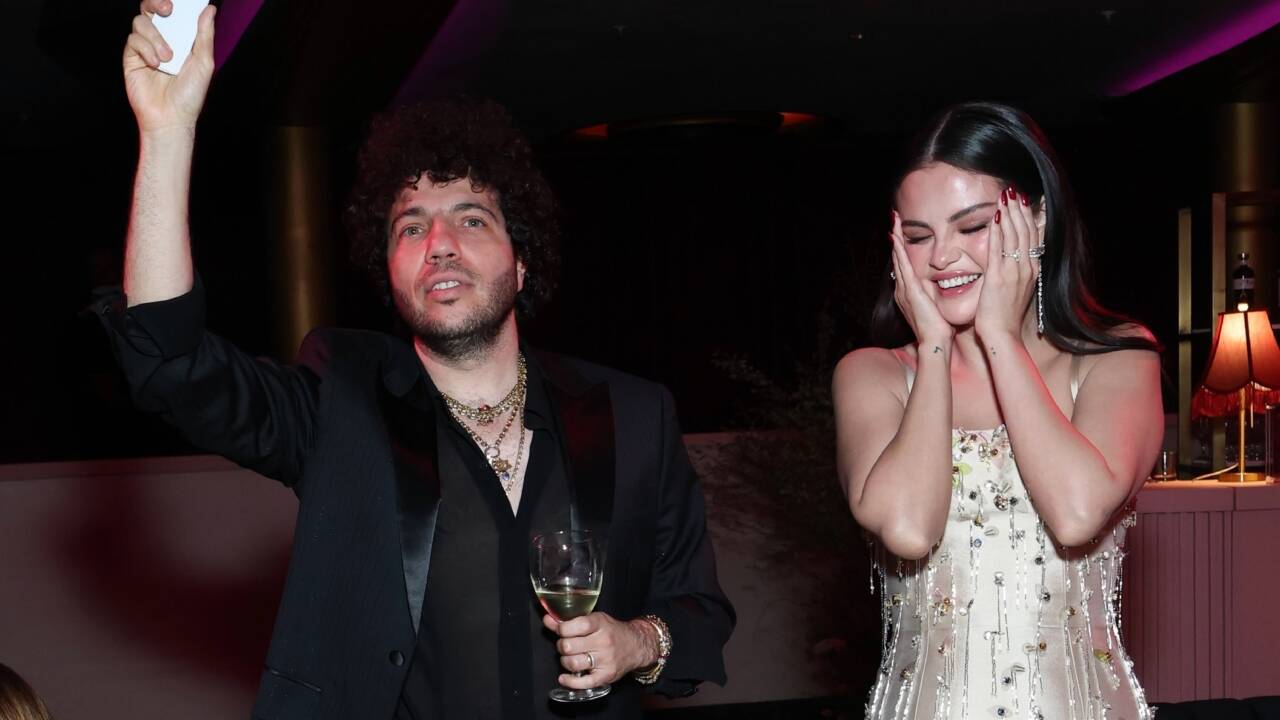
You can't talk about the night without mentioning the auction room. Music producer Benny Blanco—who married Gomez in late September 2025—decided to put his money where his mouth is.
When a unique package hit the block titled "Session with Selena Gomez's Official Glam Team," Blanco didn't just sit back. He actively fought for it. The package included styling work from hairstylist Renato Campora, makeup artistry by Jenna Nicole, and custom nails by Tom Bachik. Blanco raised his paddle repeatedly against deep-pocketed bidders before slamming down a winning bid of $25,000.
Cameras caught Gomez leaning on him as the hammer dropped. Sure, it’s a fun, tabloid-friendly moment, but from a fundraising standpoint, it's brilliant auction design. Give wealthy attendees access to the inner circle experiences they actually want, and watch the checks clear instantly.
Honoring Real Work With the Katherine Short Legacy Award
One of the sharpest turns of the evening came away from the lighthearted auction blocks. Gomez introduced the inaugural Katherine Short Legacy Award, named in honor of Katherine Short, who passed away in February at age 42. Katherine was the daughter of Gomez’s Only Murders in the Building co-star, Martin Short.
Katherine was a career social worker who spent her life helping vulnerable individuals navigate their darkest psychological moments. Bringing Martin Short on stage to help present an award recognizing frontline mental health workers anchored the glitzy night in raw, human reality. It reminded everyone in the room that while pop stars throw parties, the heavy lifting of mental health care falls on everyday clinicians, social workers, and community advocates who rarely see a red carpet.
Why This Approach to Mental Health Advocacy Actually Works
Gomez has been remarkably blunt about her own psychological hurdles over the years, discussing her bipolar diagnosis and the grueling years spent looking for correct diagnoses and adequate support systems.
Most public figures treat mental health as a safe, generic buzzword for World Mental Health Day. Gomez treats it like an infrastructure problem. Young people don't just need a wristband or a positive Instagram caption; they need therapists who take insurance, school counselors who aren't overwhelmed with caseloads, and crisis lines that pick up on the first ring.
By tying the funding directly to an ongoing retail engine—the 1% model from Rare Beauty—the cash flow doesn't rely entirely on an annual gala or a passing news cycle. It flows quietly every single day a customer buys a liquid blush or a tinted lip oil.
If you want to support youth mental health initiatives yourself, look for organizations that publish audited financial disclosures and partner with schools directly. Check out local community clinics in your zip code that offer sliding-scale therapy. Supporting massive funds like Selena’s is great, but plugging financial leaks in your local community infrastructure creates immediate safety nets where kids fall through the cracks every single day. Stop waiting for celebrities to fix the system entirely and start supporting the boots-on-the-ground social workers doing the work right now.