Long queues formed outside polling stations in Belgrade and Novi Sad well before sunrise. When voting opened at 7:00 AM, the lines already stretched down city blocks, wrapped around residential corners, and signaled something unusual in Serbian politics. Voters didn't look exhausted or indifferent. They looked deliberate.
Early turnout numbers told the real story. By 2:00 PM local time, roughly 46% of eligible voters had cast ballots—nearly a million more people than turned out at the exact same point during the December 2023 parliamentary vote.
For fourteen years, President Aleksandar Vucic and his ruling Serbian Progressive Party (SNS) operated on a simple strategy: rely on a disciplined, well-oiled party machine, maintain tight control over national media, and count on widespread political fatigue to keep opposition voters at home.
That playbook completely broke down.
Instead of faced-off political veterans from traditional opposition blocs, Vucic is facing an unexpected electoral challenger: a youth-driven political movement called the Student List (Studentska Lista). Headed by 30-year-old cardiologist Ilija Srdanovic, the movement has turned months of university sit-ins, rural cycling tours, and anti-corruption marches into a serious parliamentary challenge.
The Tragedy That Broke a Fourteen-Year Spell
Political movements rarely start in a vacuum. The momentum driving voters to the polls traces back to November 2024, when a concrete railway station canopy collapsed in Novi Sad, killing 16 people.
The building had recently undergone a high-profile, highly publicized renovation carried out by foreign contractors. Yet official documentation was classified, and months after the disaster, nobody had been held accountable. For millions of Serbians, the canopy failure wasn't just an accident. It was a physical manifestation of deep-seated state corruption, regulatory neglect, and unchecked political cronyism.
Protests started at universities. Students blocked lecture halls, held vigils, and demanded the resignation of top officials. When government-aligned media tried to dismiss them as paid agitators or fringe troublemakers, the students changed tactics.
They didn't just stay on campuses in major urban centers. They hopped on bicycles and walked across the countryside, visiting rural villages and small agricultural towns where Vucic's message usually goes unchallenged. They knocked on doors, spoke directly with elderly farmers, and explained how systemic corruption directly affects local schools, roads, and healthcare.
That grassroots effort built a campaign slate unlike anything Serbia has seen. The Student List put forward 250 candidates—mostly unfamiliar faces made up of young academics, actors, doctors, and farmers who had never held public office.
Beyond Belgrade: A Battle for Rural Hearts and Minds
Vucic isn't taking the threat lightly. In the weeks leading up to the vote, the ruling SNS pulled out all the stops. National broadcasters heavily favored government candidates, while state-aligned tabloid newspapers ran aggressive smear campaigns against student leaders.
Vucic even made a drastic tactical move earlier this year, stepping down from the presidency to run directly in the parliamentary race with the goal of shifting the primary locus of executive power to the prime minister's office. He campaigned heavily on his record of foreign direct investment, highlighting infrastructure projects funded by China and long-standing energy ties with Russia.
Yet the contrast on the ground remained stark.
While the ruling party organized massive, tightly orchestrated rallies with bused-in supporters, the Student List relied on decentralized social media drives and spontaneous street gatherings. At their final rally in Belgrade, thousands of young voters filled the central square, lighting phone flashlights and flares while chanting slogans demanding institutional transparency, an independent public broadcaster, and an end to political appointments in public enterprises.
The elevated turnout numbers suggest those contrast points resonated far beyond youth demographics. Older voters, disillusioned by years of economic stagnation and political stagnation, appeared eager to back the younger generation.
"I came out early today because the students called us," said Ana, a 30-year-old voter in Belgrade. "After so many years of feeling like nothing changes, seeing these young people take a stand gave us a reason to show up."
What This Turnout Means for the Wider Region
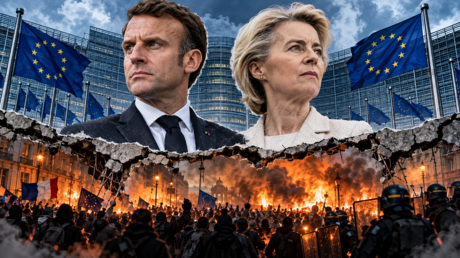
The stakes extend far beyond Serbia's borders. As a candidate nation for European Union membership, Serbia's democratic trajectory is closely watched in Brussels and neighboring Western Balkan capitals.
Under Vucic, EU officials repeatedly raised concerns over democratic backsliding, judiciary independence, and press freedom. A strong showing by an independent, civic-minded student coalition could reshape the political dynamics of the entire region. It demonstrates that even in an environment with heavy media concentration and entrenched ruling structures, organic civic mobilization can force real electoral competition.
Whether the Student List secures a parliamentary majority or simply breaks the SNS's absolute dominance, the landscape has fundamentally shifted. The illusion of complete political apathy among young Serbians is gone.
Practical Steps to Track the Results
If you're following the election outcomes as official tallying continues, keep these key factors in mind:
- Check official count updates directly through the Serbian Electoral Commission (RIK) for verified seat allocations.
- Watch urban versus rural turnout splits. Opposition movements historically perform stronger in Belgrade, Novi Sad, and Niš, while rural districts determine overall parliamentary majorities.
- Monitor international observer assessments from organizations like the OSCE Center for Free Elections and Democracy (CeSID) for reports on polling conditions and vote-tally transparency.