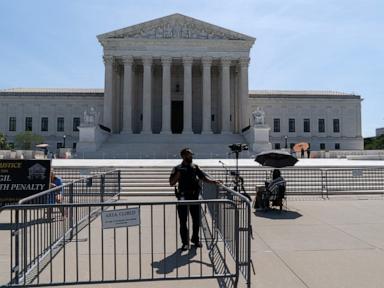
Supreme Court justices don't usually walk into the halls of Congress to testify. They prefer to let their written opinions do the talking from the quiet comfort of One First Street. But when your home becomes the target of a fake emergency swatting call, or an armed man shows up outside your colleague's house with zip ties, the silent treatment stops working.
That's why Justices Elena Kagan and Amy Coney Barrett are heading to Capitol Hill on Tuesday. It is a rare, high-stakes appearance before a House appropriations panel. Nominally, they're going to talk about a 10% budget increase. In reality, they are fighting for their personal safety in an environment where rage against the judiciary has reached a fever pitch.
Let's look past the dry budget charts to understand what this historic moment actually tells us about political violence, institutional erosion, and the scary new reality of being a judge in America.
The Millions Needed to Keep Justices Alive
The Supreme Court is asking for a total of $228 million for the next fiscal year. That sounds like a massive pile of cash, and it is a $20.6 million jump from the previous cycle. But when you break down where that money goes, it becomes obvious that the high court is preparing for long-term domestic unrest.
The biggest chunk of this new money—about $14.6 million—is dedicated entirely to expanding personal protection details for the nine justices. Right now, their security details are stretched thin. If Congress approves the request, each justice will get six additional security agents. Think about that for a second. The highest judges in the country need half a dozen more bodyguards apiece just to move safely through the world.
On top of the extra bodyguards, the court is asking for $2 million to build an off-site residential security office. This office will coordinate responses at the justices' private residences. They're also adding 25 new police officers to protect the Supreme Court building itself and spending millions on a new exterior visitor screening facility. The iconic marble building is turning into a fortress.
The Scariest Threats Nobody Wants to Acknowledge
This isn't a hypothetical exercise in bureaucracy. The threat data is genuinely alarming. The U.S. Marshals Service, which handles protection for federal jurists, reported 564 direct threats in the last fiscal year alone. That number keeps ticking upward every single year.
Justices Kagan and Barrett were chosen to deliver this testimony for a specific reason. They are widely seen as measured, consensus-building members of their respective factions. But Barrett also has chilling firsthand experience with the dark side of modern political polarization.
Just back in May, emergency services rushed to Barrett’s home after a fake 911 call claimed an active emergency was taking place there. This tactic, known as swatting, is designed to draw heavily armed tactical units to a target's house, creating a high risk of accidental violence. A year before that, Barrett's sister was targeted with a bomb threat in South Carolina.
We can't forget the near-miss with Justice Brett Kavanaugh in 2022. An armed man carrying weapons and tactical gear was arrested right outside Kavanaugh's house after a draft opinion leaked. Chief Justice John Roberts tried to warn the public earlier this year, stating plainly that while criticizing judicial opinions is completely fine, personal hostility is dangerous and has to stop. Nobody seems to be listening to him.
The Irony of Cross-Examining the Court
When Kagan and Barrett sit at that witness table, they won't just face questions about security guard salaries or building maintenance. Lawmakers are going to use this rare opportunity to grill them on recent, explosive rulings.
The court just wrapped up a monumental term that left both sides of the political aisle furious. They handed down a ruling that expanded executive power over federal regulatory agencies, a massive win for conservatives. But then they turned around and blocked attempts to end birthright citizenship via executive order and rejected wide-ranging global tariffs. Those decisions sparked immense anger from Donald Trump and his base.
This creates a deeply uncomfortable dynamic on Capitol Hill. The very lawmakers who stoke public anger against the court for political points will be the ones deciding whether to fund the security needed to protect the justices from that same anger.
Expect Democrats to push hard on court ethics and transparency. They want to talk about luxury travel controversies and internal leak investigations. Expect Republicans to focus heavily on left-wing protesters targeting conservative justices' homes. The budget hearing will almost certainly devolve into a political circus.
Why This Hearing Breaks a Century of Tradition
Public testimony from sitting justices used to be normal. Between 1960 and 2011, members of the high court appeared before congressional committees at least once a year. They would talk about the administration of the judiciary, swap stories, and keep the branches of government connected.
Then the cultural climate shifted. The last time any justice testified before Congress was back in 2019, when Kagan and Justice Samuel Alito spoke about a potential ethics code. Before that, the last Senate appearance was all the way back in 2011 with Stephen Breyer and Antonin Scalia.
The justices stopped coming to Capitol Hill because the meetings became too toxic. They realized that appearing before Congress put them in a position where they had to dodge political traps while trying to maintain the appearance of neutral arbiters of the law. The fact that Kagan and Barrett are willing to endure this gauntlet now shows how desperate the security situation has become.
How to Think About This Funding Request
Some court critics argue that Congress should withhold this money or use it as leverage to force the Supreme Court to adopt a stricter, enforceable ethics code. They feel the court has insulated itself too much from democratic accountability.
That is a dangerous game to play. Disagreeing with a court ruling is part of the American system. Threatening the physical safety of the people making those rulings undermines the entire rule of law. If a judge has to worry that a controversial vote might get their family killed, our legal system ceases to function.
Security funding shouldn't be treated as a political bargaining chip. Congress needs to scrutinize the $228 million request to make sure the cash is being spent efficiently, but the core request for better protection must be granted.
What Happens Next
The immediate next step rests with the House and Senate Appropriations subcommittees. They will draft the final budget bills over the coming months. If you want to see how serious Washington actually is about protecting the judiciary, keep a close eye on whether this $20.6 million security increase passes without getting weighed down by partisan policy riders.
Pay attention to how Barrett and Kagan handle the political traps during the hearing. Their ability to maintain a unified front will tell us everything we need to know about the resilience of the court.


