For generations, learning to ride a bike happened on cracked pavement, neighborhood cul-de-sacs, or gravel driveways under the watchful eye of a parent. Now, that classic childhood milestone is shifting indoors. Schools are swapping out old-school scooters and jump ropes for balance bikes right in the middle of physical education class.
Programs like All Kids Bike are rewriting the script on how children gain physical confidence. Instead of waiting for an older sibling to teach them or hoping their neighborhood has safe streets, kindergarteners are stepping into school gymnasiums to learn the ropes. It is a massive shift in how public education views core motor skills. In other updates, take a look at: Why The Untouchable Guardians Of Varanasi Burn The Dead In Plain Sight.
How School Bike Curriculums Actually Work
You might wonder how a P.E. teacher manages thirty five-year-olds on wheels inside a enclosed space without total chaos. The secret lies in a structured, progressive approach.
The standard curriculum spans about eight lessons. It doesn't throw kids onto a traditional bike with pedals on day one. That is a recipe for scraped knees and tears. Instead, it starts with specialized, pedal-free balance bikes. Apartment Therapy has analyzed this critical subject in great detail.
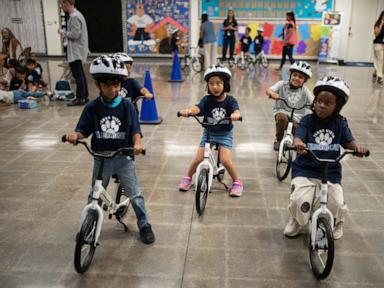
- Phase One: Kids fit their helmets, straddle the black-and-white balance bikes, and simply walk while seated.
- Phase Two: They pick up their feet, practicing short glides along paths marked by orange cones.
- Phase Three: Once balance and core stability take over, instructors attach the pedals.
It is methodical. Educators like Drew Raney, a P.E. teacher in California, watch kids transition from cautious shuffles to confident glides in real-time. That split second where a child lifts both feet off the ground changes everything about their self-belief.
Why This Shift Matters Now
Learning to ride a bike is rarely just about recreation. It is an intensive workout for the nervous system. Lori Dunn, a district physical education manager in Seattle, points out that the process demands core stability, spatial awareness, and sequencing. It mirrors cognitive tasks like typing; once your brain cracks the code, the physical memory sticks with you for life.
Equity drives a lot of this movement, too. Not every family has a driveway, a quiet street, or the budget to buy specialized starter equipment. Local funding models—such as a $45,000 investment from the city of Rancho Cucamonga to equip several elementary schools—help level the playing field. When bike instruction becomes part of the school day, every kid gets a shot at freedom, regardless of their zip code or background.
Beyond the Gymnasium Walls
The long-term payoff goes far beyond a single gym class. Schools utilizing playground "traffic gardens"—painted miniature streets with stop signs and crosswalks—help children practice real-world navigation. They learn how to exist safely as pedestrians, cyclists, and future motorists.
Critics might argue that gym class should stick to traditional sports or unstructured play. But when screen time competes with active outdoor hours, schools have to adapt. Handing kids the keys to independent mobility early builds lifelong habits.
If you work in education or care about childhood development, advocate for active transit programs in your local district. Push your school board to look past outdated P.E. templates. Get the equipment funded, get the kids on wheels, and let them experience what it feels like to move forward on their own terms.