Most schools still prepare children for a world that vanished a decade ago. Classrooms remain frozen in an industrial-era model where memorization trumps invention and sitting quietly beats solving messy real-world problems. Yet the modern job market demands something radically different.
When Renée Boey founded Bloom KKCA Academy in Hong Kong, she started with a straightforward premise. She wanted to build a school for the environment kids will actually inhabit as adults, rather than recycling the blueprints of the past. Founded in 2021 with bilingual primary classes and expanded with the Smart Too Bloom Academy secondary section, the institution relies heavily on project-based learning to train young minds for constant disruption.
Moving Beyond the Textbook Routine
You can't solve twenty-first-century problems using nineteenth-century teaching methods. At Bloom KKCA, core academic subjects occupy the morning hours, anchoring students in rigorous foundations across languages, mathematics, science, and humanities. But afternoons tell a completely different story.
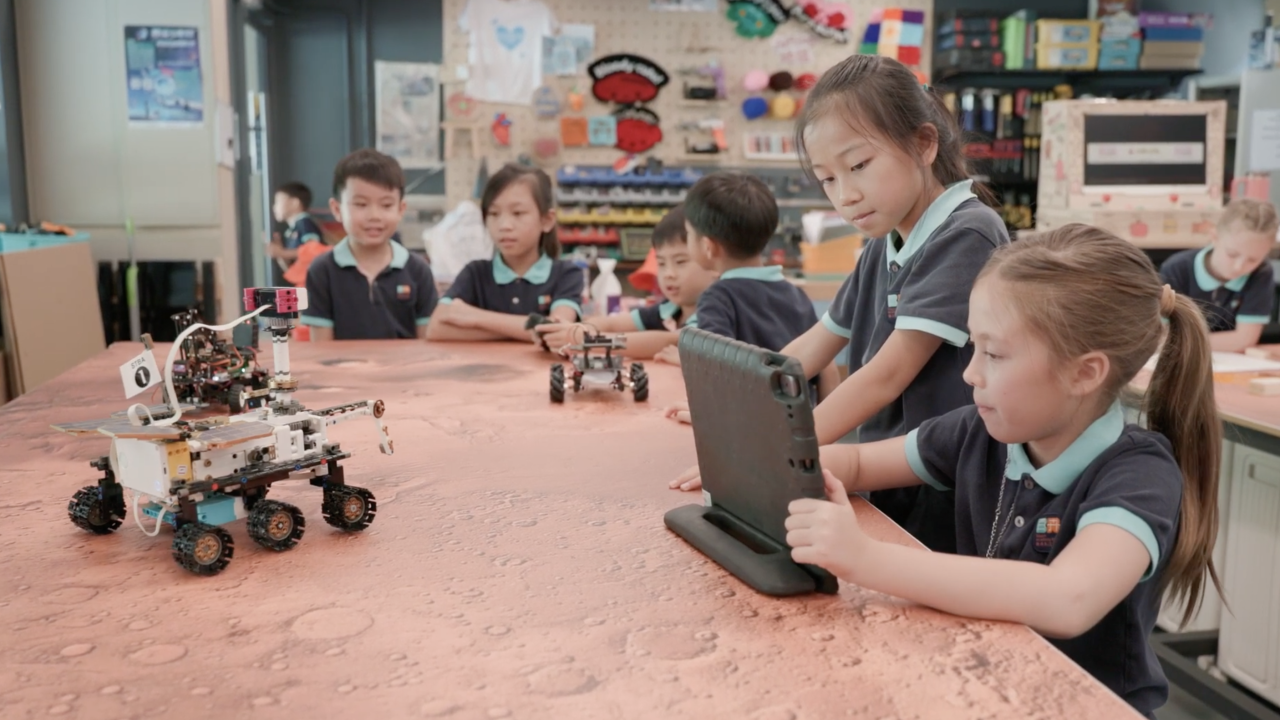
Instead of passive listening, students dive straight into co-curricular project work focused on STEM themes, artificial intelligence, and applied design. The underlying philosophy treats entrepreneurship not merely as starting a business corporation, but as a habit of mind characterized by initiative, creative problem-solving, and sheer grit.
Kids don't just study theories in a vacuum. They build tangible solutions, analyze real data, and bring in outside experts to critique their work. When secondary students design sustainable fashion lines, they don't stop at sketching ideas on paper. They pitch concepts to actual buyers and run live sales events with partner brands like Determinant. When exploring food innovation, they consult directly with social enterprise leaders from Gingko House to study how businesses balance profit, people, and the planet.
The Power of Immersive Fieldwork
Real learning rarely happens inside a sterile classroom box. Bloom integrates regular field investigations into its weekly schedule, reserving Fridays for hands-on experiences at sustainable farms, game design studios, and local business incubators.
International and regional study tours push this philosophy even further. Senior students travel to destinations like Malaysia and Singapore to analyze the commercial realities of the gaming industry and environmental sustainability initiatives. Other excursions take students deep into mainland China to study traditional medicine, biodiversity, and agriculture alongside calligraphy and philosophy.
This interdisciplinary approach prevents students from viewing subjects as isolated silos. Science connects directly to culture, while wellbeing ties straight into environmental science.
Balancing Rigor With Adaptability
Skeptics often worry that project-based schools sacrifice academic rigor for hands-on fun. Bloom counters this by keeping traditional standards firmly intact. Secondary students navigate the UK Key Stage 3 curriculum before choosing paths that lead to International A-Levels, the local DSE curriculum in Putonghua, or US-accredited tracks.
You can't think critically about quantum computing, biotechnology, or artificial intelligence without understanding fundamental science and mathematics first. Knowledge remains the anchor. The difference lies in what students do with that knowledge once acquired. They learn how to adapt when variables change, how to communicate complex ideas clearly, and how to stay resilient when initial hypotheses fail.
The goal isn't teaching children the answers to tests they will face tomorrow. The goal is giving them the confidence to figure out answers to questions nobody has even asked yet. Stop waiting for traditional education systems to fix themselves from the inside out. Look at models prioritizing real adaptability, and watch how quickly students rise to meet the actual demands of the modern world.