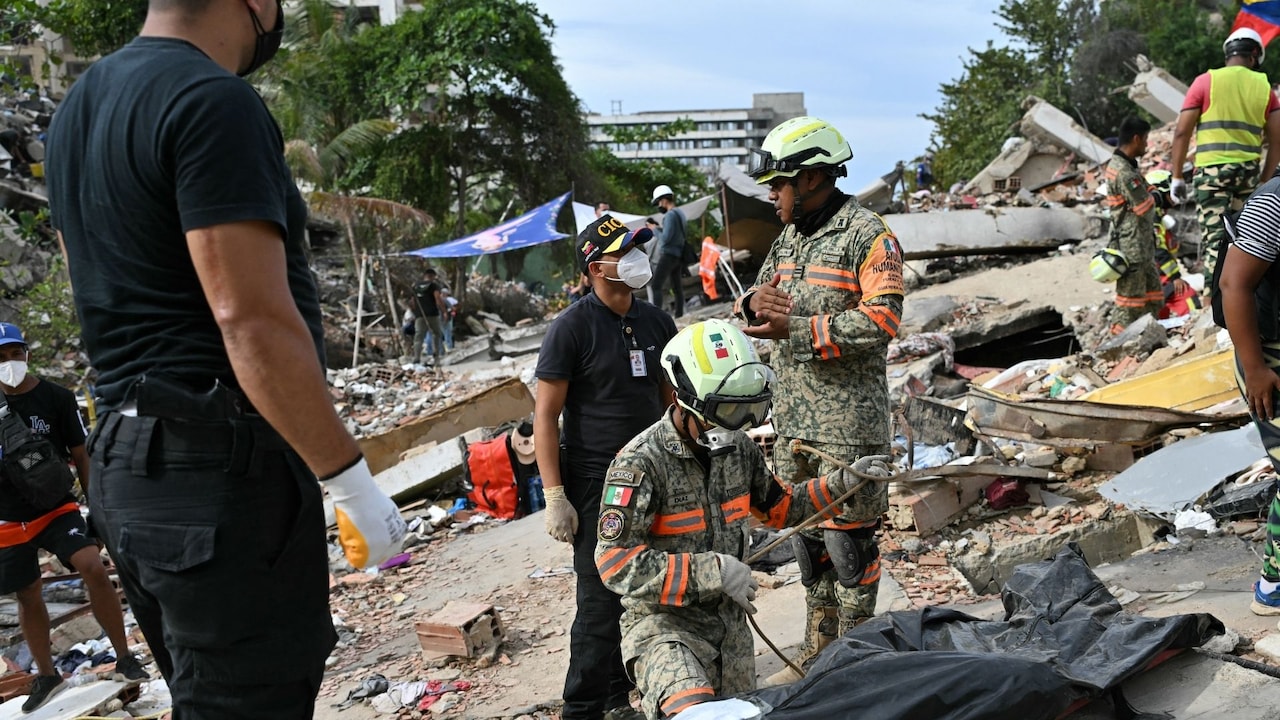
The ground in northern Venezuela didn't just shake on June 24; it literally swallowed whole neighborhoods.
We now know the human cost has crossed a staggering milestone. According to official figures shared on Telegram by Parliament Chief Jorge Rodríguez, the confirmed death toll from the back-to-back earthquakes has climbed to 4,118. Another 16,740 people are treated for injuries. But anyone who understands the realities of disaster response knows these numbers are just the tip of an iceberg. With thousands still missing, the final tally will be much worse. For a more detailed analysis into this area, we suggest: this related article.
This wasn't a standard tremor. A 7.2-magnitude shock struck the coastal state of La Guaira, followed a mere 39 seconds later by a massive 7.5-magnitude monster—the largest the country has felt in over a century. That cruel double-tap function gave concrete apartment buildings no time to settle, flattening them into multi-layered sheets of debris.
The Grim Shift From Rescue to Recovery
Official rescue teams have effectively called off the hunt for survivors. More than two weeks after the initial disaster, the window for finding anyone alive has slammed shut. For additional context on this development, comprehensive reporting can be read at The Washington Post.
But tell that to the families. Walk through the ruined streets of La Guaira today, and you won't see people giving up. You see everyday citizens—the amateur rescuers known locally as the "Moles of Venezuela"—scouring the concrete slabs with bare hands and rudimentary tools. They aren't looking for miracles anymore. They're looking for closure. They want to give their children, parents, and neighbors a dignified burial rather than leaving them entombed under tons of structural ruins.
The psychological toll is building by the day. Just hours ago, a minor 3.0-magnitude tremor rattled central Caracas. In a normal city, a 3.0 quake is barely a conversation starter. In a traumatized nation, it triggered immediate panic, sending thousands of terrified people streaming out of high-rises into the streets.
A Broken Infrastructure Meets a 37 Billion Dollar Nightmare
The sheer economics of this disaster are staggering. The United Nations Office for Disaster Risk Reduction estimates the direct physical damage to housing and infrastructure at roughly $37 billion.
To put that in perspective, consider the state of Venezuela before the first tremor even hit. Years of economic collapse had already degraded public water, power networks, and medical facilities to near-uselessness. Now, the northern coast is a patchwork of mobile kitchens, field hospitals, and makeshift clinics set up in public squares.
The UN has made an urgent plea for $300 million in immediate relief funds to help 1.3 million people facing acute shortages of food, clean water, and shelter. But getting that money to the people is a political minefield.
Estimated Structural Damage: $37 Billion
UN Emergency Aid Requested:  $300 Million
Confirmed Injured Citizens:  16,740
The Political Battle Over Disaster Funding
Money exists to fix this, but it's locked behind global sanctions. Interim President Delcy Rodríguez has actively pushed international bodies to release frozen state assets held abroad—specifically the massive reserves of Venezuelan gold locked in British vaults due to long-standing political sanctions.
Whether foreign governments will trust the current administration to manage those funds is another story. Historically, the local government targeted independent non-governmental organizations (NGOs) with severe repression. Now, those same NGOs are the ones keeping survivors fed and bandaged.
If you want to support the relief efforts directly without dealing with state bureaucracy, look toward established international neutral players. Groups like the International Federation of Red Cross and Red Crescent Societies (IFRC) and Doctors Without Borders (MSF) are actively on the ground delivering medical care and clean water directly to the hardest-hit sectors of La Guaira.
Don't wait for global political bodies to untangle the frozen funds debate. Direct aid through verified humanitarian pipelines is the only thing keeping the current crisis from morphing into a widespread secondary health epidemic.