Pleading the Fifth in front of Congress looks terrible on television. Even when it's your constitutional right.
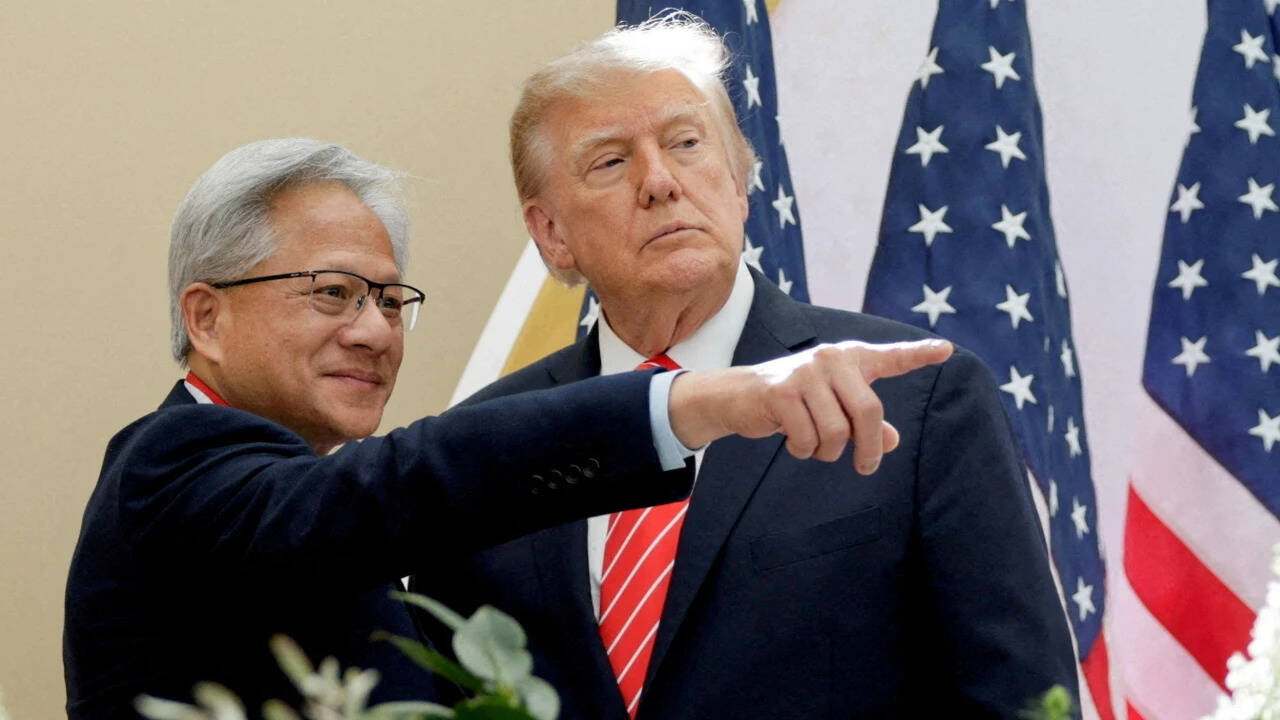
President Donald Trump told the New York Post this week that he doesn't think Nvidia CEO Jensen Huang needs to invoke the Fifth Amendment when he faces lawmakers over export controls, chip diversions, and personal scrutiny. Trump said he wants Huang to "just tell the truth" while leaving the final legal call to Huang's defense lawyers and keeping a presidential pardon in the back pocket "if necessary".
That single sentence from the White House connects two massive threads people are searching right now. First, what does the Fifth Amendment actually do in a congressional hearing or legal investigation? Second, why is Trump publicly nudging the head of America's biggest AI chipmaker not to use it?
If you've watched any high-stakes congressional hearing over the past few decades, you already know the theater. A witness sits under bright lights. A senator asks a pointed question about rules, money, or foreign contacts. The witness leans into the microphone and says they decline to answer on the grounds that it may tend to incriminate them. The clip runs on cable news for three days.
What the Fifth Amendment Actually Covers
Most people know the phrase "taking the Fifth" from courtroom dramas, yet its real-world mechanics trip up smart people constantly.
Part of the Fifth Amendment to the U.S. Constitution states that no person "shall be compelled in any criminal case to be a witness against himself". In plain English, the government can't force you to give testimony that hands prosecutors evidence to build a criminal case against you.
People often assume the right only applies inside a criminal courtroom while you're on trial. Not true. The U.S. Supreme Court has long held that the privilege against compelled self-incrimination can be asserted in other settings—including civil proceedings and congressional investigations—whenever a witness has reasonable cause to fear that truthful answers could furnish evidence used in a criminal prosecution or lead to such evidence.
That doesn't give you a magic mute button for every uncomfortable topic. You can't invoke the Fifth just because an answer is embarrassing, politically awkward, or bad for your stock price. There has to be a real, reasonable risk of criminal exposure. And if you start answering questions on a topic, lawyers warn that selective silence gets tricky fast because answering part of a question can sometimes be argued as waiving the privilege on related details.
In a criminal trial, a judge and jury aren't supposed to treat a defendant's silence as proof of guilt. Outside a criminal trial, the fallout looks very different. In civil lawsuits, juries can often draw an adverse inference from silence. In congressional hearings, there's no jury verdict in the room—just cameras, headlines, and potential referrals to the Department of Justice if lawmakers suspect contempt or wrongdoing.
Why This Clash With Jensen Huang Matters Right Now
Trump's remark didn't land in a vacuum. It came right after a dizzying stretch of corporate and political turbulence around Huang and Nvidia, following Huang's resignation and rapid reinstatement as CEO after scrutiny over an affair with a woman suspected by U.S. intelligence officials of ties to Chinese intelligence, alongside intense pressure over whether restricted AI chips reached China through third countries.
Lawmakers from both parties have zeroed in on export controls and national security. Some members of Congress—including critics pressing for tighter enforcement on chip smuggling and diversion—aren't letting the matter drop simply because Huang is back in the CEO chair. Meanwhile, reports have pointed to broader legal and regulatory heat around chip export compliance and investor disclosures.
When Trump says Huang shouldn't need to take the Fifth and wants him to tell the truth, he's doing three things at once:
- Protecting the narrative around AI dominance: Trump has repeatedly framed Nvidia's leadership and U.S. AI competitiveness as vital national priorities, warning that losing the right leader could hurt America's edge.
- Defending a favored executive: By calling Huang "100% aboveboard" while noting his lawyers will advise him, Trump tries to lower the temperature before questioning begins.
- Keeping leverage visible: Mentioning that a presidential pardon is "always an option" signals executive backing—even while Trump says he doesn't expect one to be needed.
Honestly, there's a big dose of political irony here, too. Over the years, Trump has criticized others for pleading the Fifth while also defending or using the protection himself when facing investigations. In politics, people's view of "taking the Fifth" often shifts depending on whose side is sitting in the hot seat.
The Trap Every High-Profile Witness Faces
From a practical standpoint, watching executives or officials prep for congressional testimony shows how wide the gap is between public pressure and legal reality.
Politicians want clean, quotable answers. A president wants a smooth story that doesn't feed opponents. Defense lawyers want one thing above all else: keeping their client out of criminal jeopardy and avoiding perjury or false-statement traps under oath.
Tell the truth, and you might hand critics ammunition or expose gaps in records you haven't double-checked. Plead the Fifth, and critics scream that you have something to hide, even though the Supreme Court has stressed that invoking the privilege isn't an admission of guilt.
That's why seasoned crisis and white-collar lawyers hate off-the-cuff public advice about testimony. A soundbite from the White House doesn't rewrite federal criminal statutes or export-control rules. Only the actual facts, internal documents, and advice of counsel can tell a witness where the real legal landmines sit.
What to Watch and Do Next
If you're following this story—whether as an investor, tech watcher, or someone trying to understand how constitutional rights play out in Washington—don't get lost in cable-news spin.
- Watch what questions actually get asked on the record: Pay attention to whether lawmakers focus on documented export-control compliance, third-party routing, or personal conduct, and how carefully each question is phrased.
- Separate legal rights from public optics: Remember that invoking the Fifth Amendment is a constitutional shield against compelled self-incrimination, not a guilty verdict—even when headlines treat it like one.
- Read primary filings and official statements when they drop: When congressional letters, committee schedules, or legal disclosures are released, read the exact wording rather than relying on second-hand summaries.
- Check authoritative legal sources when researching rights: If you want to read the exact constitutional text and how courts treat congressional subpoenas and self-incrimination, start with the Legal Information Institute Fifth Amendment overview and major Supreme Court decisions like Quinn v. United States on Justia.
In high-stakes hearings, the toughest battle isn't just what you say under oath. It's deciding when silence protects you and when speaking up clears the air.