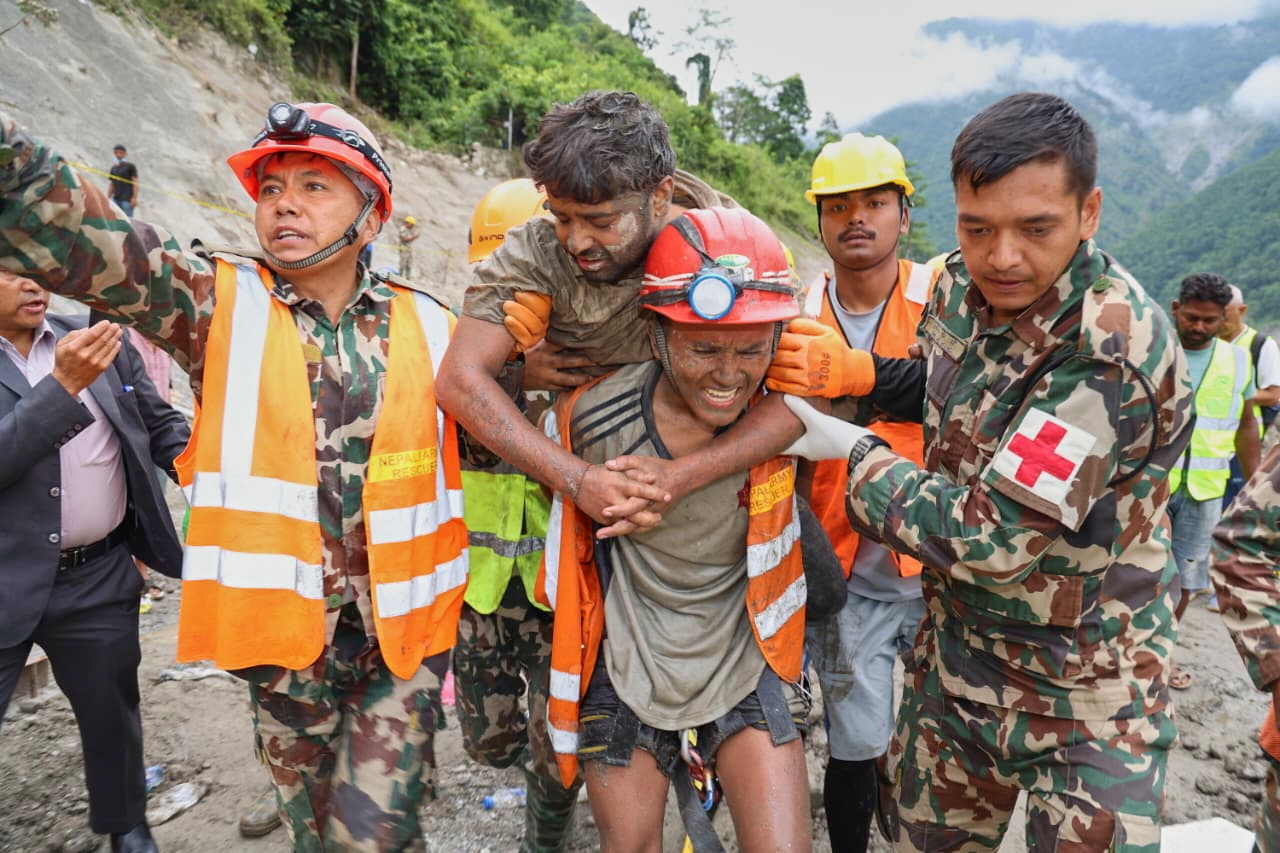
Nine days is an eternity in the dark. Imagine staring at pitch black walls, listening to the heavy drip of water, and wondering if anyone even knows you are still breathing. That is the grim reality two workers faced before being pulled alive from a hydropower tunnel in Nepal. Torrential floods and devastating landslides struck the region, wiping out villages and leaving entire communities shattered. Yet, amidst the massive destruction, a rare moment of hope emerged from deep underground.
Emergency crews managed to extract the two men alive from a hydropower plant tunnel along the Trishuli River. People often wonder how anyone can survive that long without food, clean water, or fresh air. The truth comes down to sheer human endurance and pockets of trapped air inside the massive subterranean infrastructure. Local authorities confirmed the workers were in stable condition after the extraction, and they were quickly flown to a hospital in Kathmandu for emergency medical care.
The Scale of the Disaster in Nepal
The catastrophic floods did not just impact isolated mountain paths. They hit critical energy infrastructure hard. Nepal features numerous hydropower projects carved into rugged terrain. When the heavy monsoon rains triggered massive landslides, mud and debris surged into plant facilities.
Reports indicate that hundreds of workers went missing across multiple hydropower projects along major river systems. Many are believed to be trapped inside underground tunnels or buried beneath tons of rock and soil. Rescue operations face monumental hurdles. Heavy equipment struggles to reach remote valleys, and unstable slopes continue to threaten emergency personnel.
Why Underground Survival is So Rare
Surviving nine days underground defies normal human limits. Dehydration usually kills a person within three days. So how did these workers beat the odds?
Tunnelling experts point to a few critical factors. Large hydropower tunnels often maintain distinct air pockets even when partially flooded. If water levels stabilize below the ceiling of an elevated section, trapped air can sustain human life for days. Furthermore, subterranean environments often feature condensation or minor water seepage that provides minimal hydration, even if the liquid is far from pure.
Psychological fortitude plays an equally massive role. Panic burns precious oxygen and accelerates dehydration. Men who survive disasters like this often describe locking into a mental routine, shutting down fear, and focusing entirely on conserving every ounce of energy.
What Happens Next for Rescue Operations
Finding two survivors provides an emotional boost, but the overarching crisis remains staggering. Search teams are working around the clock across multiple project sites. Families are desperate for news about missing relatives.
Authorities must balance the urgency of finding survivors with the safety of rescue workers. Engineers are constantly shoring up collapsed tunnel entrances to prevent secondary cave-ins. Every hour counts, but rushing blindly into unstable tunnels risks more lives.
Check local emergency updates and support humanitarian relief funds providing clean water and medical supplies to displaced families across Nepal.