The fragile peace in the Middle East didn't just crack; it completely shattered. If you thought the three-week-old interim ceasefire between Washington and Tehran would hold, Thursday morning brought a violent reality check.
Iranian armed forces launched targeted strikes against United States military infrastructure embedded right inside neighboring Gulf states. Missiles and drones rained down on installations across Kuwait, Qatar, and Bahrain.
This wasn't a random tantrum. It was a direct, calculated retaliation. Just hours earlier, the US military pounded approximately 90 Iranian military targets along Iran's southern coast and eastern provinces. President Donald Trump didn't mince words either, declaring the interim peace deal officially "over" after accusing Iran of targeting commercial tankers.
The region is now staring down the barrel of an absolute catastrophe.
The Myth of the Three Week Peace
Let's look at what actually happened on the ground because the timeline matters. The United States Central Command (CENTCOM) claims its massive Wednesday bombardment was purely retributive. They hit air defense networks, coastal radar sites, and logistics infrastructure. They blamed Iran for hitting three commercial tankers trying to navigate the Strait of Hormuz.
Iran didn't take that lying down. Tehran's response came fast, and it deliberately targeted the very countries hosting American forces.
- Kuwait: Iranian drones and missiles targeted US Patriot missile defense batteries. The Kuwaiti military intercepted a cruise missile, three ballistic missiles, and 10 drones, with falling shrapnel injuring at least one person.
- Qatar: Shrapnel and sirens disrupted Al Udeid's vicinity as Iran targeted a critical US early warning satellite antenna site.
- Bahrain: Home to the US Navy's Fifth Fleet, a fuel storage facility used by American forces was hit, triggering air raid sirens at least three times.
The timing couldn't be more dramatic. These strikes occurred precisely as Iran prepared to bury its slain Supreme Leader, Ayatollah Ali Khamenei, in the northeastern holy city of Mashhad. Khamenei was killed by a US airstrike on the very first day of this war back on February 28. Sending missiles across the Gulf during his final funeral processions was a deliberate message of defiance.
Choking the Worlds Economic Artery
This entire conflict boils down to one geographical choke point: the Strait of Hormuz. Before the war erupted in February, about a fifth of the world's daily oil supply flowed through this narrow strip of water.
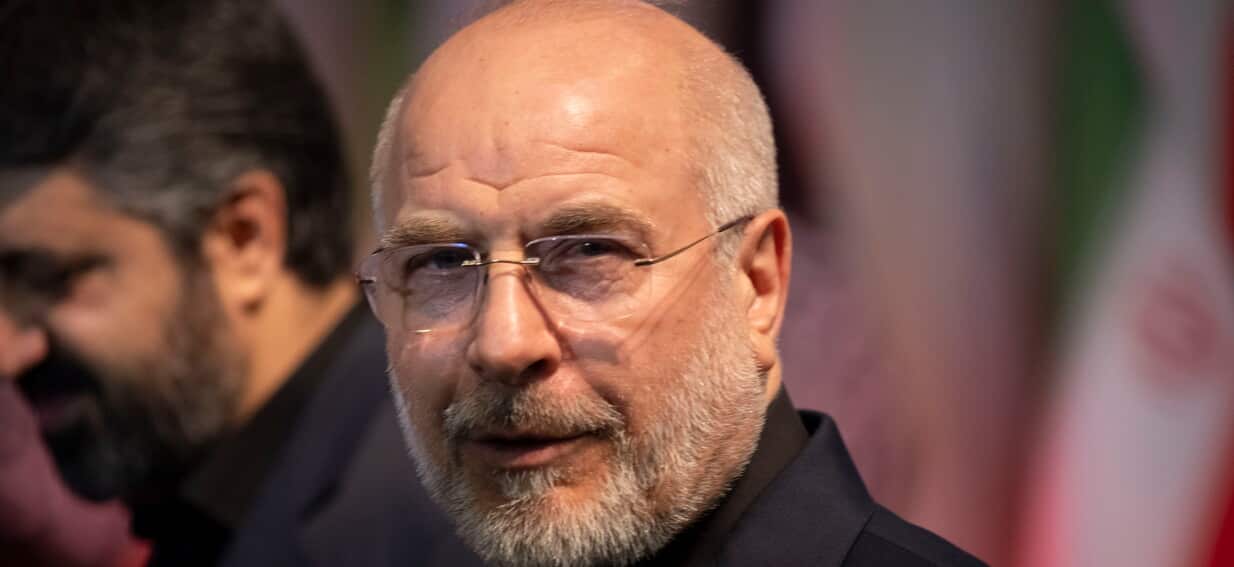
Since the outbreak of hostilities, Tehran has seized effective control of the waterway. They aren't letting it go easily. Mohammad Bagher Ghalibaf, Iran's parliamentary speaker and top negotiator, made their stance crystal clear on X. He warned that the US has not learned that "bullying" and breaking commitments carry heavy prices. He bluntly stated that the Strait of Hormuz will reopen only under Iranian arrangements, not under American threats.
The economic fallout is already hitting global markets. Oil prices have been swinging wildly as Wall Street tries to figure out if this is a temporary tactical escalation or the beginning of a total regional blockade. When Iran controls the shipping lanes, they hold a massive loaded gun to the head of the global economy.
Security Failures of Regional Proxies
Hosting American bases used to look like a golden security blanket for places like Doha, Kuwait City, and Manama. Right now, it looks like a giant bullseye.
Qatar finds itself in an incredibly awkward position. They host Al Udeid, the largest US military outpost in the region, yet they constantly play the role of diplomatic mediator between Washington and Tehran. Following the strikes, Qatari Prime Minister Sheikh Mohammed bin Abdulrahman al-Thani scrambled to call Iranian Foreign Minister Abbas Aragchi, pleading for a return to diplomacy while simultaneously condemning shipping attacks.
But diplomacy feels like a distant memory when anti-missile batteries are lighting up the pre-dawn sky. Western defense systems are being tested to their absolute limits by cheap, mass-produced Iranian suicide drones and ballistic salvos.
What Happens Next
The assumption that Western naval power could easily deter Iranian asymmetric warfare has proven completely false. Tehran is perfectly comfortable using its missile arsenal to force a violent stalemate against a technologically superior military.
If you are tracking this conflict, stop looking for signs of a diplomatic breakthrough. The interim ceasefire is dead. Watch the shipping insurance rates in the Gulf and look at the deployment of additional US carrier strike groups. The next 48 hours will determine whether this remains a localized exchange of blows or blows up into a full-scale war drawing in every single Gulf monarchy.
Keep your eyes strictly on the Strait of Hormuz. Whoever controls those waters controls the rhythm of this war.

:max_bytes(150000):strip_icc()/Sabyasachia-998984251b434f3a9c350c5694ef7f32.jpeg)
