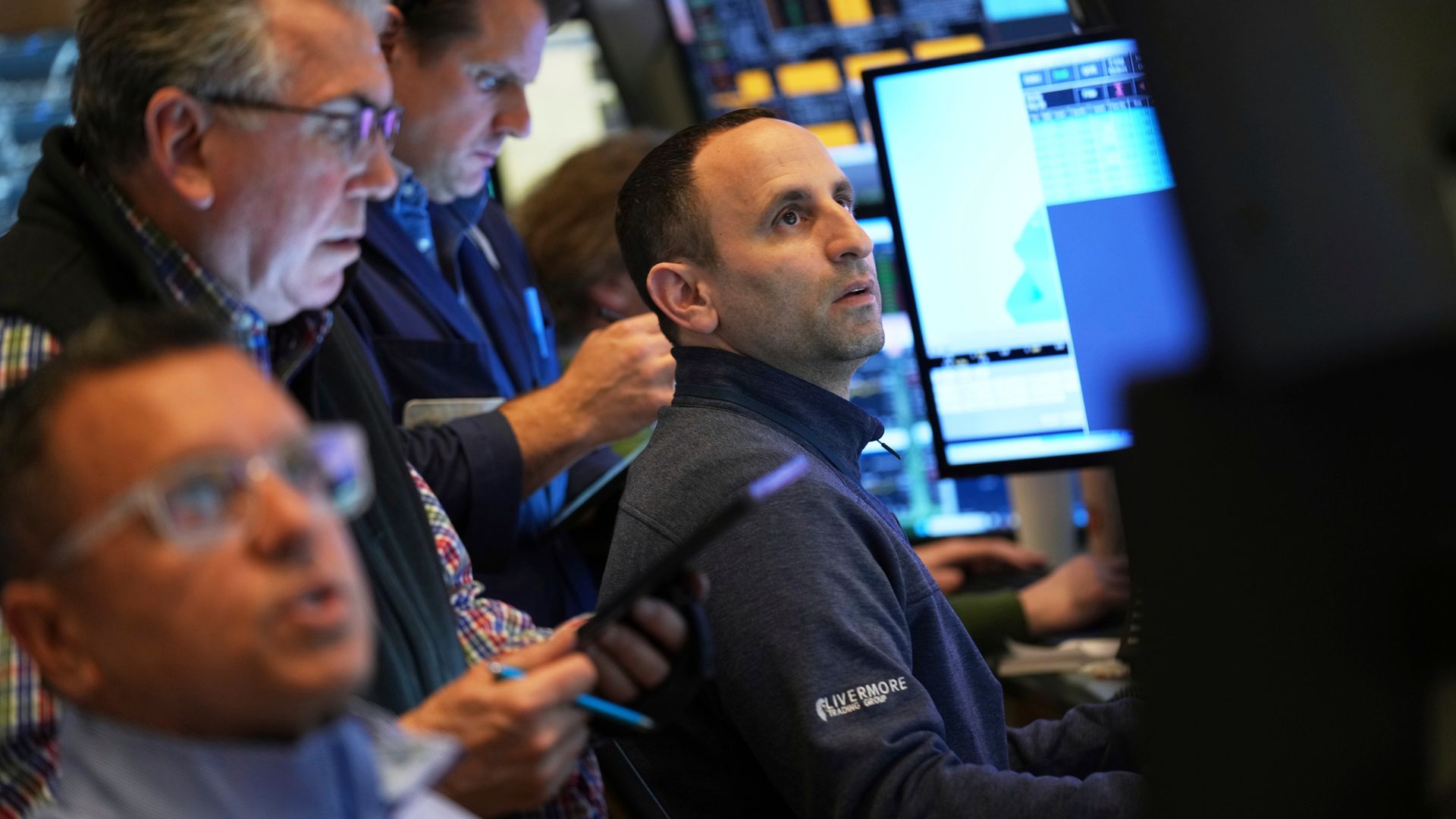
Why Wall Street Tumbled Thursday Even With Anthropic Stealing the Spotlight
You would think a blockbuster initial public offering from one of the biggest names in artificial intelligence would give Wall Street a reason to celebrate. Instead, Thursday, November 19, 2026 turned into a brutal session across the board.
Major U.S. stock indexes got hammered as AI nerves refused to cool down and traders grew uneasy about what happens next. Even with Anthropic making a massive splash on its first day of trading under the ticker ANT, the broader market couldn't hold onto early gains. You might also find this similar story interesting: What The Jensen Huang Investigation Gets Right About Founder Abuse.
The S&P 500 slid 147.80 points, or 2.0%, closing at 7,175.83. That marked six straight losing sessions, its longest skid since 2024, and left the index 8.2% off its record high from last month. The Dow Jones Industrial Average sank 1,101.11 points, or 2.2%, to finish at 49,097.06, slipping back under the 50,000 mark. Meanwhile, the Nasdaq Composite dropped 550.69 points, or 2.3%, to 23,879.20, and the Russell 2000 fell 59.20 points, or 2.2%, to 2,655.11.
More than 90% of stocks in the S&P 500 finished in the red. That wasn't just a tech hiccup. It was a wide-angle retreat. As discussed in detailed reports by CNBC, the results are notable.
How Major U.S. Stock Indexes Fared Thursday Across the Week and Year
If you zoom out just a bit, the damage over the past few days looks even sharper. After a rough stretch of selling, every major benchmark ended Thursday deep in the hole for the week, even though all four are still green for 2026.
For the week so far, the S&P 500 is down 385.84 points, or 5.1%. The Dow has dropped 3,250.49 points, or 6.2%, while the Nasdaq is off 1,257.07 points, or 5.0%, and the Russell 2000 has shed 135.38 points, or 4.9%. Looking at year-to-date performance through Thursday's close, the S&P 500 is still up 330.33 points, or 4.8%, the Dow is up 1,033.77 points, or 2.2%, the Nasdaq is up 637.21 points, or 2.7%, and the Russell 2000 leads the pack with a 7.0% gain, up 173.20 points.
Honestly, seeing year-to-date gains shrink like that is why long-term investors feel frustrated right now. You don't lose money on paper for six straight days in the S&P 500 without starting to question whether the rally has run out of steam.
Why Anthropic's Record Debut Didn't Save the Market
Let's be clear about what happened with Anthropic. By almost any standard, its market debut was historic. Priced at $83 per share, the stock jumped out of the gate, opened well above the offering price, and closed its first session at $97.17—up more than 17% from where it priced after surging past $115 intraday.
So why didn't that enthusiasm lift the rest of the market? Because buying one shiny new AI stock isn't the same as trusting the whole AI trade.
Investors have been wrestling with a tough question all fall: can AI companies generate enough actual profits to justify the staggering amounts of money poured into data centers, chips, and infrastructure? When prices shoot up during a frenzy, expectations get sky-high. Once traders start wondering if returns will match those bills, even a massive IPO can't stop profit-taking across established tech and semiconductor names.
As Deepwater Asset Management's Gene Munster pointed out during the session, hopes that Anthropic's listing would automatically rescue the broader AI trade looked a lot like groupthink. And sure enough, early morning optimism faded fast once the reality of broader selling set in.
The Pressure Points Behind the Sell-Off
AI skepticism wasn't the only thing weighing on sentiment Thursday. Traders had plenty of reasons to hit the sell button or move toward safer ground.
Interest rate worries remain front and center. Minutes from the Federal Reserve's October meeting and recent remarks from policymakers have kept rate-hike expectations alive as officials watch inflation risks. Markets have been pricing in a high probability of another hike at the December meeting, and elevated borrowing costs tend to squeeze equity valuations, especially for growth stocks. Meanwhile, the 10-year Treasury yield eased slightly to around 5.04%–5.05% from 5.07% on Wednesday as investors sought relative safety in bonds.
Consumer and corporate headlines added mixed signals rather than a clear spark. Walmart beat third-quarter estimates and raised its full-year outlook, yet its shares dipped around 1.5% because its fiscal 2027 sales growth forecast of 4.9% to 5.2% came in shy of the 5.5% Wall Street expected. In retail, small misses on forward guidance get punished quickly when nerves are already frayed.
There were bright spots, though you had to look closely for them. Palo Alto Networks climbed more than 5% after topping quarterly earnings expectations and announcing a $4.5 billion all-stock deal to acquire Applied Compute, helping lift cybersecurity names even as chipmakers struggled. Data storage firm Everpure also rose after reporting stronger-than-expected quarterly revenue tied in part to AI offerings.
Common Mistakes Investors Make During a Six-Day Slide
Having watched plenty of market pullbacks over the years, I see the same mistakes pop up every time a multi-day losing streak hits the headlines.
First, people confuse a sharp pullback with a permanent collapse. A six-day slide in the S&P 500 is serious enough to pay attention to, especially with the index down 8.2% from its October record, yet year-to-date gains are still positive across the major indexes. Panic-selling at the end of a rough week often locks in losses right before a bounce.
Second, investors often treat "AI" as a single monolith. In reality, a cloud software firm, a data storage vendor, a cybersecurity company, and a mega-cap chipmaker face very different margins, customer budgets, and competitive pressures. Painting every stock with the same brush can cause you to dump solid businesses alongside overextended ones.
Third, folks sometimes ignore concentration risk until red ink shows up. When a handful of big tech and AI names drive a huge share of index gains on the way up, they can drag everything down when sentiment turns.
Practical Next Steps When Indexes Slide
If you're looking at your portfolio after Thursday's drop, don't make knee-jerk moves just to feel like you're doing something. Take a methodical approach instead.
- Check your actual risk tolerance and cash needs. If you won't need money for five or ten years, a 2% daily drop or an 8% dip from highs is uncomfortable, not a reason to blow up your plan. If you need cash in the next six months, that money shouldn't be sitting in volatile equities anyway.
- Audit your exposure to crowded trades. Look closely at how much of your portfolio is tied to mega-cap tech, semiconductors, or speculative AI plays. You don't need to bail out completely, but knowing where your risks overlap helps you stay calm.
- Watch earnings guidance and Fed signals. Pay attention to how companies forecast demand heading into next year and what policymakers say about inflation and rates. Those two factors—earnings durability and interest rates—will do far more to set the next trend than a single day's market headline.
- Stick to a written plan. If you dollar-cost average or rebalance on a schedule, let your rules guide you rather than your mood after a 1,100-point Dow drop.