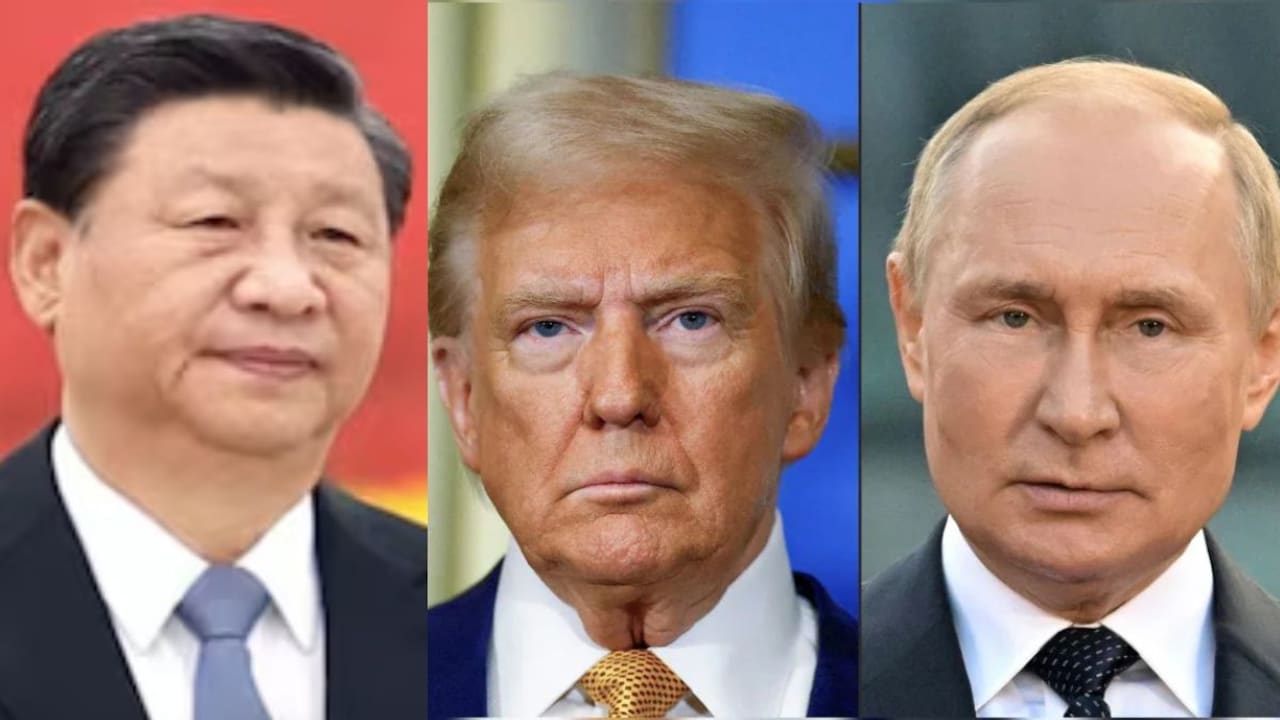
The Pentagon is scrambling to rewrite its core war plans. For the first time in modern history, American military planners aren't just preparing for a single major nuclear competitor. They are staring down two near-peer nuclear superpowers simultaneously: China and Russia.
Forget the old Cold War playbook. That era relied on a simple bilateral equation between Washington and Moscow. Today, that framework is completely dead. With the final legal boundaries on strategic arsenals gone, defense officials are forced to adapt to a messy, multi-polar nightmare scenario.
Here is what is actually driving this massive strategic shift, and why the defense establishment is sweating the details.
The End of the Post-Cold War Illusion
For decades, American foreign policy operated under a comfortable assumption. Russia's arsenal was shrinking or tightly capped by bilateral treaties, while China maintained a minimal, predictable nuclear deterrent. Those days are gone.
Beijing has aggressively expanded its missile silo fields and doubled its stockpile size in record time. Meanwhile, Moscow continues to rattle its nuclear saber amid grinding conventional conflicts.
When the last major arms control framework expired, it stripped away the remaining legal guardrails. Washington woke up to a reality where deterrence can no longer be treated as a two-party negotiation. You cannot deter Beijing with the exact same logic you use against Moscow. Their regional goals, command structures, and geopolitical timelines are completely different.
Why Facing Two Peers Changes Everything
Handling one nuclear adversary is an exercise in complex mathematics. Handling two at the same time breaks standard deterrence theory.
If a regional conflict erupts in the Pacific over Taiwan or in Eastern Europe, the Pentagon has to calculate whether a strike or escalation could trigger a simultaneous response from the other nuclear power. Military analysts call this the "two-peer problem."
- Targeting Overload: The U.S. nuclear warhead inventory is finite. Spreading those assets across two expanding adversaries strains existing delivery platforms.
- Escalation Pathways: A conventional skirmish could fast-track into a nuclear exchange if an opponent believes its core regime survival is threatened.
- Asymmetric Intentions: Russia poses an immediate, acute threat through erratic conventional and nuclear signaling, whereas China represents a methodical, long-term pacing challenge aimed at displacing American influence in Asia.
Military planners can no longer treat these threats as isolated silos. They overlap in terrifying ways, especially as defense cooperation and technology sharing deepen between Moscow and Beijing.
The Modern Dilemma of Force Posture
So, what is the actual solution inside the Pentagon? Opinions are fiercely divided.
Some defense strategists argue that the United States must rapidly expand its deployed warhead count. They want to load stored nuclear weapons back onto existing intercontinental ballistic missiles and submarines to ensure absolute overmatch against both combined opponents.
Critics counter that this approach will trigger an unstoppable, three-way arms race. They point out that matching Russia and China nuke-for-nuke drains economic resources and ignores the reality of modern missile defense and mobile launchers. Tracking truck-mounted ballistic missiles in vast territories is an intelligence nightmare, regardless of how many warheads sit in American silos.
Instead of chasing numerical superiority, a competing faction within the defense community pushes for self-restraint paired with flexible hedging. This means focusing on modernizing the aging triad—like the delayed Sentinel intercontinental ballistic missile program—while accepting that you cannot target every single mobile asset an adversary owns.
Living Without a Safety Net
We have entered a dangerous grey zone. Traditional arms control is flatlining, and new transparency channels between Washington, Beijing, and Moscow barely function.
The update to U.S. war strategy isn't just about hardware upgrades or buying new bombers. It is a fundamental admission that the rules of global stability have dissolved.
Watch how procurement budgets shift over the next fiscal cycle. The real test of this updated strategy won't be found in policy white papers. It will show up in how fast the military can adapt its command-and-control systems to fight a war nobody sane ever wants to launch.
.png?width=1200&auto=webp&trim=0%2C0%2C0%2C0)