You can't force heavy clay soil to yield endless profits when nature is fighting you every step of the way. For seventeen years, Sir Charles Burrell tried to make a conventional commercial farm work on 3,500 acres of the Low Weald in West Sussex. It drained his bank account. It broke his machinery. The soil acted like concrete during summer dry spells and sticky porridge through the winter rains.
Instead of doubling down on chemical fertilizers and sinking deeper into debt, he did something radical. He quit.
In 2000, the dairy herd was sold, the equipment auctioned off, and the land abandoned to whatever wanted to grow there. That bold financial surrender became the Knepp Estate rewilding project—now widely recognized as Britain's most successful private ecological experiment.
Moving Away From Micromanagement
Traditional conservation tries to keep ecosystems frozen in time. Rangers plant specific trees, mow particular fields, and constantly meddle to protect single species. Knepp threw out that playbook entirely.
The project adopted a process-led model inspired by Dutch ecologist Frans Vera. Vera argued that prehistoric European landscapes weren't just dense, unbroken canopies of trees. Large herbivores kept parts of the land open, creating dynamic mosaics of thorny scrub, grasslands, and wetlands.
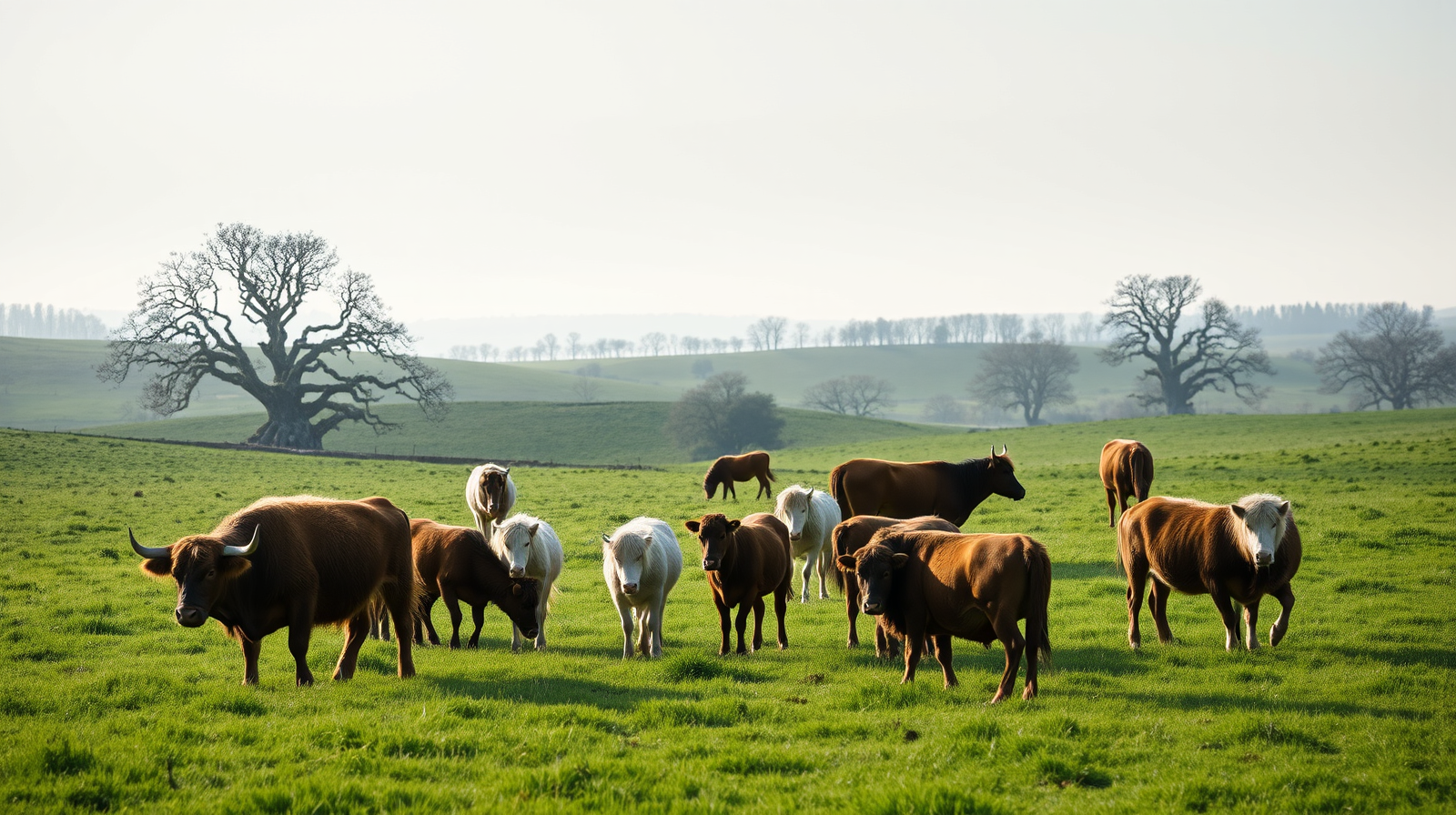
To replicate this, the estate introduced free-roaming proxy herbivores:
- Old English Longhorn cattle
- Exmoor ponies
- Tamworth pigs
- Red and fallow deer
These animals don't have feeding schedules or indoor barns. They roam year-round. Pigs root around and churn the dirt. Ponies and cattle graze selectively and trample aggressive weeds. Deer browse saplings. Their dung attracts thousands of insect species, which in turn feed everything else up the food chain. Nature runs the show now. Humans just watch.
When You Step Back, Wildlife Floods In
The speed of the recovery surprised even the optimists. Within a few short years, plants and animals that hadn't been seen in the region for decades suddenly appeared.
The dense thorny thickets that conventional farmers hate became luxury real estate for rare birds. Turtle doves returned in numbers that stunned ornithologists. Nightingales began singing across the estate by the hundreds. Purple emperor butterflies found the newly established sallows and colonized the property into a breeding hotspot.
More milestones followed. White storks nested and hatched chicks here for the first time in England in six centuries. Beavers returned to Sussex waterways, engineering complex wetland habitats that slow down water flow and filter pollutants naturally.
Economic Survival Through Ecotourism
Critics love to claim that rewilding turns productive land into useless wastelands. Knepp proves the exact opposite.
Farming this stubborn clay at an industrial scale was a losing financial bet. Letting the land go wild turned out to be an economic engine. The estate now makes money through regenerative tourism, high-end campsites, safaris, and the sale of organic, ethically raised wild-range meat from the roaming livestock. Local pubs, cafes, and bed-and-breakfasts in the surrounding villages report a steady boost in business from travelers visiting the site.
You don't need artificial inputs to generate value from the earth. You just need to stop fighting natural hydrology and soil biology.
What Landowners Can Learn From Knepp
If you own land—whether it is a sprawling rural estate or a neglected patch of acreage—the lesson from West Sussex is simple. Perfection is the enemy of ecology.
Stop cleaning up every fallen log, stop spraying every weed, and give natural processes room to operate. Biodiversity doesn't need your micromanagement. It just needs space, time, and freedom from constant human interference.