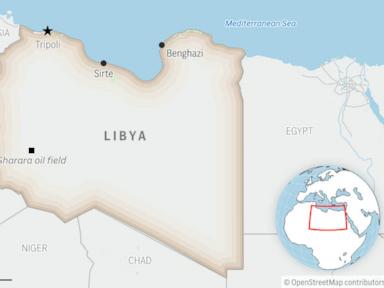
Another fragile vessel has gone down. This time, it happened just off the eastern coast of Libya near Tobruk. On June 12, 2026, an overcrowded boat packed with desperate people flipped over in the rough waters of the Mediterranean Sea. When the news finally broke via local tracking groups, the numbers were grimly familiar. Fifty-one people are dead or missing. Only ten survived.
If this news sounds like something you read last month, or last year, or five years ago, that's because the system driving this horror hasn't changed. We talk about these events as isolated accidents or natural disasters caused by high waves and bad weather. But they aren't. They are the direct result of a highly organized, multi-million-dollar human smuggling industry that thrives in the vacuum of lawless states, funded by the desperation of people who feel they have absolutely nothing left to lose.
Let's look at what actually happened out there on the water last week, why eastern Libya is suddenly a hot zone for these departures, and what the real cost of Europe's outsourced border security looks like on the ground.
Inside the June Shipwreck Off Eastern Libya
The Abreen group, a local organization that tracks migrant movements in eastern Libya, confirmed the details of the latest shipwreck. The boat departed with dozens of people crammed onto a vessel that was never designed to handle the open sea. Within hours, the boat capsized.
Ten survivors managed to cling to remnants or swim to safety, but for most on board, the Mediterranean became a graveyard. Over the past 24 hours, the Libyan coast guard and the Red Crescent in Tobruk have been pulling bodies out of the surf. Eleven bodies have been recovered so far, while 40 people remain missing, swallowed by the sea. The coast guard even posted video footage of their rescue teams dragging white body bags across the sand. It's a brutal image, and it's one that repeats itself week after week without making the front pages of major international news sites.
What makes this specific incident notable is where it happened. Historically, most migrant boats departed from western Libyan ports like Zuwara or Sabratha, heading toward the Italian island of Lampedusa. But human traffickers are adaptive businessmen. As European surveillance and western Libyan coast guard interceptions ramped up, smuggling networks moved their operations eastward to places like Tobruk. The eastern route is longer, more dangerous, and forces unseaworthy boats across a wider stretch of the sea toward Greece or Italy, drastically increasing the chances of a catastrophic failure.
The Numbers Paint a Horrifying Picture
We can look at the raw data from the International Organization for Migration to understand the sheer scale of what's happening. Between January 1 and mid-May of 2026 alone, more than 800 migrants were officially recorded as dead or missing on the central Mediterranean route. Last year, that number topped 1,300.
The terrifying reality is that these numbers are almost certainly an underestimate. Human rights organizations frequently refer to "invisible shipwrecks"—boats that slip off the Libyan coast at night, capsize out in the deep ocean with no witnesses, and leave no survivors to tell the story. Their families back home simply stop receiving phone calls, never knowing if their loved ones are alive, stuck in a hidden detention camp, or resting at the bottom of the sea.
To understand why people keep getting onto these rubber dinghies and rotting wooden fishing boats, you have to understand the environment they are fleeing. Most of the people making this journey come from countries across sub-Saharan Africa, parts of the Middle East, and South Asia. They are running from grinding poverty, brutal civil wars, political persecution, or total economic collapse. By the time they reach the Libyan coast, they have already survived thousands of miles of dangerous travel across deserts and through territories controlled by rogue militias. They are already deeply invested, both financially and emotionally. Turning back isn't an option.
The Exploitation Machine Inside Libya
Libya has been a fractured state since the 2011 NATO-backed uprising that overthrew Moammar Gadhafi. The country lacks a single, unified government capable of enforcing the rule of law across its vast territory. Instead, it's divided between rival administrations and a patchwork of local militias, many of which are deeply embedded in the human smuggling trade.
Smuggling isn't a side hustle in Libya; it's a major pillar of the shadow economy. Traffickers recruit migrants across Africa, promising safe passage to Europe for thousands of dollars per person. Once the migrants arrive in Libya, the trap snaps shut.
United Nations investigators have documented the conditions facing migrants inside Libya, and their findings are sickening. If a boat is intercepted at sea by the Libyan coast guard, the passengers aren't freed. They are sent straight back to government-run detention centers. Inside these facilities, abuses are rampant. We are talking about forced labor, systematic beatings, extortion, rape, and torture. Militias frequently hold migrants hostage, torturing them while forcing them to call their families back home to beg for ransom money. Once the family pays up, the migrant is often sold right back to a different smuggler, and the loop starts all over again. The UN has explicitly stated that these state-sanctioned abuses amount to crimes against humanity.
When you realize that the alternative to boarding a sinking boat is enduring an endless cycle of torture in a Libyan prison camp, the choice to risk the sea becomes entirely logical. It's not a reckless gamble; it's a desperate run for survival.
The Shared Responsibility of European Policy
You can't talk about these deaths without looking at the policy decisions being made in Brussels, Rome, and Athens. For years, European Union policy has focused almost entirely on deterrence and outsourcing border management.
Instead of deploying large-scale naval search-and-rescue operations to save lives in the Mediterranean, European governments have poured millions of euros into funding, training, and equipping the Libyan coast guard. The goal is simple: stop the boats before they reach European waters, regardless of what happens to the people on board once they are dragged back to North Africa.
By pulling back their own ships and criminalizing civilian NGO rescue vessels, European nations created a massive safety void out on the water. When a boat capsizes north of Libya now, there are rarely any professional rescue ships nearby to respond. Merchant vessels sometimes try to help, but they are ill-equipped to handle hundreds of drowning people at once. The result is exactly what we saw near Tobruk: a high death toll, a few traumatized survivors, and dozens of families left with empty seats at their dinner tables.
The current strategy relies on making the journey so dangerous and miserable that people won't try it. But that strategy fails to take human desperation into account. As long as the conditions in a person's home country are worse than the risks of the Mediterranean, the boats will keep launching. The only thing deterrence policies achieve is changing the price tag of the journey and pushing smugglers to find even more perilous routes to evade detection.
Moving Past Empty Political Statements
Every time a major shipwreck occurs, international leaders release carefully worded statements expressing deep sorrow and calling for action against human trafficking rings. These statements are functionally useless because they treat the smugglers as the root cause rather than a symptom of a much larger, systemic failure.
To actually move the needle on this crisis, policy shifts must focus on three distinct areas.
First, there must be an immediate expansion of safe, legal pathways for migration and asylum. If someone has a legitimate asylum claim or a legal mechanism to apply for a work visa from their home region, they won't hand their life savings to a criminal syndicate in Libya. By shutting down almost all legal avenues for migration, Western nations have effectively handed a monopoly on regional travel to human traffickers.
Second, the international community needs to tie financial aid and political cooperation with Libyan authorities to the immediate closure of the abusive detention system. Funding a coast guard that feeds people directly into criminal extortion networks makes outside nations complicit in those very abuses. Transparency and independent oversight of these facilities are non-negotiable prerequisites for any future security partnerships.
Third, the Mediterranean needs a dedicated, well-funded, and proactive humanitarian search-and-rescue mission. Saving lives at sea is a fundamental obligation under international maritime law. It shouldn't be treated as a political bargaining chip or outsourced to a failed state's maritime militia.
Actionable Steps for Global Citizens
It's easy to look at a tragedy of this scale and feel completely powerless. The geopolitical forces at play are massive, but individual actions can still exert pressure on the institutions driving these outcomes.
If you want to see an end to these preventable shipwrecks, consider taking these direct steps:
- Support independent monitoring groups and search-and-rescue organizations like SOS Méditerranée, Sea-Watch, or Doctors Without Borders (MSF) who operate directly in the central Mediterranean.
- Pressure your local political representatives to oppose policies that outsource border enforcement to countries with documented histories of systemic human rights abuses.
- Donate to or volunteer with organizations that support legal aid and resettlement services for refugees and asylum seekers inside transit countries.
- Stay informed through independent journalist networks that cover migration from the ground up, rather than relying solely on official state press releases.


,webp/025/311/183/v2/2560x1440.217.webp)