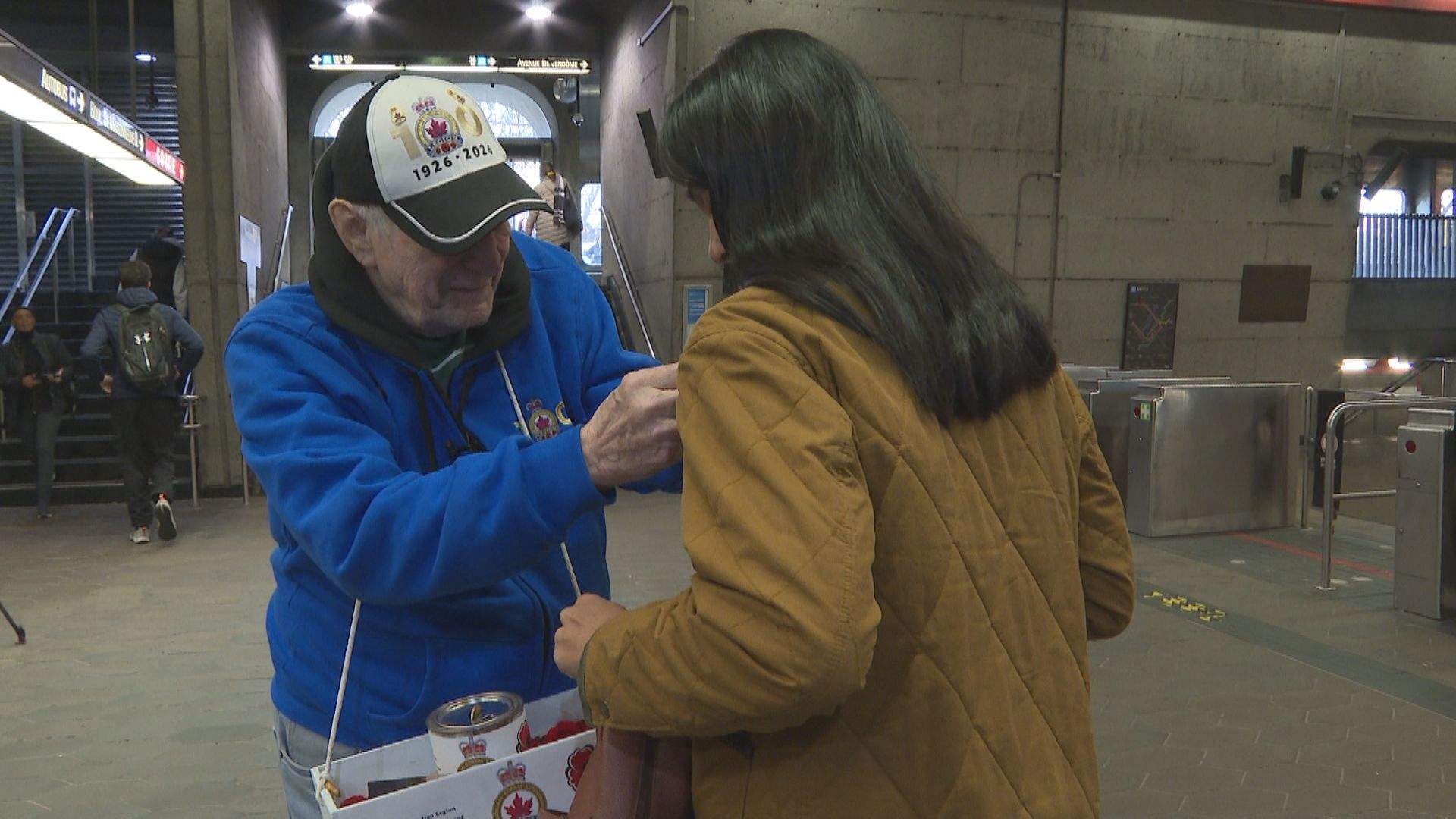
Bureaucracy rarely knows how to handle a person with a genuine sense of purpose. Carl Andersen found that out the hard way at a Montreal metro station last November. At ninety years old, Andersen isn't looking for trouble. He is just trying to pin a red artificial flower onto the lapel of a hurried commuter. For two decades, this Canadian Forces veteran has stood quietly at Vendôme station during the annual poppy campaign, raising money for the Royal Canadian Legion.
Then transit security stepped in. Also making waves in this space: Why The Effort To Impeach Pete Hegseth Just Hit A Wall In Washington.
Two Société de transport de Montréal officers approached Andersen and demanded to know if he had official permission to sell poppies. His answer was simple. He had been doing it for twenty years without asking anyone. The guard replied that they were trying to clear out panhandlers and solicitors from the subway system.
Let that sink in. A veteran who enlisted at fifteen by stretching the truth about his age, who served during the Korean War, and who has raised roughly a million dollars for various charities through marathons and community work, got lumped into a category with people begging for spare change. More information regarding the matter are covered by The New York Times.
The exchange left Andersen feeling harassed. Worse still, after consulting their supervisors, the guards informed him that they would merely "tolerate" his presence. Tolerate. A ninety-year-old combat veteran raising funds for wounded and needy soldiers is tolerated by transit authorities in his own country.
The Reality Of Public Transit Rules And Public Good
Rules matter, obviously. Transit agencies have to manage crowds, maintain clear pathways, and prevent aggressive panhandling that makes riders uncomfortable. The STM later clarified its official stance, noting that volunteers are permitted to solicit donations outside paid zones as long as they do not block traffic flow or harass commuters, and as long as transactions are strictly donations.
Yet the friction points to a deeper disconnect. Urban transit systems are managed by people staring at spreadsheets, risk matrices, and liability policies. They see a stationary body in a high-traffic corridor and see a variable to control. They don't see the commuter who stops, smiles, and shakes the veteran's hand. They miss the shared cultural memory of why those poppies exist in the first place.
When security guards lean on an elderly volunteer, the failure isn't just a lack of common sense. It is an administrative blindness that treats civic tradition like a zoning violation.
A Lifetime Of Giving Far Beyond The Metro Station
Andersen's commitment to charity didn't start yesterday. Growing up with a mother who taught him generosity despite financial hardship shaped his outlook early on. That foundation pushed him to run ninety-seven marathons and rack up countless fundraising miles for breast cancer research, the Terry Fox Foundation, and the War Amps.
When you spend your life running marathons to cure diseases and supporting veterans who have nowhere else to turn, standing in a drafty subway station in November isn't a chore. It is a duty.
"There are veterans that are in real need, and for them, this is why we do it," Andersen told reporters.
Fortunately, public backlash and common sense quickly corrected the initial overreach. Since that awkward encounter, Andersen hasn't faced any further trouble. Commuters keep stopping by, buying their poppies, and offering a warm greeting. He plans to keep volunteering at Vendôme until he turns at least one hundred.
Bureaucrats will always draft new rules to sanitize public spaces, but communities are built by people like Carl Andersen who refuse to stay home.
If you see a veteran volunteering this November, don't just walk past with your headphones in. Stop, hand over a few bills, and make sure they know they aren't just tolerated. They are valued.