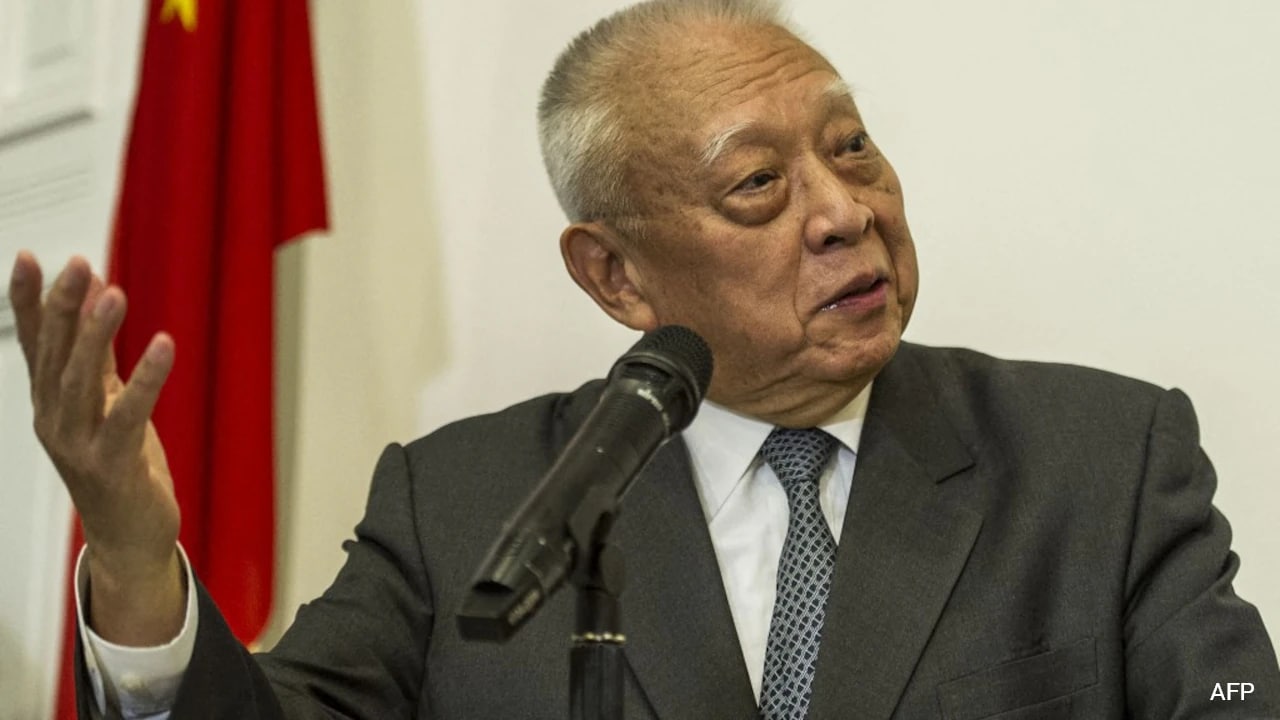
Tung Chee Hwa never wanted the job. He was a shipping tycoon, not a career politician, yet Beijing handed him the keys to one of the world's most complex financial hubs anyway. When Tung passed away at 89, he left behind a legacy that shaped modern Hong Kong in ways we are still unpacking today.
Let's look at why his tumultuous tenure as Hong Kong's first post-colonial leader still matters, and why his story goes far beyond a simple obituary.
The Reluctant Tycoon at the Helm
Born in Shanghai in 1937 into a wealthy shipping family, Tung moved to Hong Kong in 1947 after weathering the turbulence of post-war China. He studied marine engineering at the University of Liverpool before running the family business globally. Life changed abruptly in the mid-1980s when he joined the committee drafting the Basic Law, Hong Kong's mini-constitution following the Sino-British Joint Declaration.
When the British flag came down on June 30, 1997, Beijing tapped Tung to steer the newly established Special Administrative Region. He inherited a city full of anxiety, uncertainty, and immense wealth. Most residents watched the handover with bated breath, wondering if the "one country, two systems" promise would hold.
Tung walked straight into an absolute storm.
Crises That Defined a Fractured Era
You cannot understand Tung's eight-year tenure without looking at the sheer weight of crises that hammered his administration almost immediately.
Barely had the ink dried on the handover documents when the Asian financial crisis struck. Property prices crashed, unemployment spiked, and ordinary families saw their life savings evaporate overnight. Tung tried to fix the housing shortage with an ambitious target of building 85,000 flats a year, but the market collapse turned that policy into a political disaster.
Then came public health emergencies. The avian flu outbreak of 1997 shook public confidence, followed by the devastating 2003 SARS epidemic that crippled tourism and local commerce.
Yet, the biggest fractures were political, not economic. In July 2003, half a million people flooded the streets to protest controversial national security legislation known as Article 23. Citizens feared the erosion of civil liberties, and the sheer volume of dissent forced Beijing and Tung to shelve the bill.
Discontent boiled over again in 2004. By December of that year, Tung and his cabinet received an unprecedented, public dressing-down by China's then-president Hu Jintao for poor governance.
The Quiet Exit and Later Years
Tung stepped down in March 2005, citing health reasons with two years left in his second term. His deputy, Donald Tsang, took over the reins.
Many critics viewed Tung as a well-meaning businessman out of his depth in populist politics. Supporters argued he bore an impossible burden, trying to bridge two completely different political systems while keeping Beijing and Hong Kong's freewheeling populace happy at the same time.
After leaving office, Tung served as vice chairman of China's top political advisory body and tried to position himself as an elder statesman. During the 2004 and 2014 pro-democracy movements, he publicly urged student demonstrators to go home, reflecting his steadfast loyalty to state stability above all else. In his final years, he faded from public view entirely, missing major flag-raising ceremonies due to failing health.
Tung's passing marks the definitive close of Hong Kong's early post-colonial chapter. The shipping tycoon who never sought the spotlight became the symbol of a city caught between two worlds, navigating a turbulent passage into a very different future.