Archaeologists hate easy digs. They want puzzles, and southwestern Poland just delivered a massive one. Crews expected standard Roman-era graves while working near Wrocław. Instead, they hit something nearly 5,000 years older, sitting quietly underneath.
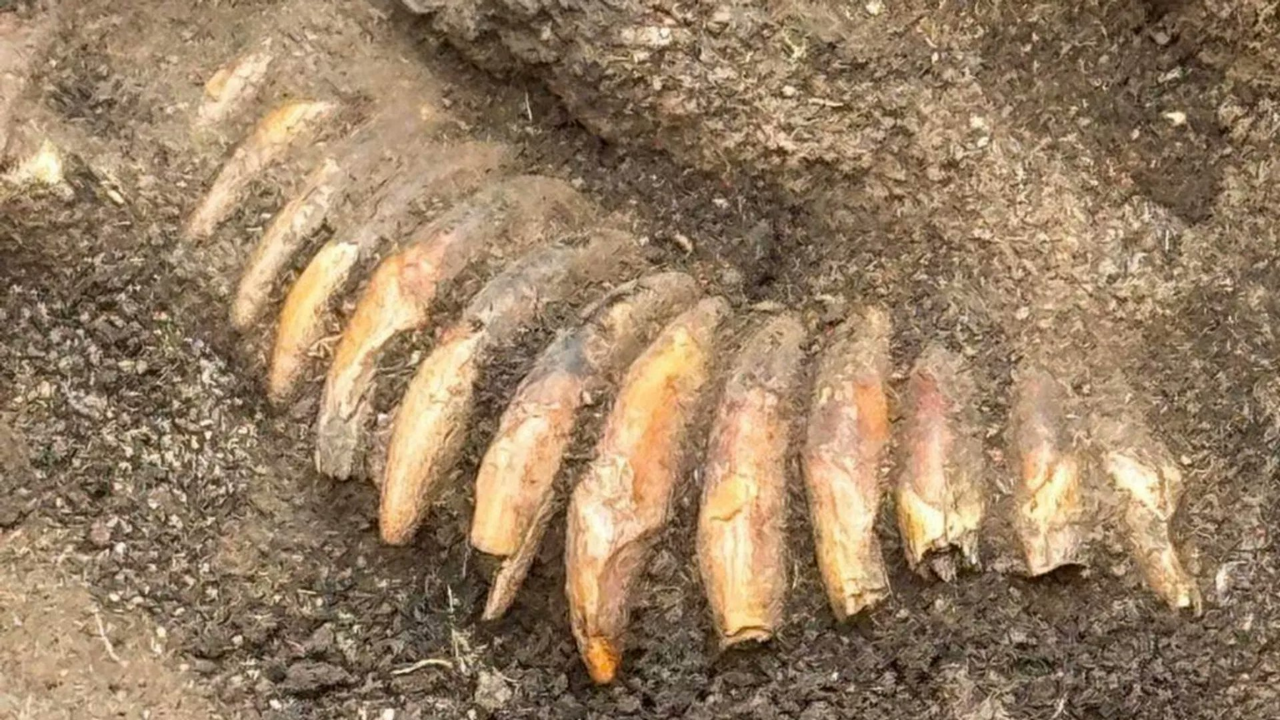
What they pulled out of the dirt rewrites local prehistory. It wasn't just a skeleton. It was a Middle Neolithic man buried around 2900 B.C. with a serpentinite battle axe, a flint blade, rare amber beads, a necklace crafted from 42 drilled mammal teeth, and two severed human skulls.
If you think ancient burials are just bones and broken pottery, think again. This find forces us to look past simple timelines and confront how complex prehistoric mortuary rituals actually were.
The Grave Beneath the Roman Cemetery
Layering is normal in archaeology. People tend to build over what came before, turning ancient spaces into multi-generational housing estates or graveyards. Even so, stumbling upon a Corded Ware culture burial three thousand years older than the surrounding Roman cemetery is a jarring surprise.
The man belonged to a prehistoric group famous for sweeping across Europe with distinct pottery styles and cattle-herding practices. But his specific send-off goes far beyond routine burial norms. Prehistoric humans didn't drop people into the dirt with weapons and animal teeth by accident. Every single item placed in that grave carried heavy social weight.
What the 42-Tooth Necklace Tells Us
Let's talk about the necklace. Forty-two mammal teeth, each meticulously drilled to accept a cord, doesn't sound like casual streetwear. It represents a massive investment of time and specialized skill.
Biological anthropologists point out that such items signal high status. This guy wasn't just another hunter in the woods. He was likely a clan leader, a master hunter, or a prominent figure within his community. Animal teeth often symbolized power, dominance over dangerous fauna, or spiritual authority. When you wrap a body in that kind of symbolic currency, you are making a loud statement about who held the power.
Pair that necklace with a polished green serpentinite battle axe and rare imported amber beads, and you have the prehistoric equivalent of a VIP funeral. Amber didn't grow on trees locally; it moved across long-distance trade routes. This man commanded resources and respect across wide distances.
The Mystery of the Two Decapitated Skulls
The heavy grave goods are wild enough, but the two human skulls placed beside the skeleton steal the spotlight. They weren't attached to bodies. They were isolated heads dropped into the pit alongside him.
Right now, scientists are treading carefully. Were these enemies taken in combat? Were they revered ancestors whose bones were gathered long after death? Or were they attendants sacrificed to accompany the leader into the next world?
Archaeologists are running tests to check for cut marks, biological kinship, and age profiles. Until DNA sequencing and osteological analysis clear things up, we are left staring down a dark window into ancient ritual violence or ancestor worship. It proves that prehistoric belief systems involved intense, complex drama that written history never got to record.
What Happens Next
Finding a grave like this in Poland is an extreme rarity—only the second of its kind in the region. The next steps involve heavy laboratory work. Researchers will extract DNA, map his exact diet, track his childhood origins through isotope analysis, and check if those two skulls shared any bloodlines with him.
History isn't just written in books. It is buried under our feet, waiting for the exact moment a backhoe or a trowel uncovers a puzzle we aren't quite ready to solve. Keep your eyes on the upcoming osteological papers. The dirt in Wrocław still has stories to tell.