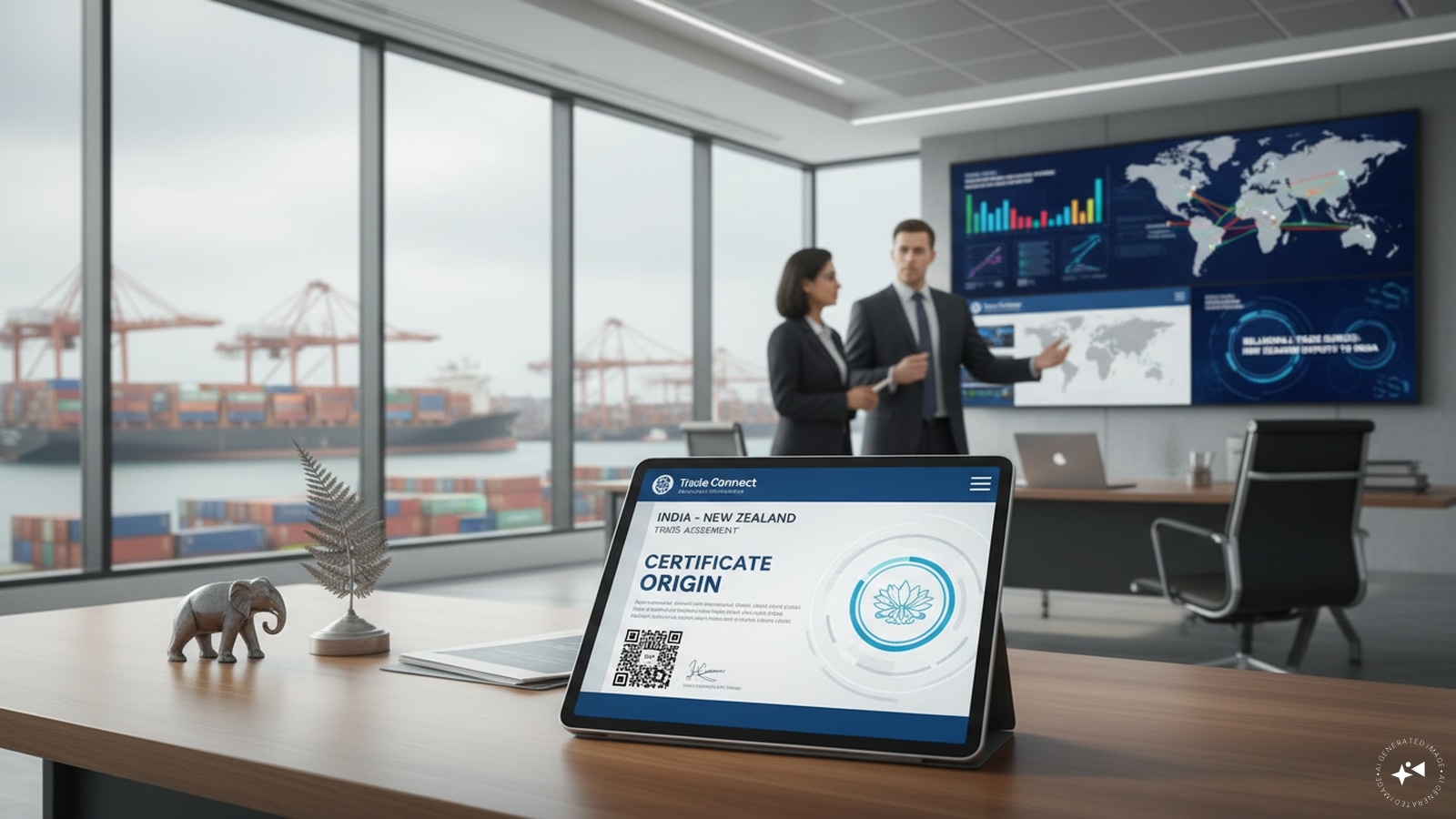
Signing a landmark trade agreement makes great headlines, but moving actual goods across international borders requires wading through a mountain of paperwork. When the Directorate General of Foreign Trade cleared 17 specific agencies to issue preferential Certificates of Origin for the India-New Zealand trade pact, it solved half the puzzle for exporters trying to claim duty-free benefits.
If you're an exporter looking at this pact to scale your operations, getting the paperwork right matters more than the initial tariff cuts. Without the correct certificate, your shipment sits at customs, racking up storage fees while officials debate your product's origin.
Why Certificates of Origin Make or Break Your Shipment
A trade agreement doesn't automatically mean every item leaving an Indian port gets a free pass into New Zealand. Customs authorities need proof that the product is genuinely manufactured in India and meets specific rules of origin criteria.
This is where the authorized agencies step in. The government didn't open the floodgates to just any notary or local office. Instead, they designated 17 specific bodies—ranging from the Export Inspection Council to commodity boards like APEDA and the Spices Board, alongside major special economic zones—to verify production processes and issue the mandatory documentation.
Trying to bypass this step or using an unaccredited body results in rejected claims, meaning your buyers overseas end up paying full import tariffs they shouldn't owe.
Who Handles What Across the 17 Clearing Bodies
Not all certifying agencies handle every product category. Knowing which door to knock on saves weeks of administrative delays.
The Directorate General of Foreign Trade regional offices and the Export Inspection Council handle general applications across broad product lines. But if you're shipping agricultural goods or processed foods, you deal directly with APEDA. Marine exporters must head to the Marine Products Export Development Authority.
Special Economic Zone units also carry unique administrative pathways. Zonal development commissioners across locations like Cochin, Kandla, Noida, and SEEPZ hold the authority to clear goods originating straight from designated SEZ and Export Oriented Unit facilities.
Common Mistakes Exporters Still Make
Most businesses treat compliance as an afterthought, scrambling for certificates only after the cargo has already reached the port terminal. That approach burns profit margins fast.
First, misclassifying your product code under the Harmonized System leads to immediate rejection. If the HS code on your commercial invoice doesn't match the description on your Certificate of Origin down to the final digit, customs software flags the discrepancy.
Second, relying on self-certification when it isn't permitted under the specific bilateral guidelines creates legal exposure. While some modern free trade agreements lean toward exporter self-declaration, this pact relies heavily on vetted third-party issuance through the 17 approved bodies.
What You Need to Do Next
If you want to capitalize on the India-New Zealand economic corridor without losing money to administrative friction, audit your supply chain documentation today. Verify whether your specific product line falls under agricultural boards, textile committees, or general DGFT jurisdiction, and establish direct communication channels with your assigned regional issuing office before booking your next container.