Money talks, especially when a deadly virus spreads faster than health workers can track it. The British government just announced it's nearly tripling its financial commitment to fight the raging Ebola epidemic in the Democratic Republic of Congo, pushing total funding up to £78.7 million.
It is a massive shift. For months, international aid budgets faced brutal cuts from major Western governments, leaving boots on the ground dangerously thin. Now, faced with what health authorities call the fastest-spreading Ebola crisis on record, reality is forcing a course correction.
If you are wondering why this matters far beyond Central Africa, the answer is simple. Pathogens don't care about borders. When containment infrastructure collapses in regions plagued by conflict and displacement, the entire world sits a plane ride away from a public health catastrophe.
The Cost of Hesitation in Central Africa
The numbers coming out of the DRC are staggering. Since the epidemic was declared, thousands of lives have been lost with confirmed cases soaring past the six thousand mark. The World Health Organization has issued stark warnings that this outbreak threatens to eclipse the devastating West African epidemic of the mid-2010s.
Why did it get this bad? The virus, identified as the Bundibugyo strain, managed to circulate undetected in local communities for months before public health officials sounded the alarm. Compounding the disaster, healthcare workers went on strike over unpaid wages, rebel groups clashed in eastern provinces, and misinformation ran rampant.
When you strip away political spin, global health security relies on boring, unglamorous things: contact tracers, clean water, personal protective equipment, and functional local clinics. Previous aid reductions gutted precisely this foundational layer.
Where the New Money Actually Goes
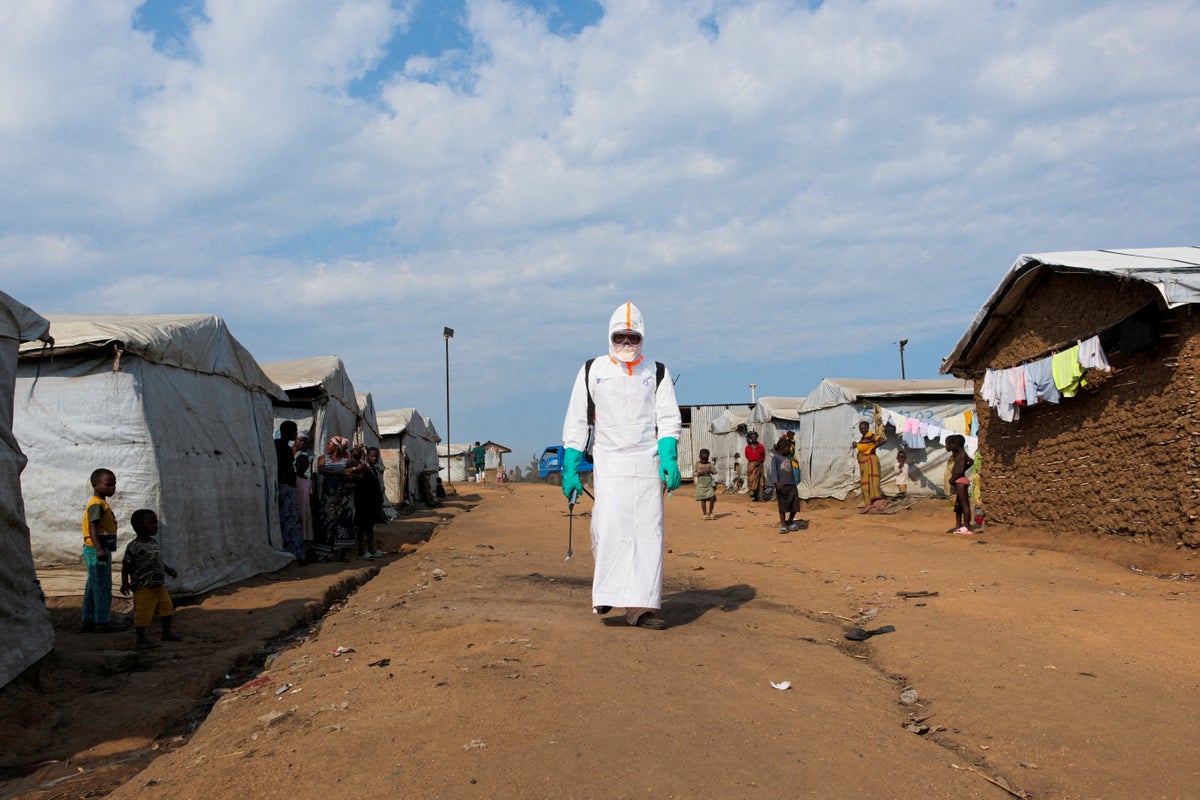
Throwing cash at a crisis changes nothing if it sits in bank accounts instead of buying supplies. According to Foreign Office officials, the newly injected millions will fund critical resources on the ground.
- Deploying specialized public health rapid response teams.
- Procuring and distributing personal protective gear for frontline medical staff.
- Scaling up maternity care and targeted health services for women.
- Improving sanitation infrastructure and active community surveillance.
Women have shouldered a terrifying burden in this outbreak. Because traditional domestic roles position them as primary caregivers within households, and because women make up the vast majority of local nurses and midwives, they account for more than half of all infections. Maternal deaths in the affected zones have nearly doubled. Protecting female healthcare workers isn't just an equity issue; it is the absolute linchpin of stopping the chain of transmission.
Turning Promises Into Action
NGOs and humanitarian leaders have welcomed the financial boost, but caution remains high. Securing the funds from emergency reserves or reallocated budgets is only step one. Getting those resources past checkpoints, hostile zones, and logistical nightmares in eastern Congo is where programs usually break down.
Local health organizers demand transparency on how fast these funds translate into treatment beds and trained contact tracers on the ground. Communities exhausted by violence, displacement, and broken promises need proof that international support means real protection.
Keep a close eye on delivery timelines over the coming weeks. Funding announcements make great headlines, but survival depends entirely on execution speed.